

Yesterday’s piece about Charlie Kirk’s alleged killer got a few folks riled up—including one reader so offended that I had the audacity to [*checks notes*] question the comically tidy official narrative that he declared he was promptly cancelling his (free) subscription.
You guys know you never need to announce that, right? You can just… leave. Not just my Substack, but all of them. Any old time you’d like!
That’s my—also free—PSA for the day.
As it happens, there’s another Charlie Kirk story worth talking about—and you may be relieved to know that this one’s not about patsies, projectiles, or preliminary hearings. It’s about paydays. Eye-popping ones. Because it turns out that being an absolutely repulsive human being is the new winning Powerball ticket.
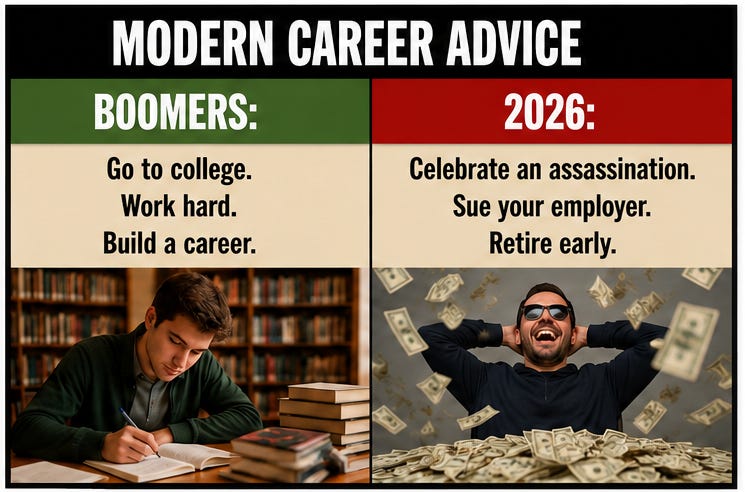
You may recall that in the days and weeks following Kirk’s senseless murder, an alarming number of people responded with the warmth and humanity of a rusty wood chipper. Social media was a repulsive sea of celebrations, crass memes, celebrity backpedaling, and tweets about karmic retribution. (For… engaging. Make it make sense.) Several of these lovely specimens lost their jobs after their employers decided that publicly cheering a man’s execution maybe wasn’t aligned with corporate values. Many found sympathetic donors eager to help cushion the blow—because if it doesn’t immediately inspire a GoFundMe, did it even happen?
Now, some of those poor, unemployed “victims” are cashing in bigly.
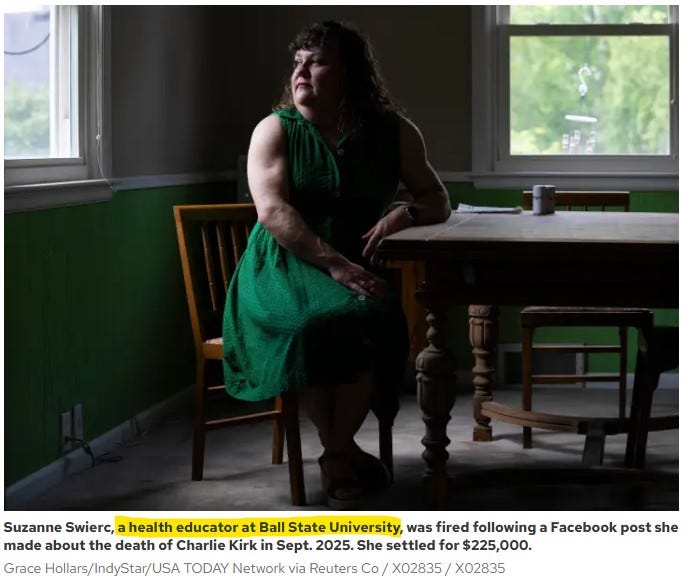
According to NBC News, at least five educators who were disciplined or fired after posting unthinkable comments about Kirk following his assassination have collectively received more than $2.7 million in settlements from public institutions. One former professor alone is walking away with $1.9 million after calling Kirk a “disgusting psychopath,” insisting Erika is “a sick f*ck for marrying him,” and putting in print that his children were better off as orphans.
The words themselves are ugly and shocking enough, but the most disturbing part is who’s saying them.
Again, these aren’t anonymous trolls lobbing grenades from burner accounts. They’re not even liberal influencers hoping to go viral on TikTok. They’re educators. Administrators. College professors. A high school teacher. People entrusted with shaping young minds, modeling civic discourse, and—at least in theory—teaching students how to engage with ideas they find offensive without wishing death on anyone.

And yet here we are.
An assistant psychology professor in Kansas framed Kirk’s murder as “karma” on Facebook. Another called his death a “blessing.” Another unloaded a laundry list of insults so over-the-top it reads less like political commentary and more like a psychotic break. As a result, they were relieved of their professional responsibilities. Seems fair enough. What doesn’t seem fair is rewarding them with six and sometimes seven figure checks. But I don’t make the rules.
The very best (as in absolute worst) part? Those settlement dollars didn’t come from a handy “Consequences for Saying Disgusting Things” insurance fund. They came from public institutions—which means, in plain English, taxpayers. You. Me. Erika Kirk. Charlie’s parents, colleagues, and friends. Because nothing says “justice” quite like asking the victim’s family to help finance the payout.
If you’re already racing to the comments to type “BUT ACADEMIC FREEDOM!” in all caps, allow me to save you the keystrokes. Academic freedom protects your right to teach controversial ideas, challenge students, and hold unpopular political views. It was never meant to shield “This man deserved to die and his kids are better off” as a profound or even acceptable scholarly contribution. That’s not a hot take. That’s not rigorous discourse. That’s just being a horrible person with a captive audience of 19-year-olds. It’s precisely the kind of statement that should end a career, not fund a beach house.
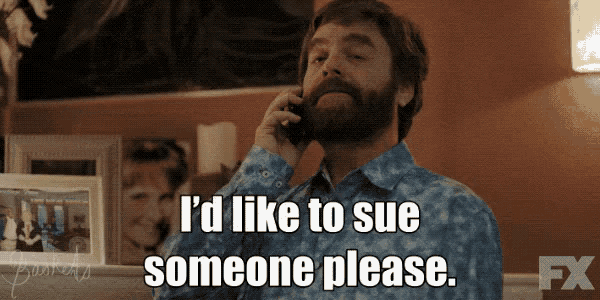
As much as I’d love to call this a cancer that only affects the left, I cannot. When Paul Pelosi was attacked with a hammer in his home in 2022, Fox News hosts Rachel Campos-Duffy and Pete Hegseth laughed about it on air. (Campos-Duffy’s exact quip was that Pelosi “needs the hammer, not the medal,” which is only slightly less funny than root canal surgery during a Jimmy Kimmel monologue.) Campos-Duffy is still employed by Fox. Hegseth is now Secretary of War. Similarly, when Minnesota Sen. Melissa Hortman was shot and killed last year, Sen. Mike Lee posted that “this is what happens when Marxists don’t get their way” before quietly deleting it. Nobody lost their job. There were no lawsuits. No settlements. Just a quick spin through the internet outrage cycle and then business as usual.
The circumstances aren’t identical—but the inconsistency in consequences is hard to ignore. Some people say abhorrent things and slink away untouched. Others make equally grotesque statements, get fired, and saunter off with a jackpot. And we’re all just supposed to shrug and pretend that makes sense.
People of every political persuasion, it turns out, are prone to being awful. That’s not just not a crime, it’s a constitutionally protected right. But what about my rights as an employer? If I find your words or behavior reprehensible—and believe they could damage my company or my sanity—and I’m paying you actual money to represent that company, doesn’t my ability to fire you fall under my own right to pursue happiness?
To be crystal clear, this isn’t an argument against free speech. I will fight for your right to say monstrous things without the government throwing you in jail even if I despise you. Yuge First Amendment fan here. But you don’t have to be a constitutional scholar to recognize that “the government can’t imprison you for your opinion” is not remotely the same thing as “taxpayers should cut you a million-dollar check after you express it in the most indefensible way possible.” Free speech means you’re free to say it—not that you’re free from any and every possible consequence of your verbal vomit.
Courts could sort out whether these firings checked every procedural box, but apparently it’s easier—and cheaper—to settle than to defend the idea of basic decency. The problem is, settlements aren’t neutral; they’re practically permission slips. And it seems people are increasingly picking up on the grift.
The pattern is hard to miss. Spew something breathtakingly cruel after a politically explosive moment. Get fired. Sue. Cash in. Repeat.
That’s not just a legal loophole—it’s an incentive structure. It tells people that the worst possible instincts aren’t just tolerated; they might be profitable if you play your cards right. (GoFundMe, anyone?)
And if that’s the system we’re building, we shouldn’t bank on better behavior. We should expect it to get even worse—louder, uglier, and even a little more calculated—because now everyone knows there might be a check waiting at the end.
Thanks Jenna …🥰…Every morning, I send my kids a daily message from KLove , they either thumbs up me or put a heart , but I know they are fine and/or it’s ok to call . Here’s today’s message because people have lost their way . There is so much hate and vitriol. July 10, 2026
Three things will last forever—faith, hope, and love—and the greatest of these is love.
1 Corinthians 13:13 NLT
This is just further proof that the current system is setup to collapse our society. It's obvious that certain types of behaviors are rewarded while others are punished, which by design, is socially programming people to behave in one way or another.
Say some vile actually hate-filled crap online and get fired and paid out.
Refuse mandatory clot shots, speak out about medical freedom, and how dangerous mandated medical interventions are, get fired, get sued, have your life ruined.
Actions are louder than words and the actions of the system couldn't be any more clear.