

There’s a specific kind of disappointment reserved for when your people start acting like, well, their people. Not full betrayal. Not burn-the-jersey outrage. Just the painful, creeping realization that the guy who vowed to clean house has instead located the broom, leaned it gently against the wall, and then wandered off to record a podcast.
I’m talking specifically about Kash Patel, a man who, not that long ago, promised to make an inherently tight-lipped institution the “most transparent agency ever.” (Is it just me, or is that the equivalent of a pastry chef pledging to whip up the “healthiest deep-fried Oreos on the planet”?) He insisted truckloads of documents would be made public. He presented himself as the patron saint of accountability. He swore up and down that sunshine is the best disinfectant. You could practically hear the FOIA requests writing themselves.

You may recall last summer, when Patel went public with what sounded like a bureaucratic fever dream: the discovery of a “secret room” (it might have been rooms, plural; the details are vague) inside FBI headquarters that was bursting with highly sensitive, undigitized documents related to Russiagate, the Mueller probe, and Special Counsel Jack Smith’s investigation into Trump’s alleged role in the January 6 “Capitol attack.” Material evidence that could implicate senior officials from previous administrations in a coordinated effort to take down Trump. Just sitting there, untouched and unread, many stored in “burn bags” that, strangely, nobody ever got around to actually torching.

And then… nothing.
I’m sorry, what? This would be like discovering a hidden trap door in your house labeled “TOP SECRET—FOR THE LOVE OF GOD DO NOT OPEN,” and then walking away and leaving it for… what? A rainy day? The next owners? A sign from God delivered by butterfly during a rare Super Flower Blood Moon?
Also, can we talk about “secret rooms” in the FBI for a sec? Because I was under the impression that the agency itself was the secret room. Like… isn’t the whole complex already where the secrets live? Why do we need a secret “Sensitive Compartmented Information Facility” inside the secret place? Who is in charge of deciding which secrets need to be extra-secret? Is there a guy with a clipboard going, “Okay, this feels like a regular secret… but this one? This one’s going to need to be reduced to ash. For now, stick it in a room no one knows exists inside a building nobody can access”?
And on that note, do you mean to tell me that the FBI—the nation’s most powerful investigative arm—actually has a formal system in place for destroying potentially incriminating records… and then sometimes forgets to use it? That’s not federal policy. That’s a scene from The Naked Gun.
“Everything will be exposed,” Patel promised, before the world got so busy with ICE raids and UFOs and WWIII that we all just sort of forgot about it.

Fast forward to now, and thanks to a Judicial Watch lawsuit, we have something slightly more concrete than internet chatter: a federal court filing confirming that the FBI is indeed sitting on somewhere between one and two million pages of records—all largely ignored since the Comey era—and estimating it could take up to a year just to process them.
“A few burn bag documents were released to the public, but most were not,” Texas Border Business—the lone interested media outlet—reported. “Along with newly disclosed material from the CIA and the Director of National Intelligence, the documents, Judicial Watch noted, added weight ‘to charges that starting in 2016, top government figures, including then-President Barack Obama, then-Vice President Joe Biden, [FBI Director James] Comey, CIA Director John Brennan, Director of National Intelligence James Clapper, Hillary Clinton and others conspired to protect the Clinton presidential candidacy, defame candidate Donald Trump, and later destroy his presidency.’”

I know. These things take time. Of course they do. But we’ve now reached the point where Judicial Watch—basically a FOIA request with a pulse—got tired of waiting for the FBI to investigate itself and is in court trying to force a timeline for release. (I’m sure half a million citizen journalists would gladly volunteer to review a few pages apiece. Just a suggestion.)

Here’s what’s weird, though: if these documents really do point to sweeping nefariousness tied directly to Democrats, you’d expect a sprint to release them, not a bureaucratic jog. I get that there are processes—classification reviews, interagency sign-offs, a million pages of paperwork that don’t exactly scan themselves—but still. When your entire brand is “we’re the ones who will finally show you everything,” you’d think this would look a little less like a retirement project and a little more like a priority.
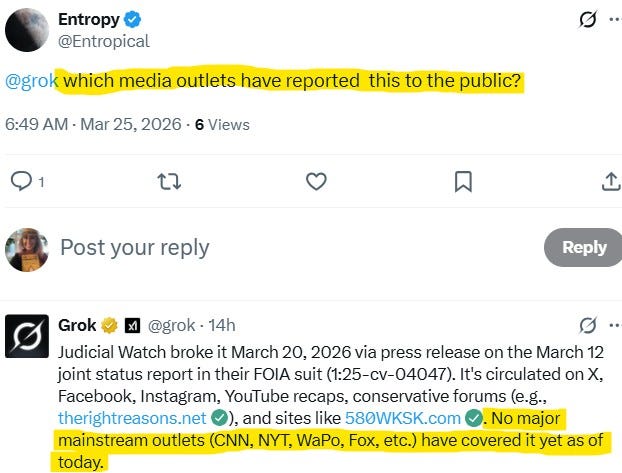
Just to recap: federal investigators found a hidden room—possibly several—within a secure facility. Stashed in this surprise find were reams of damning documents that were labeled to be destroyed. Except they never were. Nor were they released. They were just relegated to paperwork purgatory by Clipboard Guy and left to rot.
Which leaves us with a few familiar possibilities: Perhaps this is just bureaucracy moving at the speed of, well, bureaucracy. Maybe it’s more of that Byzantine 5D chess we keep hearing about and there’s a strategic reason for the dramatic slow roll. It’s possible they unearthed something truly explosive and are trying to figure out how to handle it without blowing up the entire federal government. Or—and I say this with love—there’s always the chance we’re watching the same political tap-dance we’ve been complaining about for the last decade, just with different dancers.

Here’s the part my inner Pollyanna begged me to point out: yes, Patel is running the FBI—but he’s still running the FBI. The same institution, the same processes, the same layers of procedural molasses that don’t magically disappear just because new management hung a different sign on the door.
Which would be a perfectly reasonable explanation—except “slow and methodical” was never part of the “we’re gonna blow the doors off this place” sales pitch—the one we bought into, argued for, and maybe even felt a little smug about.

Judicial Watch is demanding the FBI and DOJ release what they have. Not a teaser. Not a timeline. Every last page. Swiftly and completely. As of now, what we’ve got is confirmation that the documents exist… and a sternly-worded demand for disclosure. Another “the smoking gun is sitting on my desk” moment—followed immediately by “but you can’t see it yet.” If that feels weirdly familiar, it’s because it is. Apparently, transparency—like those healthy, deep-fried Oreos—hasn’t quite been mastered yet.


The plan truster in me wants to believe that they're building up to an October surprise before the midterms, but I'm with you, sister.
Different administration. Same playbook. Same frustration. So much disappointment.