

I won’t lie. Until this week, I was only vaguely aware of Stephen A. Smith—mostly because he occupies the vast, mysterious corner of television (which I do not watch) devoted to grown men who seem to enjoy drinking beer while arguing with screens (which I do not understand). If you can relate, according to Wikipedia, “Stephen Anthony Smith is an American television personality, radio host, sports analyst, political commentator, and actor” who mostly spends his time blustering about basketball on ESPN.
But when someone escapes the sportsball ecosystem and starts dominating my social media feed, I take it as a sign that I’ve been assigned some homework. A quick study session revealed that Smith was trending on X this weekend for the unforgivable crime of [checks notes] admitting he got some stuff about Covid wrong.


To be fair, Smith wasn’t some quiet bystander who merely went along with the “I guess we should trust the science?” crowd. He climbed aboard the vaccine bandwagon, grabbed the loudest megaphone he could find, and spent the next few years trying to recruit the rest of humanity.
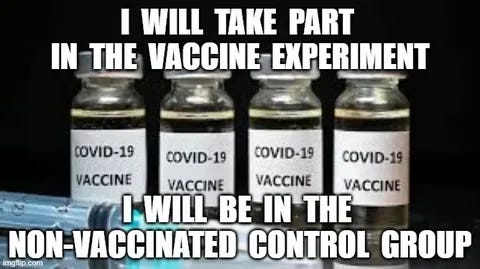
He supported harsh consequences for unvaccinated players. He championed performative obedience disguised as mask-wearing. He blasted high-profile pro-sports holdouts like Kyrie Irving and Aaron Rodgers not just for refusing to take part in history’s biggest and most macabre medical experiment, but because they weren’t using their celebrity status to evangelize their fans. And when Smith himself was hospitalized with Covid—along with double pneumonia, severe liver issues, and 103-degree fevers, despite being boosted out the proverbial wazoo—he credited the vaccine with saving his life.
Basically, he’s the reason shampoo comes with instructions.
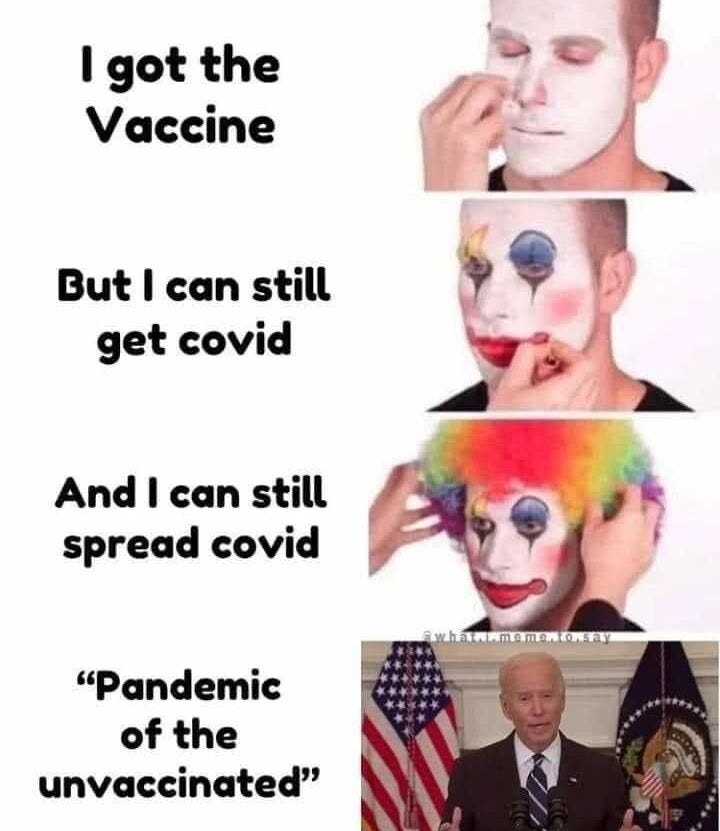
“Kyrie Irving, not taking the vaccine makes you look what I know you are not—which is flat-out stupid,” Smith spit in an unhinged rant in 2022. He accused Irving of having “an alarming level of self-righteousness,” as well as being untrustworthy, hypocritical, and selfish.
In other words, Stephen A. Smith wasn’t just drinking the Kool-Aid. He was whipping up drums and handing out pitchers.
But four years later, something Ripley’s Believe It or Not-level happened: Smith realized he had been wrong. And rather than quietly reaching out to Irving to make amends, or trying to rewrite history or gaslight his audience or even defend his prior position, he used his own media platform to issue a sincere, contrite, public mea culpa.
The irony is what finally broke the spell. It wasn’t the mounting evidence of Covid vaccine side effects and shortcomings—the elevated cardiac risks in young men, the Cleveland Clinic research finding each additional dose increased infection risk, the skyrocketing turbo cancers, the Florida surgeon general’s damning analysis, the perverse failure to prevent infection and transmission. No, it was watching Dr. Anthony Fauci squirm through a congressional hearing and refuse to answer for any of it: the lockdowns, the school closures, the six-foot-distance theater, the masking of toddlers—the whole ghoulish edifice of “the science” that completely crumbled under silent cross-examination.
“There were others who had the courage to say ‘bunk that’,” Smith said. “One of those people at the forefront was Kyrie Irving. I bring his name up because I had my issues with him from a leadership standpoint. Never as a player, because he’s sensational, but with him in terms of leadership. I didn’t look at [refusing the vaccine] as being courageous. I looked at it as being selfish.
I watched Dr. Fauci on Capitol Hill yesterday, and the person I thought about most was Kyrie Irving. Kyrie Irving stood out in my mind because of the heat that he was taking. In my opinion, particularly hindsight-wise, it didn’t make him stubborn or selfish. It made him brave. For his willingness to stand up and say, ‘Nah, I’m not doing that.’
Kyrie Irving did nobody wrong. We did him wrong. I did him wrong. And for that, I’m sincerely sorry. I just thought it was important to say that… I need to do better. I’m not alone, but I’m responsible for me. I need to do better. And I will.”
I can hear the furious objections already: Smith only apologized because the façade finally cracked! To which I say, yes. He did. That’s sort of how apologies work. People rarely admit they’re wrong when they think they’re still winning. The Fauci hearing made it impossible to sustain the illusion, and Smith—to his credit—acknowledged that fact. He could have done what every other Covid hardliner has done: dig his heels in even deeper. But instead, he accepted responsibility for his actions and asked for forgiveness.
It turns out, the Internet is made up of far fewer biblical scholars than one might have hoped.


Conservatives have spent the past half-decade demanding, “When are these people ever going to admit they were wrong?” And then when someone actually does, an alarming mob of them respond, “Too little, too late, go French kiss a wood chipper.”
I get the instinct. Forgiveness isn’t my default either. I can carry a grudge like it’s got a car seat and a college fund. But if we aren’t going to even flirt with the idea of grace, if we’re going to gloat forever in our smug, relentless rightness, where’s the incentive for anyone to ever change their mind? If the punishment for willful ignorance is eternal ridicule, and the punishment for expressing regret is… also eternal ridicule, congratulations. You’ve just created the moral equivalent of “heads you lose, tails you also lose.”
Is one sorry “enough?” No. Is it progress? Also no? Because if that’s the baseline, the only acceptable apology is one delivered by a time traveler. If you’re just another guy who says nothing, you can coast forever on a sea of anonymity. But the minute you speak out against the narrative, you’re burned at the stake. It’s like asking someone if they’d prefer a first-class upgrade or a punch in the face.
Imagine you’re Rachel Maddow or Stephen Colbert right now, watching Smith get eviscerated for saying, “I was wrong.” Now imagine (*it won’t be easy) that you’d had a similar awakening and were in the midst of drafting a humble confession. Do you think you’d continue fine-tuning it? Of course you wouldn’t! You’d close your laptop, pour yourself a scotch, and take that little revelation to the grave.
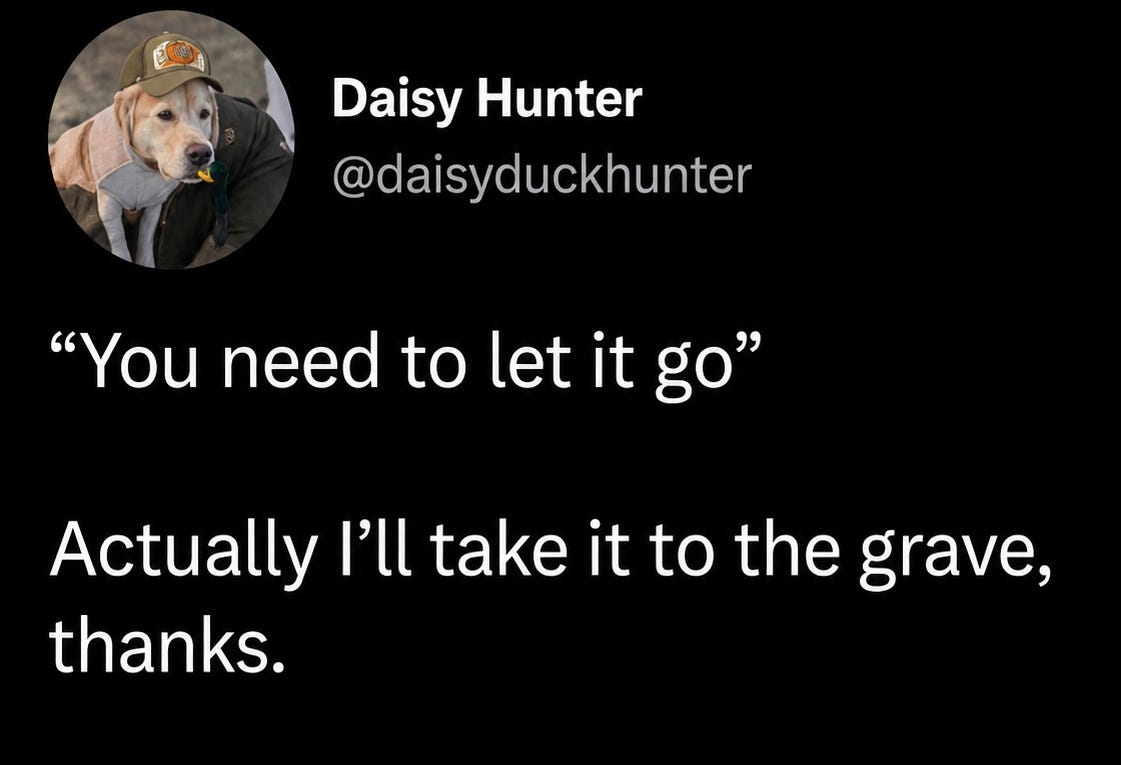
What’s tragic about that scenario is that the person who almost changed their mind isn’t just a coward. They’re one fewer witness for the prosecution; one less person admitting, “Yeah, we got played.” The Overton window doesn’t blindly swing on its own; it moves—incrementally—with every high-profile change of heart. We shouldn’t just hope for those; we should be hanging up giant neon signs that say, “Welcome to the party! Better late than never.”
In 2022, The Atlantic published a bold and infuriating piece titled, Let’s Declare a Pandemic Amnesty. My response at the time was essentially, “yeah, let’s not.”
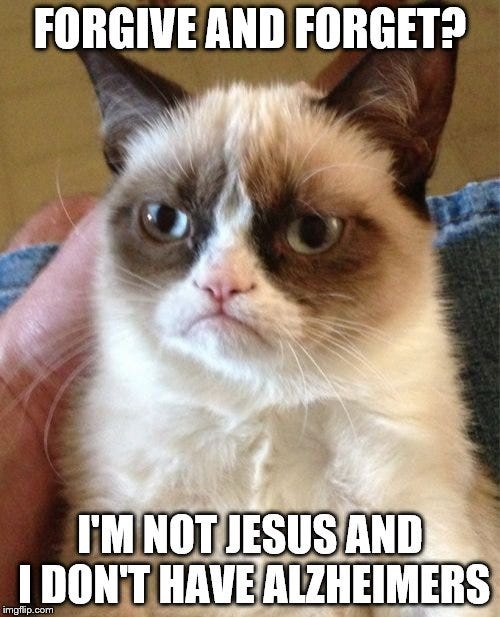
My take hasn’t changed. It’s not forgiveness I can’t stomach—it’s the blanket pardon that doesn’t require anyone to actually say the thing. The word amnesty comes from the ancient Greek word amnēstia, meaning “forgetfulness” or “oblivion.” The Atlantic literally asked the world to collectively agree with “we all did our best, some of us got it right, some of us got it wrong, water under the bridge.” Sure, let’s all willfully engage in some amnesia—that’ll make everything better!
Except, it won’t. We want apologies. Acknowledgment. Admissions. Remorse. Promises of reform. And a hugely public figure just delivered the complete repentance kit—without a gun to his head or anything. I say we take it… graciously. Otherwise, all we’re doing is inviting every reluctant Stephen A. Smith out there to double down, dig in, and die on a hill of deceit and denial.
P.S. Some generous supporters who aren’t fans of online payment platforms have asked if I could include a mailing address for donations, so here you go:
Jenna McCarthy, POPME
POB 342111
Lakeway, TX 78734
(If you mail a contribution, kindly DM me so that I can add you to the paid subs list!)
The first step toward reconciliation is the acknowledgment of wrong doing.
And it is up to us to give grace. God’s word tells us to forgive - seventy times seven.
It does not tell us to forget.
Excellent post Jenna. ❤️
I’m still waiting for people to apologize to me for their bad behavior simply because I was trying to point out the obvious lies, inconsistencies, and crimes against humanity. But you know, ….pride. I’ll be waiting a while I guess