

Language is a funny thing. Like shots can be festive or deadly. “This is sick” might be a compliment or a diagnosis. “We killed it” could be something you shout after a group PowerPoint presentation or mutter during a murder-trial confession.
Context, in other words, matters bigly.
Take diversity, equity, and inclusion. (Please! Ba-dum-bum.) Individually, they’re three concepts most normal people would be hard-pressed to categorically oppose. Diversity suggests variety. Equity implies fairness. And—unless you’re a middle-school mean girl deciding who gets to sit at your lunch table—inclusion is generally considered a virtue. But capitalize the trio and smash them together in their prescribed order, and the resulting acronym becomes a controversial corporate buzzword, a political grenade, and arguably one of Donald Trump’s favorite things to take a flamethrower to.
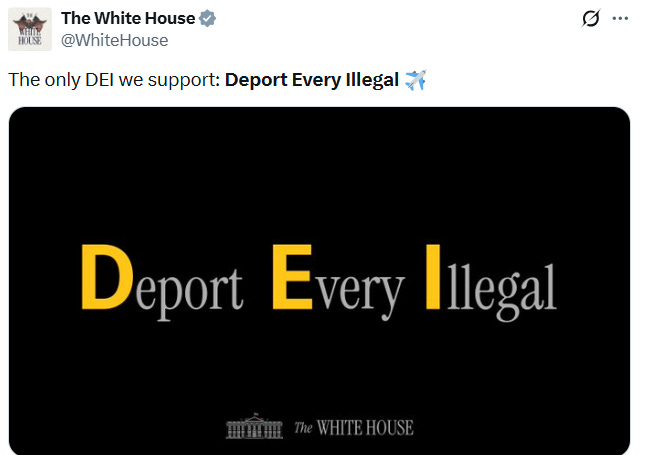
The effort to make American workplaces look less like the cast of Mad Men has been rattling around America since the Civil Rights Act—but the modern, acronymed-up version really hit the gas after George Floyd’s death in 2020. Companies issued solemn statements, pledged piles of money, and rolled out trainings and initiatives meant to make their ranks more representative and less likely to produce a viral discrimination lawsuit. If Pantone had a Position of the Year™, 2020’s would have been Chief Diversity Officer.
Then Trump won back the keys to the White House. On his second first day in office, POTUS ordered federal DEI programs dismantled. A day later, he revoked longstanding affirmative-action requirements for federal contractors and started going after the private sector. Picture a bull in a china shop but with far less finesse and way more carnage.
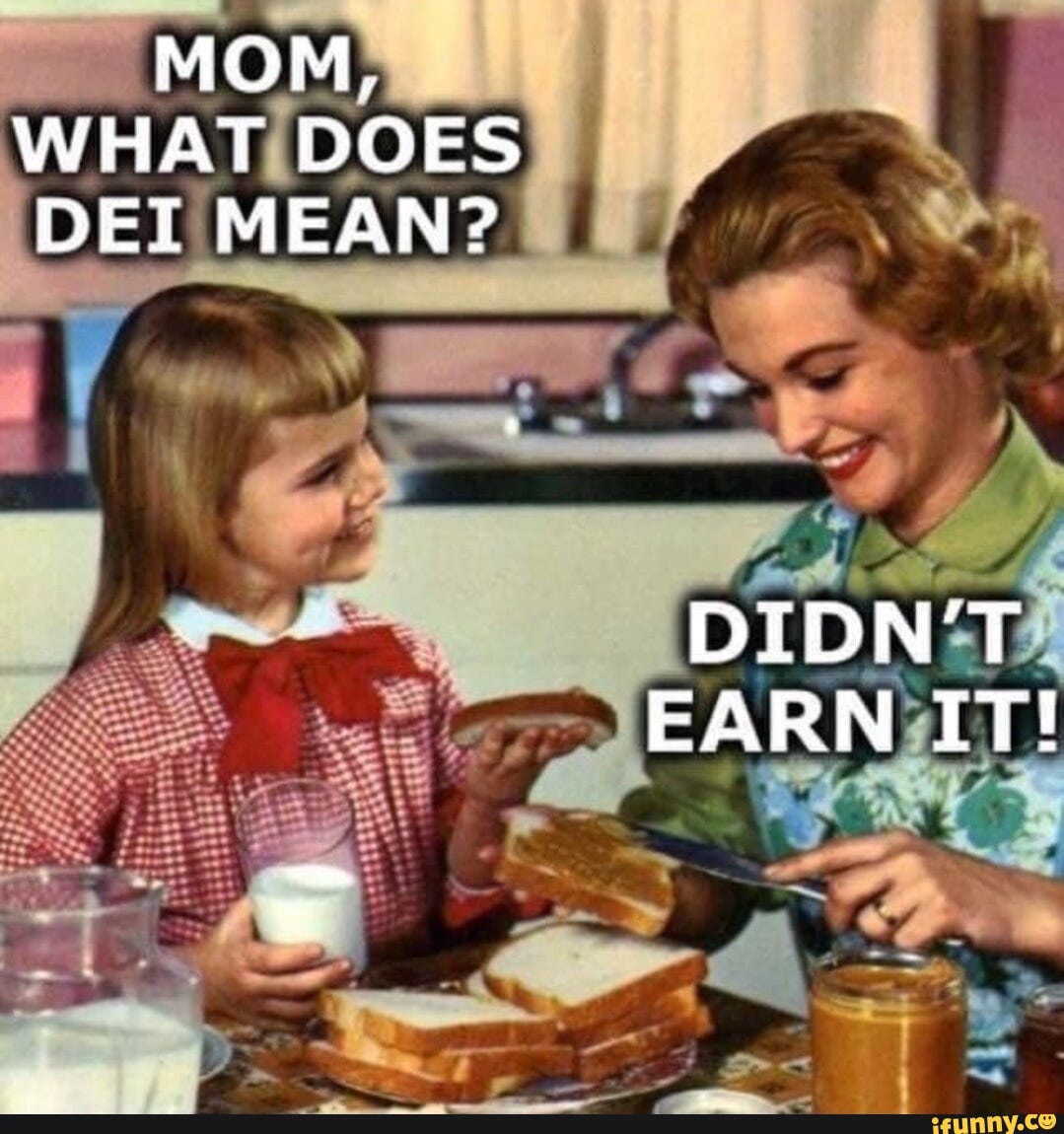
Trump continued to treat “DEI” less like a set of employment policies and more like an invasive species of mold that had gotten into the HVAC. He’s pushed agencies to eliminate DEI offices, jobs, grants, contracts, and requirements, and encouraged scrutiny of companies, schools, and institutions he believes are illegally favoring certain candidates. Basically, he’s not missed a single opportunity to help turn a once-boring HR initialism into a full-contact political blood sport.
But apparently, DEI is a resilient SOB. According to USA Today, despite Trump’s valiant and relentless efforts to annihilate it, the woke-workforce agenda is making a surprising bipartisan comeback.

I’m sorry. It is?
This headline is basically suggesting that Republicans spent the past two years railing against all things DEI only to wake up one morning, gaze upon their tragically homogeneous cubicle farms and think, You know what this accounting department needs? A lesbian Samoan.
Except that’s not quite what this “exclusive poll” revealed.
In the survey designed for USA Today, Gallup found that 71 percent of Americans believe businesses with diverse workforces are more profitable, while 75 percent think diverse workforces produce more innovative products. Both numbers have risen substantially since last year, including among Republicans. Neither figure is particularly shocking.
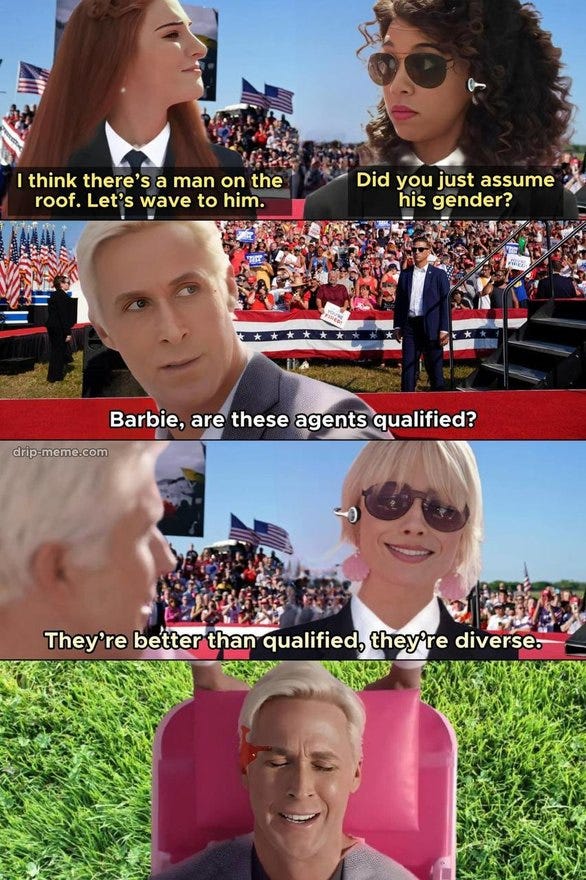
The numbers are also mostly meaningless. Seventy-one percent of Americans can believe that eating a Pop-Tart before a quarterly earnings call increases profitability; Gallup still hasn’t established that it does. Similarly, agreeing that people with different backgrounds, experiences, and perspectives can make a company better isn’t the same thing as endorsing Diversity, Equity & Inclusion™—no matter how hard the mockingbird media tries to spin it.
The actual political and legal battle over DEI has never really been about the pros and cons of diversity. It’s been about how that diversity is achieved: through institutional policies that prioritize race or sex in hiring, promoting, training, and other employment decisions—policies that tend to favor a certain fair-skinned, notoriously toxic demographic the way AARP favors toddlers.
Which makes another detail in USA Today’s own story particularly relevant. This week, the Justice Department announced that IT consulting firm Accenture had agreed to pay $25 million to settle allegations involving its employment practices. The DOJ alleged that Accenture discriminated based on race and sex in hiring and promotion decisions and reserved certain training, mentoring, and leadership programs for employees of particular demographic groups. You know, diversity and inclusion—just not for everyone. (White guys, you’re on your own!) Accenture settled the case without admitting any wrongdoing.
“I did not back into your Tesla! Here’s fifty grand anyway,” said no one ever.
While USA Today is very busy trying to sell a bipartisan DEI comeback, the actual numbers are considerably less triumphant. Its own poll found that 46 percent of Republicans believe diverse workforces produce more innovative products. It’s a decent number (although among Democrats, the figure is 94 percent). But far more tellingly, only 37 percent of Republicans say promoting DEI should be an important priority for businesses—compared with 49 percent who said the same thing in 2024. (If that’s a comeback, someone should tell Bed Bath & Beyond to fire up the coupon printer.)
Forbes ran its own version of the “breaking story,” cherry-picking the equivalent of a vaccine’s relative efficacy figure to slap in its headline.

“Americans believe more than ever that diverse workforces make businesses more profitable, according to a new Bentley University-Gallup survey,” Forbes wrote, “a shift that cuts across party lines even as Republicans remain far more skeptical than Democrats or independents [emphasis mine].”
USA Today, bless its biased, partisan heart, credited a “growing rank-and-file buy-in” with “driving a quiet thaw across party lines.” That’s not what I see. What I see is maybe—just maybe—proof that Americans are capable of holding two thoughts in their heads simultaneously:
THOUGHT ONE: A company comprised entirely of 47-year-old white guys named Todd probably isn’t churning out the most inventive widgets on the planet.
THOUGHT TWO: We shouldn’t decide who gets the job based on the color of his or her skin.

The real surprise here isn’t that Americans recognize the obvious value of working alongside people with different backgrounds. It’s that so many journalists and corporate spokespeople still insist on treating that banal observation as a ringing endorsement of the entire diversity-equity-inclusion industrial complex. Because if “Republicans are embracing DEI,” somebody might want to tell the other 63 percent.
A regular reader told me yesterday that she often can’t read the poll responses on her phone and therefore has to guess at the answers, which seems less than ideal. 😂 I agreed this was unacceptable and promised to start typing out the poll questions and responses in the body of the Stack. Hope this helps!
According to this exclusive Jenna’s Side poll, what did you learn today?
Diversity ≠ DEI.
Polls are dumb.
All news is fake news.
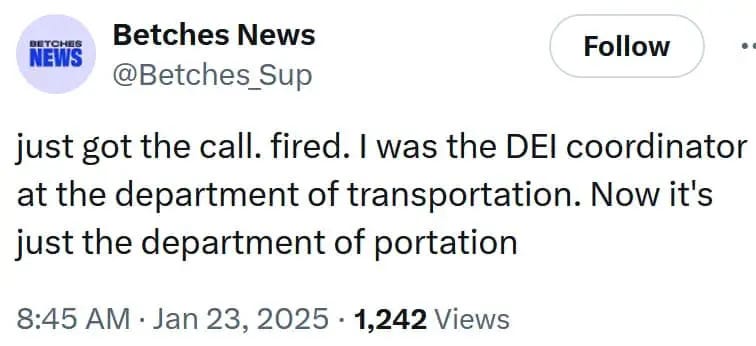
The U.S. has a potation department.
*combo/unsure/other
Thing is - most of us aren't opposed to diversity when it happens naturally. We're opposed to forced diversity to meet a quota. It quickly becomes obvious when someone was hired for that reason rather than their ability to do the job. There's been a lot more "noticing" lately and that's apparently verboten....
George Floyd was not murdered. I work with 4 white women. I hire qualified people who have critical thinking skills and are not easily offended.