

I could smell the methane as soon as I read the headline: “Unlike RFK Jr., I Don’t Want A Cure For My Son’s Autism.”
“My son’s smile means everything,” the piece begins. And for a moment, you think: Aww, sweet. We’re about to hear about resilience. Hope. Maybe even a breakthrough.
But then the story unravels like a Hallmark special directed by Kafka.
Lucas is 14, “nonverbal and full of joy.” His father James describes their relationship like this: “Gestures. Silent routines. Sometimes, it’s just instinct. Like a friend across the room during a boring business meeting, I can tell what he’s thinking simply by looking in his direction.”
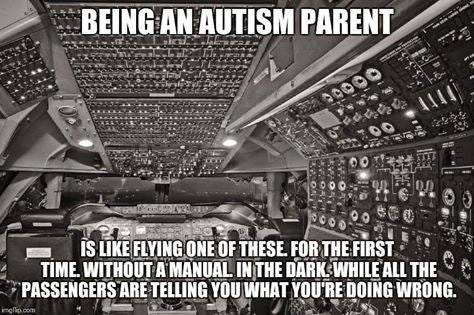
I don’t doubt that Lucas is adored, or question James’ sincerity. He loves his son unequivocally, as any good parent would. My question is: Who, if given an actual choice, would pick this life for their child?
This is where the gaslighting starts to slip in. The writer quickly pivots from acknowledging the very real pain, fear, and confusion of those early days (“I was terrified—not of my son but of the world and what it might take from him”) to an almost monastic embrace of suffering:
“I feared a life full of explanations and misunderstandings. And honestly, some of that came true. But so did things like peace, love and self-realization. All the things I thought might disappear with the diagnosis ended up defining our story in a different, more beautiful way.”
Peace. Love. Self-realization. Beauty. This isn’t finding a silver lining; it’s spray-painting the cloud gold and giving it an Instagram filter.
There’s a moment where the author describes trying to explain to his toddler that pizza has to cook. He says, “I’d enunciate ‘It has to cook,’ louder and slower, like a frustrated tourist.” And now, years later, when he puts a pizza in the oven, Lucas understands that Dad will call when it’s ready.
“Does he understand the act of cooking?” James wonders. “I don’t know. Does he understand the passing of time? Minutes? Hours? I have no idea. But he doesn’t have to, because he trusts me.”
My heart aches for this man and his son. I know that’s the opposite of what James wants, but it’s the truth. And also: why is it callous to acknowledge that a child not stomping and shouting until the pizza finally emerges from the oven is a heartbreaking bar? Don’t get me wrong; I understand that this is a win for this family—for countless families. It’s also profoundly tragic. The two things are not mutually exclusive.
At this point, the essay stops describing and starts deflecting.
“That’s why it’s so jarring when someone drops into the comments section below a post I’ve written about my irreplaceable boy with the latest miracle cure… Their suggestion is that something must be wrong. Something needs to be fixed. But the only people who think my son needs fixing are the ones who don’t know him.”
So, if you believe that every child should have the right to speak, to be independent, to live without constant supervision, to avoid a life of institutional vulnerability—that’s a you problem. Got it.
Next comes the outrage at RFK Jr. for having the nerve to want to figure out what causes autism:
“It’s the mindset behind it—that autism is something dangerous that must be tracked down and erased… Because when they talk about eliminating autism, they’re talking about eliminating people like my son.”
There it is. The sleight of hand.
No one is talking about eliminating Lucas. No one. We’re talking about eliminating whatever environmental time bomb derailed his development so his future could have been shaped by choice, not by constraint.

And maybe—just maybe—that’s part of what’s going on here. Because if a cause is ever nailed down, it could come with a gut‑punch of guilt. What if it turns out to be something in the house, the water, the choices made before anyone knew better? If you’re James, maybe it feels safer to wrap your arms around the mystery than to risk opening a door that might point a finger, however unfairly, back at you. That’s just human nature.
Like others I’ve read like it, this essay makes it sound as if acknowledging suffering equals rejecting the person. And so, somehow, a condition that steals communication, independence, and safety becomes reframed as a feature you’d select from a drop-down menu if given the opportunity.
And here’s the thing: Lucas sounds wonderful. He also sounds like a kid who deserves more than to have “waits patiently for pizza” be the milestone everyone celebrates.

This is the part that knocks the wind out of you if you read between the lines:
“My son might not say ‘I love you’ with words. But I hear it when he reaches for my hand… It wasn’t language that brought us closer. Love and time did.”
No one is denying or diminishing that. No one is suggesting that Lucas isn’t lovable or deeply loved—or that he would be less of either of those things if he were neurotypical. My daughter has anxiety. I do not love her because of or despite this; it’s simply part of who she is and I wouldn’t change a thing about her if you held a gun to my head.
But given the choice, would you ask God specifically to give you a child who can’t tell you if he’s hurt, or scared, or bullied, or lonely—or one who suffers routine, debilitating panic attacks? (*I’m not saying you wouldn’t ask God to bring a child like this into your life because you know you’d love and protect him fiercely; I’m asking whether you’d ask God to make him this way from the start.)
The world gaslights parents into pretending these hardships are noble, that wanting answers is cruel, that pain equals purpose, and that looking for causes is the same thing as denying a person’s worth. So we applaud them for being martyrs and romanticize their suffering and refuse to admit that deep down, every parent wants the same thing: the knowledge that their child can survive—maybe even thrive—without them someday.
“There’s no one like my son,” James wrote. “[Lucas is] not a problem. He’s not a tragedy. He’s my child. And I wouldn’t change him for anything.
And if you knew him like I do, you wouldn’t want to change him either.”

Isn’t that the whole point of being a parent—to love your kid exactly as they are, to find what lights them up, and to celebrate it—even if it looks nothing like what you imagined? If a former college quarterback ends up with a kid who can’t throw a ball straight but writes breathtaking poetry, he doesn’t waste a decade yelling “Go long!” at a kid holding a notebook. He learns their language, claps like crazy at poetry recitals, and teaches them how to stand tall—even without cleats.
This isn’t about wanting to change Lucas.
It’s about asking if it might have been better if he hadn’t been saddled with a lifetime of hurdles in the first place.
James seems like a wonderful, loving father—and Lucas is extraordinarily lucky to have him. So… am I a horrible person for finding his story sad? LMK (nicely, please) in the comments.
Where I live, having a special needs child is like wearing a badge of honor. I agree with you and the parents that loving your child is unconditional. Regardless of their trials and shortcomings. But that parental "badge of honor" is to shield the parent not to help the child. We owe it to our children to strive for the best environment for their growth and happiness. Including finding the causes and a solution to autism.
I submit that James is being disingenuous in his article, and started w the premise that RFK is the devil and wrote a heartrending account of his child to make an emotional argument.
This is how these people are, from Pelosi and Schumer to James here. Take a position, usually politically-based, and construct an emotional plea to argue it. We see it w immigration, trans, education and everything else.
This guy isn’t the idiot, his readers are being suckered.