

I didn’t want to write about Lindsay Clancy. I really didn’t. Not the first time or the second time, honestly. But this case has become impossible to ignore (I know, Vee; that’s the entire point of it), albeit not for the reasons mainstream media would have you believe.
The world watched breathlessly while a murder trial morphed into a national referendum on motherhood, mental illness, and whether women are emotionally stable enough to sit on juries—or even to have the right to vote at all. In the last few weeks, however, an entire counter-narrative has crystallized around two words: “Patrick said.” And suddenly the debate shifted from whether insanity excuses murder (spoiler: it doesn’t, never did, and never will) to questions of due process, reasonable doubt, and whether “fair and impartial” means anything when guilt has been pre-baked into the premise like a plastic baby in a king cake.
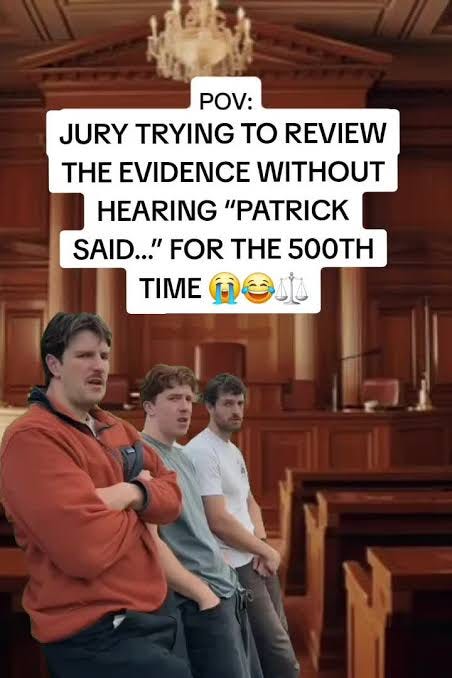
Intrigued by the proliferation of “Patrick said,” I accidentally did something crazy. I watched the trial. Not all of it—the thing spanned 180 hours over 28 days—but enough of it to realize that “Patrick said” isn’t a fringe delusion. It’s a legitimate challenge to an accepted narrative, especially when you consider that the fate of not just one woman but potentially the whole lot of us rests on a version of horrific events supplied by a single person.
To be clear, last week, I was 100% Team Lindsay Belongs in Prison. There wasn’t a generous bone in my body about it, either. I was appalled by her fangirls. I was sick over the defense strategy. My stance could best be summed up as “IF YOU KILL YOUR CHILDREN OF COURSE YOU’RE INSANE BUT THAT DOESN’T EXCUSE YOU ONE TINY IOTA, BEST I CAN OFFER IS ‘WOULD YOU PREFER LETHAL INJECTION OR THE CHAIR?’”
But when I actually looked at the case that had been presented (and I’m not talking about the endless parade of armchair private eyes breaking down the claims, although I consumed my fair share of that content, too) instead of the headlines, I understood why the meme took hold.
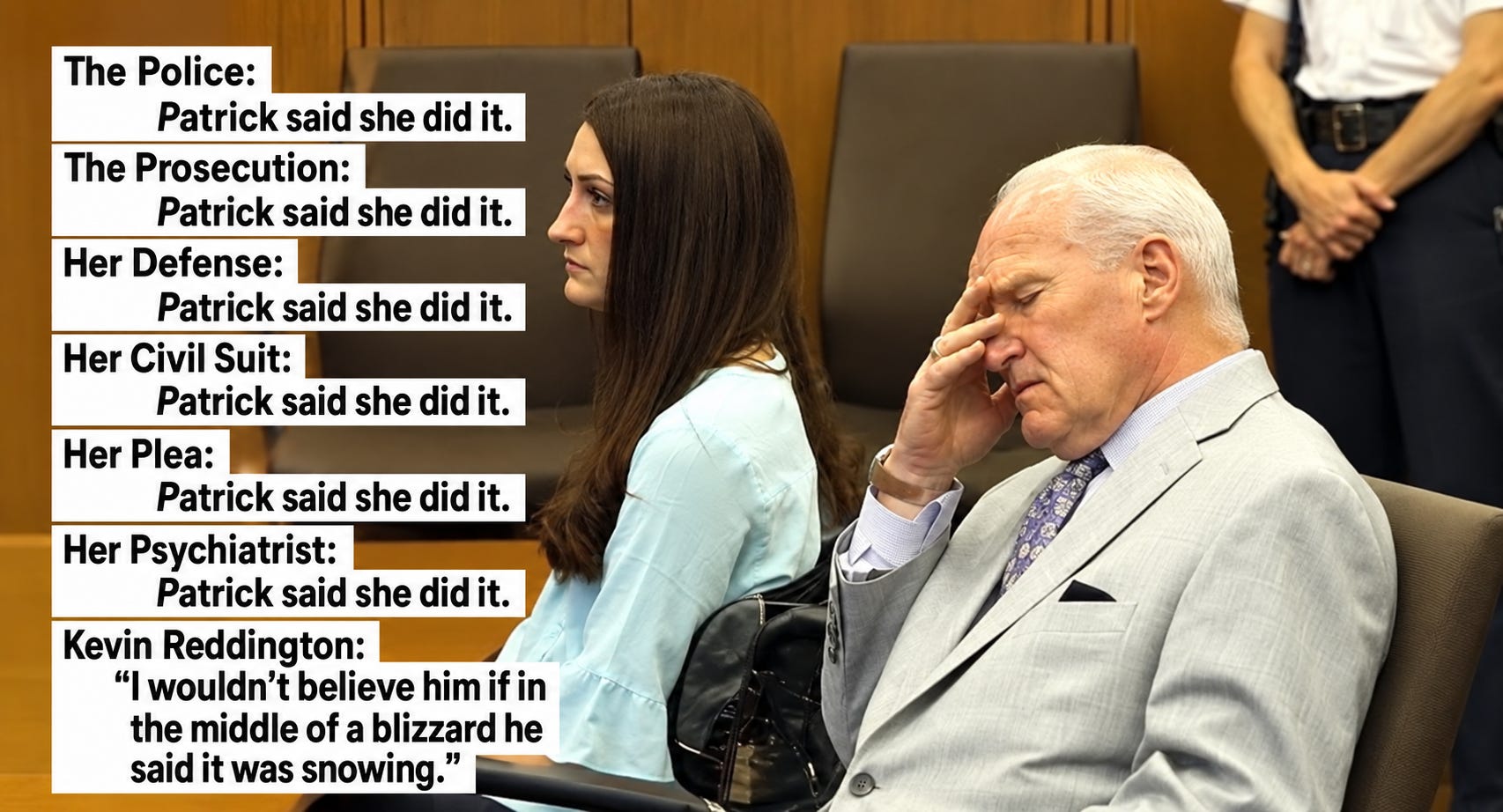
Because every argument against Lindsay Clancy, every chipper “she deserves the electric chair” quip from a conservative Christian, every rant about toxic empathy begins and ends with the same statement: She admitted to killing her own kids. The media assured us of this over and over in giant bold type. It was settled fact. The only thing the jury (and therefore, the remote jury pool which I had enthusiastically volunteered to serve on) had to decide was whether she did it willfully or in a drug-and-hormone-induced psychotic stupor.
JUROR #13 [*looks suspiciously like me*]: “Why does that even matter? Three children are dead. Sorry “the system failed you” but it fails lots of people who don’t murder their kids. Good luck on Judgment Day, sis. And in the meantime, enjoy your three squares.”
Enter “Patrick said.” Until those two words were trending, I had no idea the “confession” everyone kept referring to doesn’t actually exist. There is not a recorded police interview, a signed statement, or an account in which Lindsay independently describes taking three resistance bands, putting them around her children’s necks, and strangling them. There is no video of that, no audio of that, no contemporaneous statement in which she narrates it herself.
Yes, later, Lindsay signed an affidavit agreeing to a version of events, but by then, her legal strategy was locked in. There is also the insanity defense, which the public—and the media—has treated as an admission. But neither is the same thing as an independent confession.
And that distinction matters, because every detail Lindsay has later repeated about that dreadful day was first supplied to her by someone else.
You killed your three children. You told your husband so. Then you tried to kill yourself. That’s what happened. Did you mean to do it or were you off your rocker?
Remember when it turned out that the prescription sleep-aid Ambien could impel people to “sleep-drive” with zero recollection of having done it? Imagine waking up in a hospital and being told that you’d gotten up at 2 a.m., piloted your Prius across town, broken into someone’s home, cooked a four-course meal, and then wrapped your vehicle around a tree on your way home. You have no competing memory. All you know is that something catastrophic happened. The people around you—people you trust—seem to know the details. You were drugged! It wouldn’t take long for “they told me I did it” to become “I guess I did it.”
At her initial arraignment, which she attended via Zoom from her hospital bed, Lindsay pleaded NOT GUILTY. She entered the same plea again at her Superior Court hearing nine months later. Every time, to every charge. I’m not saying that denying a crime makes you innocent. But “not guilty by reason of insanity” also isn’t necessarily an admission of guilt; it’s a procedural move. It’s what you’re left with when you ask the judge to make the prosecution prove your client committed the crime before you’re forced to defend her sanity—and the judge says no.

And that’s exactly what Lindsay’s attorney, Kevin “Big Red” Reddington, tried to do. Before the trial even began, he asked Judge William Sullivan to bifurcate the proceedings, which is legalese for splitting the whole circus into two parts. First, make the Commonwealth convince a jury that Lindsay had killed her children. If they succeeded at that, the trial would move on to whether she was of sound mind when she did it.
The Judge refused.
So instead, everything went before the jury at once—which meant Reddington had to present an insanity defense for murders his client was simultaneously pleading not guilty to committing. Think about how completely that changes the framing. The moment your lawyer starts calling psychiatrists to explain why you weren’t responsible when you strangled your children, the question of whether you strangled them in the first place has pretty much left the building.
For three years, we’ve been arguing about postpartum psychosis, psychiatric drugs, intrusive thoughts, and whether insanity should excuse a mother for murdering her children. Meanwhile, contemplating what “Patrick said” forces a narrower question that almost nobody—including me—stopped to ask: Did she even do this? Because the entire global belief system propping up the fact that she did came overwhelmingly from a single source.
Lindsay had intrusive thoughts about harming the children, Patrick said.
Lindsay was suicidal, Patrick said.
January 24 was one of her “best days,” Patrick said.
Lindsay always took her medication as instructed, Patrick said.
There was blood “everywhere… it looked like it was sprayed with a hose,” Patrick said.
The powder in the cup by her bed was crushed medication, Patrick said.
Lindsay told Patrick, “I tried to kill myself,” Patrick said.
There’s a reason “Patrick said” has become not just a meme but the literal soundtrack of this trial. Who suggested the CVS run? Patrick said Lindsay did. Whose idea was it to get Pedia-Lax for Cora? Patrick said it was Lindsay’s. Why didn’t Patrick call 911 sooner? Patrick said his phone was toggling between data and Wi-Fi. Who established what time he left the house, what he saw immediately before leaving, what happened when he returned, and what Lindsay supposedly said when he found her? Patrick, Patrick, and [*checks notes*], Patrick.

It was Patrick, screaming into his phone on the 911 call, who first and irrevocably established his wife as the murderer: “She killed the f*cking kids!”
How the hell did he determine that? If I came home and found my spouse critically injured beneath a second-story window and then discovered my children had been strangled, I’m pretty sure my first thought would be OMG WHO DID THIS TO ALL OF YOU? Promptly followed by, are you going to be okay and maybe is there still a murderer in my house?
Patrick, on the other hand, went straight to look what she did.
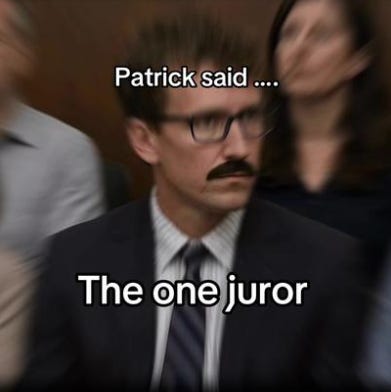
Obviously, that doesn’t prove or even suggest Patrick was lying about anything (only Patrick lying proves that). But it does underscore a stark reality: Patrick was a source. Essentially, he was the source. And when so much of the accepted account of a triple murder comes from the person with arguably the greatest stake in the investigation’s outcome, his statements should be treated as claims to verify—not facts to accept as gospel. Somewhere along the way, that distinction disappeared.
Wholly unimpressed, the internet launched “Patrick Said.” People are comparing his testimony with the 911 call, photographs, surveillance video, medical findings, and earlier statements. Not necessarily because they all believe it was Patrick who murdered those children—although scores certainly do—but because once you discover how much of the story depends on one man’s account, at least a few folks are bound to ask how thoroughly that account was verified.


I want to be very clear about one thing: I am not saying Patrick Clancy killed his kids. I’m saying maybe someone should have to prove that Lindsay Clancy did before sentencing her to life in prison without the possibility of parole.
Believe me, I know lots of people—I was one of them—have already convicted Lindsay in their minds. Because she “admitted it,” or because it seems the most likely scenario and they just want closure, or because entertaining any other possibility feels like betraying the children, or maybe because Patrick said and he seems like a believable dude. Complicated, emotional trials beg us to pick a side, plant a flag, and defend that position at all costs. Changing your mind requires a certain tolerance for discovering—and admitting—that you were spectacularly wrong. Not everyone enjoys that as much as I do. And not everyone has figured out yet that repetition and coordination don’t magically make something true. #SafeAndEffective
I’m not here to solve a murder. I don’t want to calculate how many minutes it takes to strangle—or resuscitate—a toddler. I don’t want to reverse-engineer how quickly a catastrophically injured woman’s core temperature can drop to 82 degrees on a January night in Massachusetts. I don’t want to analyze timestamps and Google maps and potentially-altered evidentiary photos. I don’t want to spend six hours enhancing pixels from a CVS security camera until I qualify for an honorary degree in forensic podiatry. I don’t want to play connect-the-dots between the families involved and the prosecutors or speculate about psyops or agendas or extramarital affairs.
I’m merely reporting on a meme, one that seems to be asking some pretty straightforward questions that the defense didn’t. Like, why didn’t investigators… investigate? How did the husband of a woman found nearly dead beneath an upstairs window, whose three children were simultaneously discovered strangled in the basement, become the narrator of the crime rather than a potential suspect in it?
According to roughly half the internet, you are clinically psychotic if you say that last part out loud—which is funny, because it’s basically Homicide 101. When someone is murdered, investigators start with the people closest to the victim and work outward, ruling them out with evidence and alibis as they go. In this case, the evidence was self-reported, the alibis are being questioned, and generally speaking, “ruling someone out” ought to involve a tiny bit more than “So you say your wife did all of this? Well, okay then.”

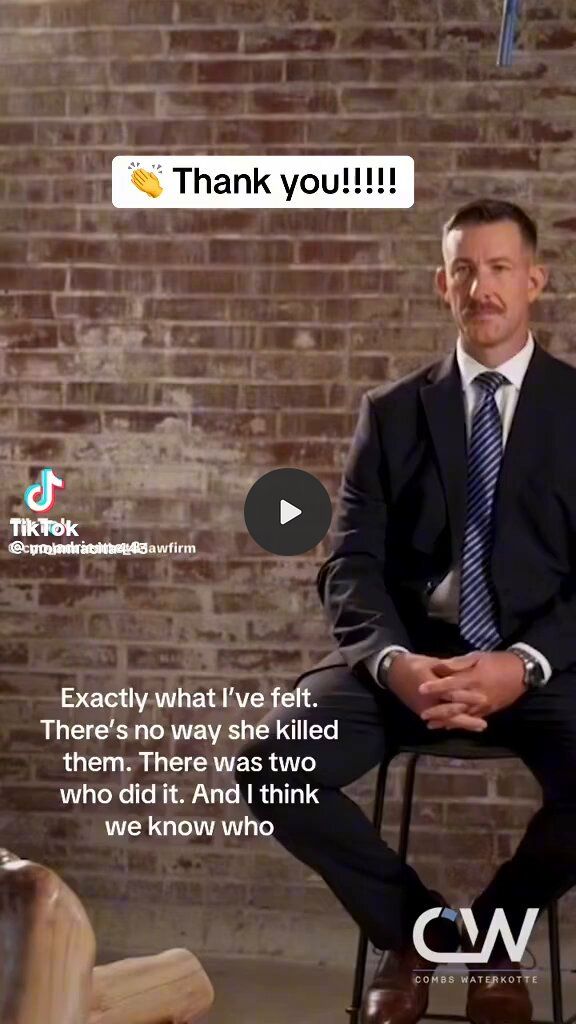
That’s “Patrick said” in one sentence. Because Patrick wasn’t some random witness who happened upon the scene. He was the other adult in the house. The only other adult. And, according to a growing mountain of internet intel—some of it admittedly bananas, some of it considerably harder to dismiss—there are questions about his movements, his motives, his statements, his relationship with the woman he later married, his finances, and his connections that thousands of diligent TikTok sleuths would still like answered.
Just so there’s no confusion about how far I’ve traveled down this particular rabbit hole: I am not sympathizing with a murderer. If there is actual evidence to prove that Lindsay Clancy killed her children, I stand by every sentiment I expressed at the beginning of this essay and the two that preceded it. I don’t think I can say it any more clearly: Mental illness may explain the unthinkable, but it doesn’t erase responsibility for it. Period.
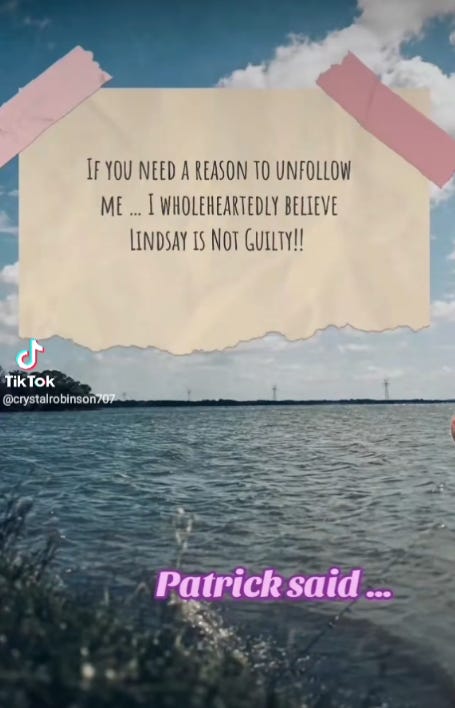
But “justice for Cora, Dawson, and Callan” isn’t convicting Lindsay Clancy because everyone already decided she did it. It’s making the state prove beyond a reasonable doubt that it has the right person. That shouldn’t be controversial or triggering. Anybody who cares about truth should demand it.
DNA testing could not conclusively connect Lindsay with all three murder weapons. Her fingerprints? Nowhere to be found on the knife she supposedly used to slash her wrists and throat. Eleven jurors were ready to acquit her. They were called irrational, unfit, and delusional. (I’m sure I’ll be called all of that and more just for quitting the lynch mob.) But clearly, after sitting through 28 days of testimony and deliberating for nearly 40 hours, they still had questions.
And maybe every one of those questions has an innocent answer. I sincerely, wholeheartedly pray that they do. And I also really hope those answers don’t begin with “Patrick said.”
*As always, I welcome dissent… but if you’re going to come at me for this one, kindly do me the favor of clicking at least a dozen of the links I provided and actually watching some of the trial. It’ll make our debates much more logical and productive. TIA.
Oof. That information shifts the frame a little. Thanks for doing the watching and reporting. No way I have the stomach for it. Agree that whoever killed the children must be held accountable. Even the mentally unwell must be accountable for their actions; otherwise we stop defining wrong as wrong and start relabeling it as mental illness. Where does that end?
I have to say Psyop when the information unfolds in a way that causes conclusions to change. You never get the full picture all at once. I believe that is intentional to leverage the fact that many people are unable to change their view once they have committed to it. They can't admit being wrong even if for a short time. It creates turmoil and arguments and division.
Thank you Jenna for always being able to change your mind based on facts, not previous assumptions. Thank you for digging in to a difficult subject that none of us want to spend the time on. It is what keeps the truth alive.