

Every once in a while the media “discovers” something that has existed for roughly the entire span of modern human civilization but nevertheless announces it like an auctioneer for the House of the Obvious. This week’s breathtaking revelation appears to be that governments sometimes produce… propaganda.

That’s right, the same institutions that brought you two unbroken years of dancing vaccine syringes, celebrity mask PSAs, brainwashing disguised as children’s programming, and a nonstop cable-news ticker of “Covid deaths” like the world’s most depressing stock market are shocked—shocked, I tell you!—to learn that the powers that be occasionally try to shape public opinion.
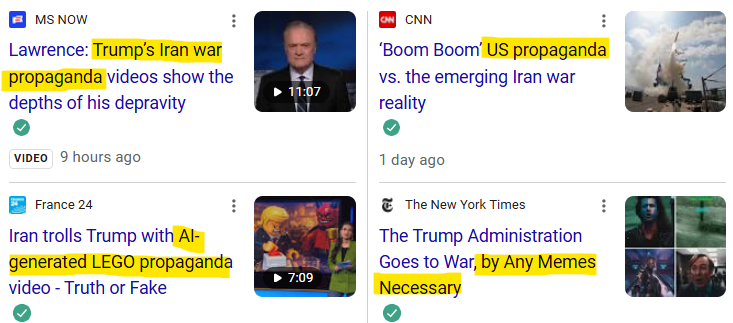
I know. Sit down before you hurt yourself.
The evidence, according to one deeply concerned analysis, is a series of slick, cinematic videos posted by the Trump administration, the Pentagon, and U.S. Central Command, highlighting American military hardware and successful strikes in the conflict with Iran. The clips feature dramatic music, slow-motion explosions, and the occasional administration official cameo.
CNN is accusing the White House of “meme-ifying war,” The Jerusalem Post went with “gamification,” while ABC is just generally horrified over the “hype videos” (which would be like trying to shame a catchy tune for being “dance music”). With all due respect, of course they look like memes. The battlefield of public opinion is no longer the evening news or even late-night lecture hour—it’s TikTok, Instagram, YouTube, and X.
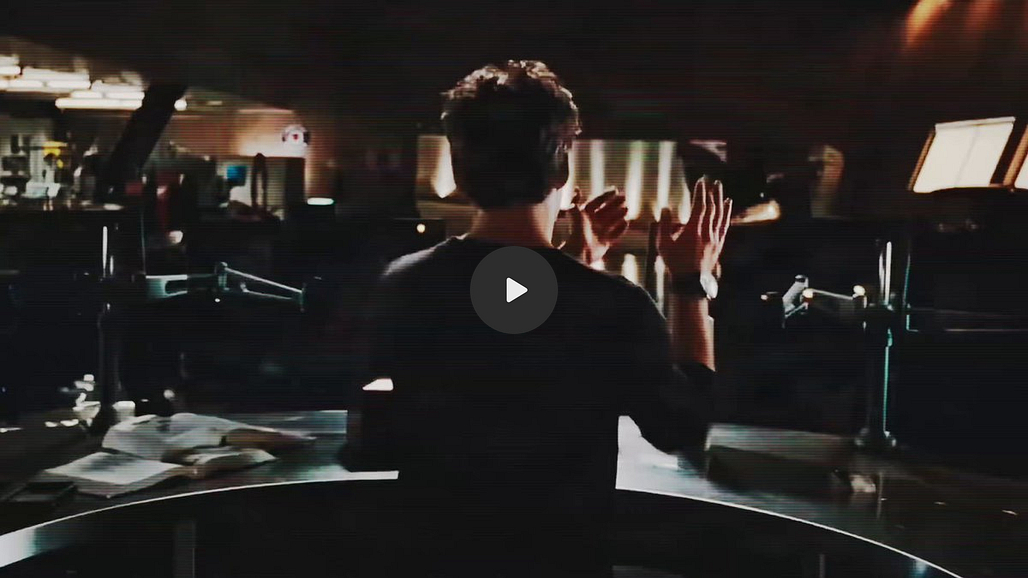
To be fair, some of the videos are over the top. They’ve got profanity and pop culture references and techno thumping and Call of Duty clips mixed in with real-life bombings on a loop with SpongeBob SquarePants asking repeatedly in between, “Do you want to see me do it again?”


One Hollywood-style war commercial (well, that’s what it is) released by The White House opens with “Wake up, Daddy’s home” (echoing Tucker Carlson’s controversial Trump analogy) before bleeding into a montage of movie scenes, cartoon combat graphics, and actual military footage. It’s loud. It’s a little shocking. It’s about as subtle as a Kardashian’s caboose in yoga pants. In other words, it’s totally, unapologetically Trump.
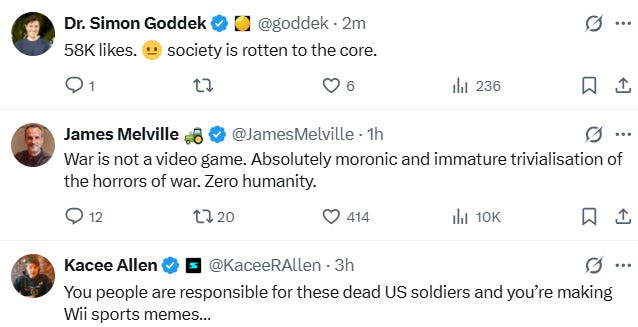
Triggered would be putting it mildly.
Let me remind you of the man we’re talking about here.
The medium may be new, the graphics may be… graphicker [it’s called poetic license], and the use of memes may embody peak post-millennial absurdity. But unless I’m misremembering the entire 20th century, governments have been doing a version of this for decades. During World War II, the United States produced entire Hollywood films designed to inspire patriotic fervor and boost support for the war effort. Posters of Rosie the Riveter and Uncle Sam were plastered across the country. War bond drives featured celebrities like Lucille Ball and Fred Astaire parading through the capital to cheering crowds and triumphant, stars-and-stripes music. The message was clear: America is strong, righteous, and deserving of all the support.
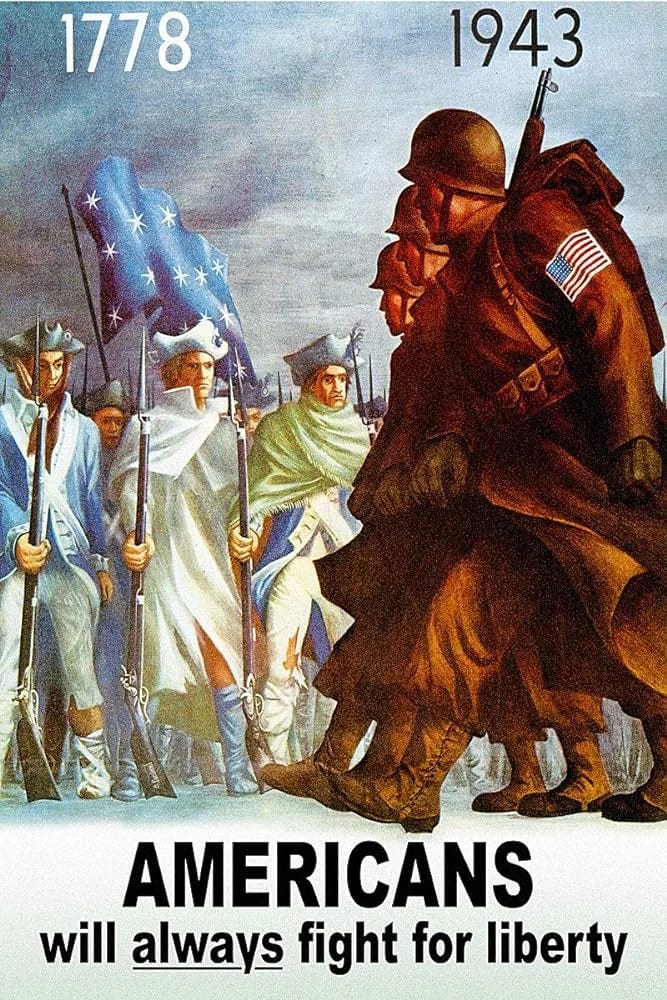
Propaganda, by definition, is “the dissemination of information—facts, arguments, rumors, half-truths, or lies—to influence public opinion, often conveyed through mass media.” Does the U.S. government engage in propaganda? You bet it does! (If NYC Mayor Bill de Blasio scarfing Shake Shack on air doesn’t live rent-free in your brain, consider yourself #blessed.) Has it done so under every administration since the invention of the radio? Also yes. Would it very much prefer that citizens not passionately oppose its habit of blowing things up overseas? One might assume so. And would broadcasting mangled limbs and infighting among military or executive ranks help with that objective? Call me crazy, but I suspect it would not. Why do you think the government shut down every vaccine injury website, group, and social media account?


The basic rule of wartime messaging has always been simple: show the bravery, the technology, the resolve—and quietly omit the blood. That’s an inarguable fact, not an endorsement, by the way. I do not support war or the glorification of it. My job is to pick up patterns, highlight hypocrisy, and mercilessly mock media stupidity. This topic nominated itself.
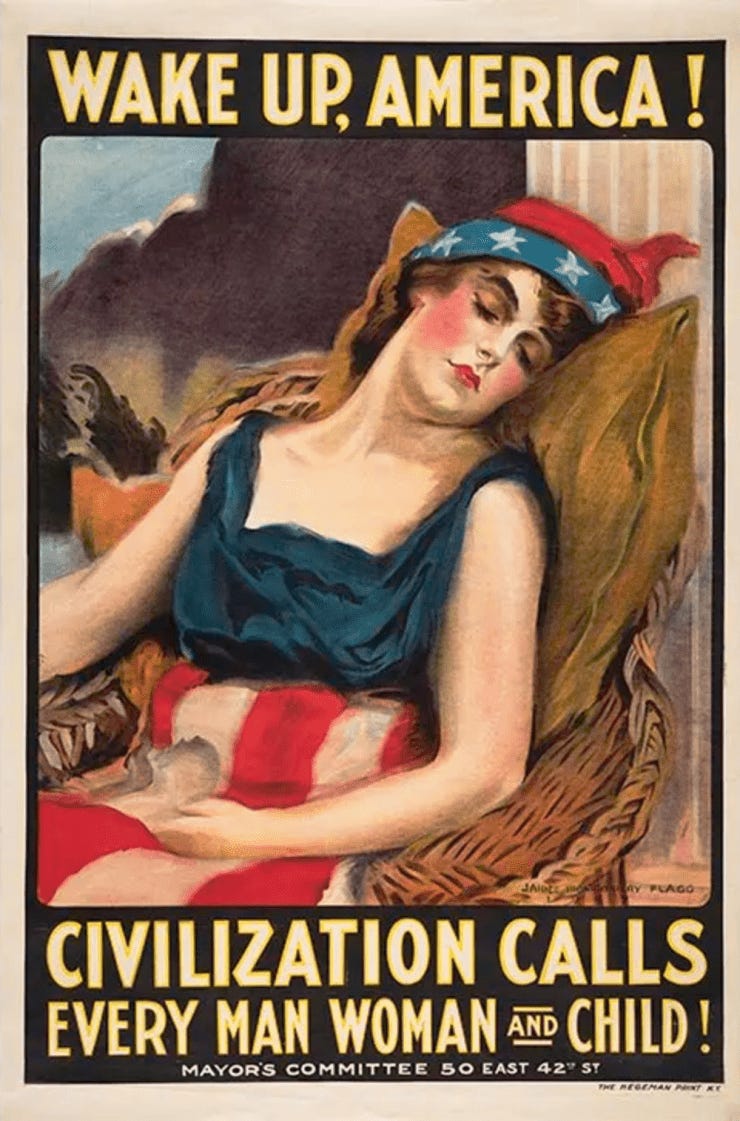
Seeing conflict packaged like an action movie might feel unsettling—but let’s not pretend Donald Trump invented the approach. The Pentagon has been partnering with Hollywood for ages. Frank Capra’s Why We Fight was a seven-film series literally commissioned by the U.S. Department of War to rally public support for the coming bloodshed. George W. Bush landed on an aircraft carrier beneath a massive Mission Accomplished banner. Top Gun, perhaps the most famous military recruiting advertisement ever made, was released with the enthusiastic cooperation of the U.S. Navy—both times.
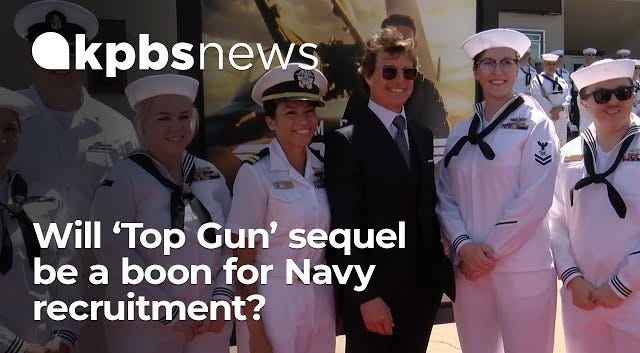
No one at CNN seemed especially alarmed about any of that, incidentally.
Nor did the media spend much time complaining when previous administrations highlighted successful drone strikes, special operations raids, or precision weapons systems in glowing terms. Cable news networks spent the opening nights of the Iraq War replaying “Shock and Awe” bombing footage on a loop like the Fourth of July over Baghdad—but apparently explosions only become offensive when they’re set to club beats. Presidents from both parties have appeared in carefully staged military footage designed to project strength and competence. The only real difference now appears to be that the current commander-in-chief is Donald Trump—and therefore everything must be treated as an unprecedented moral crisis.

The most striking part of the criticism isn’t even the outrage over the testosterone-soaked videos; it’s the selective skepticism. In the same breath that CNN warns readers about propaganda coming from the White House, it reflexively parrots casualty figures supplied by Iranian media after a missile strike destroyed a girls’ school in Minab.
It’s worth noting that the strike itself is not in dispute. Satellite imagery, geolocated video, and weapons analysis indicate that the school was hit during the opening wave of attacks, and early reporting suggests a U.S. Tomahawk missile may have struck the site while targeting a nearby Iranian Revolutionary Guard facility. If that turns out to be the case, it would be a tragic and unforgivable mistake. No decent person would argue otherwise. But the dramatic death toll circulating in headlines—numbers like 206 students and teachers killed—comes from Iranian officials and state-controlled media, with most outlets acknowledging those figures have not been independently verified.
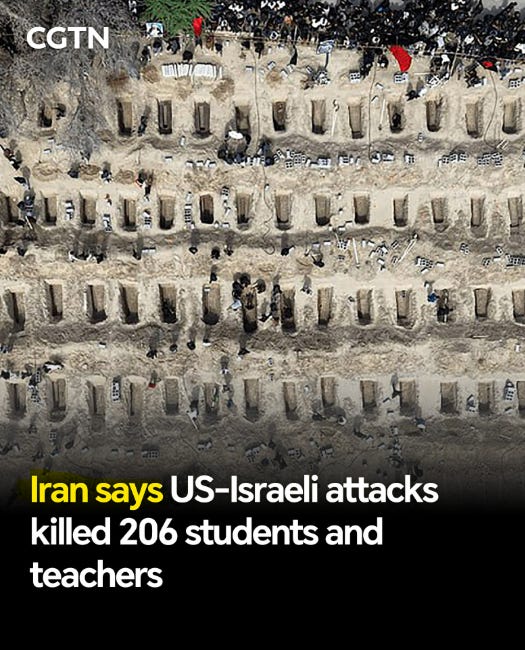
In other words: the missile strike is 100% supported by outside evidence. The casualty numbers being repeated around the world, however, don’t exactly come from a neutral, unbiased news source.
Which makes the lecture about propaganda feel a little uneven.
None of this means those figures are necessarily wrong. They may eventually prove accurate. But when a media organization spends several paragraphs warning about the dangers of wartime misinformation, it might be wise to apply that skepticism across the board.
Again, I’m not here to defend war, cheerlead for it, or pretend that any government’s version of events should be accepted uncritically. The fog of war is real, and information coming from every side should be treated skeptically. But acting as though cinematic military videos are some shocking new development in American history requires a level of historical amnesia that borders on parody.
Governments promote their wars. They always have. They emphasize victories and minimize mistakes. They highlight heroism and avoid broadcasting the worst consequences of violence.
It’s not honest. It’s not noble. But it’s also not new. The real novelty isn’t that governments show explosions—it’s that they’re now packaging them like Die Hard trailers. If Dwight Eisenhower had had Instagram during the Korean War, we’d probably still be arguing about the soundtrack.
Be kind to one another in the comments, okay? It’s rough out there. Let’s keep this space a refreshing outlier.
Being surprised that governments produce propaganda is rather naïve.
What we need is to educate our children to recognize the bias of propaganda, rather than being misled by it.
Covid was the greatest propaganda campaign ever unleashed and it still hasn't died.
I have many friends and family who are addicted to CNN. They are older (like me) and started watching CNN when it was the first cable news source. Since Covid, CNN has endangered the lives of my friends and family. Just yesterday, after the Islamic terror attacks at Old Dominion University and the Michigan Synagogue, one Jewish family member (CNN addict) did not think we have an Islamic terrorist problem. Her grandchildren attend a Jewish daycare.