

If you ever needed proof that real change doesn’t come wrapped in a velvety pink bow, look south: As you surely know by now, officials this week took out a major Mexican cartel kingpin—a man whose rap sheet read like a Mad Lib assembled by Satan—and almost immediately, huge swaths of the country lit up like a gasoline-soaked birthday cake.
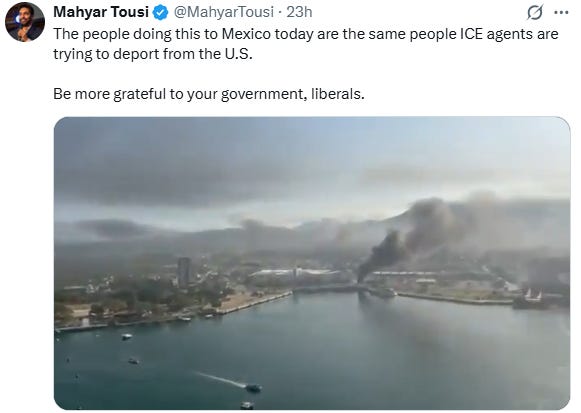
The clips online are surreal: streets barricaded, trucks burning, gunmen popping up like homicidal gophers, and residents and tourists told to shelter in place or risk being shot. (If you thought dismantling the world’s deadliest organized crime network was going to work like unplugging your Wi-Fi and plugging it back in, you must be new here.) And this isn’t happening in some remote cartel outpost; violence has torn across the country, even spilling into Puerto Vallarta, one of Mexico’s top tourist spots.

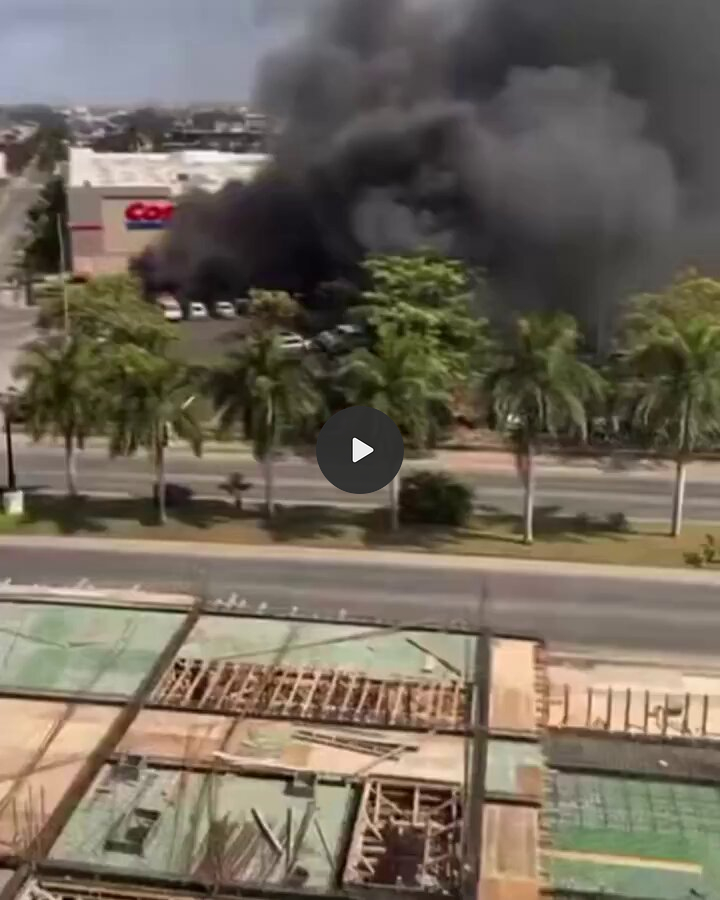
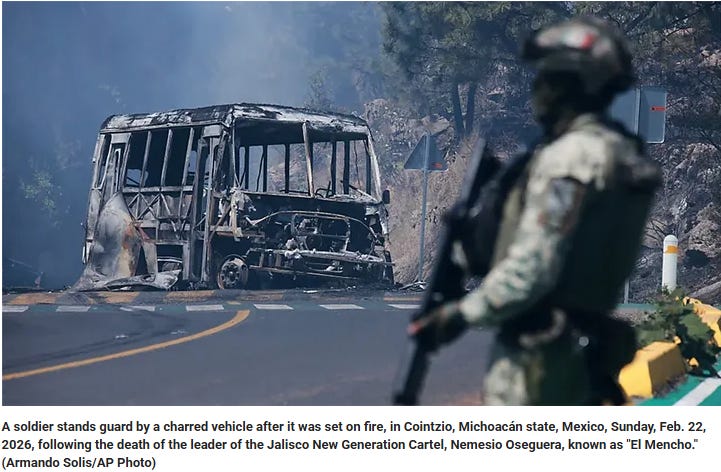
The drama began on Sunday when Mexican special forces—guided by U.S. intelligence—finally took down Nemesio Oseguera Cervantes, or “El Mencho,” the crime boss who trafficked fentanyl into the U.S., shot down military helicopters, planted landmines, and dropped explosives from drones. As one might imagine, the Jalisco New Generation Cartel (CJNG) was not happy with the sudden, unexpected restructuring of its executive suite.
More than 70 people were killed in a single day, including 25 National Guard members ambushed in six coordinated attacks. Chaos ensued, with civilians caught in crossfire, thousands stranded, flights canceled, banks and supermarkets engulfed in flames, entire cities across 20 of Mexico’s 31 states shut down under threat.
You’ll be relieved to know that Mexican President Claudia Sheinbaum—who has been called a “narco-politician” who “works for the cartels”—has announced that “peace, security and normalcy” are being maintained across the country.
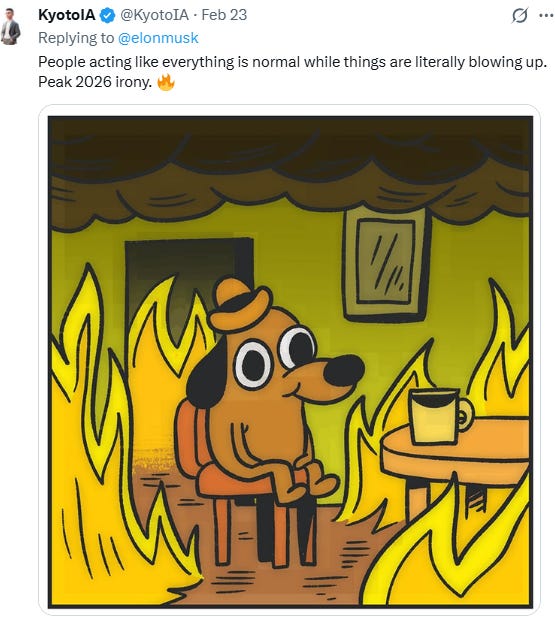
CJNG isn’t just another illicit underworld empire—it’s the most territorially entrenched, militarized criminal organization Mexico has ever seen. As such, this wasn’t routine “cartel chaos.” It was institutional retaliation from a heavily-armed syndicate with the firepower of a small army and the ethics of a stadium full of comic-book supervillains.
And this is precisely why Trump spent the last year tightening the border, deporting criminal illegals, designating cartels as terrorist organizations, and choking off their U.S. money pipelines. Dismantling a cartel is like taking down a wasp nest: you don’t whack the hive while half the swarm is already inside your kitchen. You deal with the local pests first—the distributors, the recruiters, the money launderers—and then you hit the hive.
It’s a big hive. Far bigger than its now-deceased architect. And as this week’s south-of-the-border carnage makes painfully clear, dismantling it was never going to be a one-and-done operation.
A lot of Americans still carry around a Disneyfied idea of justice: defeat the villain, restore the kingdom, cue the birds singing. But tell me—did terrorism vanish when we removed bin Laden from the equation? Did Mexico turn into a sandals-resort postcard after we nabbed El Chapo (the third time)? Did human trafficking disappear the minute Epstein “died”? Of course not. Because real-life criminal cleanup isn’t a fairy tale; it’s fighting a cockroach infestation. Stomping on the biggest, ugliest bug you see might feel satisfying, but it doesn’t change the fact that there’s an entire colony under the floorboards doing CrossFit and waiting for their chance to scamper across your foot.

This week’s brutality isn’t proof that violence begets violence; it’s confirmation that change is messy and that criminality runs deep. Because cartels aren’t one dude with a gold chain and a nickname like “El Nightmare.” They’re sprawling corporate ecosystems with hierarchy charts, logistics units, enforcement divisions, and a disturbingly efficient succession plan. When you remove the CEO of Murder, Inc., the company doesn’t quietly fold. It promotes someone. Or several someones. Half of whom were already circling his parking space.
But here’s the part too many Americans miss: safety isn’t the default setting of the universe—it’s a luxury purchased through constant, often uncomfortable maintenance. When you’ve only ever lived in a country where “danger” means someone spotted a porch pirate in your neighborhood and the biggest threat to your existence is an all caps email from the HOA president, you start to believe stability is automatic. It isn’t. It’s engineered. It’s enforced. And when you finally start dismantling the structures that create the violence, the violence doesn’t politely evaporate; it flares.
The fact is, Americans don’t see this kind of instability—at least, not yet—because under this administration, there’s been an active effort to prevent it from landing on our doorstep. That prevention isn’t glamorous. It’s not pretty. But it’s why your kid’s soccer game isn’t being canceled because the highway is on fire.
Don’t forget to tell me how you voted in the comments. ;)
Honestly, I still can not understand how people are missing what President Trump is doing. It just boggles my mind. I couldn't vote for 2 things, but both Americans are spoiled and borders are critical are the right answers. We're so accustomed to safety that we miss what is happening right under our noses. Some people aren't so lucky. And for those American families that have lost someone....well, the left should be kissing their sneakers. They've suffered more than we'll ever know. And we should all be so damn grateful.
“But here’s the part too many Americans miss: safety isn’t the default setting of the universe—it’s a luxury purchased through constant, often uncomfortable maintenance.” Day-um. That right there is very bad ass. I’ll be thinking about that one for a while (as I drink my coffee in my comfy rocking chair in my cozy house that’s NOT on fire…).