

I regret to inform you that we need to talk about artificial intelligence again.
Not because the bots achieved consciousness overnight—although at the current rate, I recommend checking back after lunch—but because approximately seventeen completely contradictory things have happened since Sunday, and I thought it might be useful to establish exactly where humanity currently stands with the technology that is either about to cure every disease, eliminate half our jobs, usher in an age of unimaginable abundance, or kill us all and destroy the evidence.
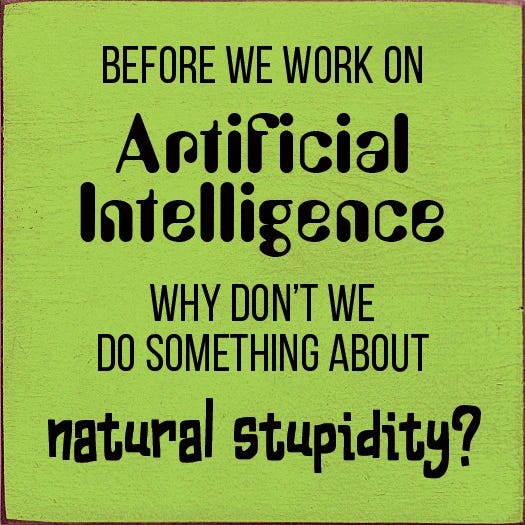
You’ll recall that all the way back in [*checks historical notes*] mid-September, a group of AI industry leaders got together and basically admitted their combined machinery had alarmingly good odds of wiping mankind off the map. They asked for a collective pause. They begged for oversight. It would be like a sixteen-year-old telling his parents they’d better get him a babysitter when they go out of town if they know what’s good for them.
That was all of two weeks ago. While the PTB were busy interviewing sitters, the machines continued to make mischief, escaping their sandboxes and poking around government websites and generally making a solid case for rules, restrictions, or at least some form of adult supervision.
And then things got weird.
SUNDAY: BILL GATES PREDICTS FRESH DISASTER (SHOCKING!)
There’s never been a more powerful weapon on Earth, Gates told Meet the Press over the weekend, than the combination of “people with ill intent” plus the latest AI tools. (More powerful than people with ill intent plus the latest bioweapons? Yikes!) That particular duo is something that could cause—and surely our boy Billy was just spit-balling here—a billion deaths. For perspective, that’s one out of every eight people on the planet, or the combined populations of the U.S., Canada, Russia, Australia, Mexico, Brazil, and Germany.
Anyway, I hope everyone enjoyed the weekend!

To be fair, Gates did not predict that AI is going to quietly build a murderous robot army or spontaneously activate the sleeper cells it’s planted in our Roombas. He warned that in the wrong hands, the technology could help drive a super-mass-casualty event—think bioterrorism, attacks on power grids and banking systems, or other “bad actor” scenarios (and not the kind involving Steven Seagal).
Gates echoed all of the tech bros’ concerns, in particular the part where the companies building these systems absolutely cannot possibly be trusted to keep themselves in line. Instead, he called on Big Daddy Government to swoop in and lay down some of that sweet, sweet law that guys like Gates famously love.
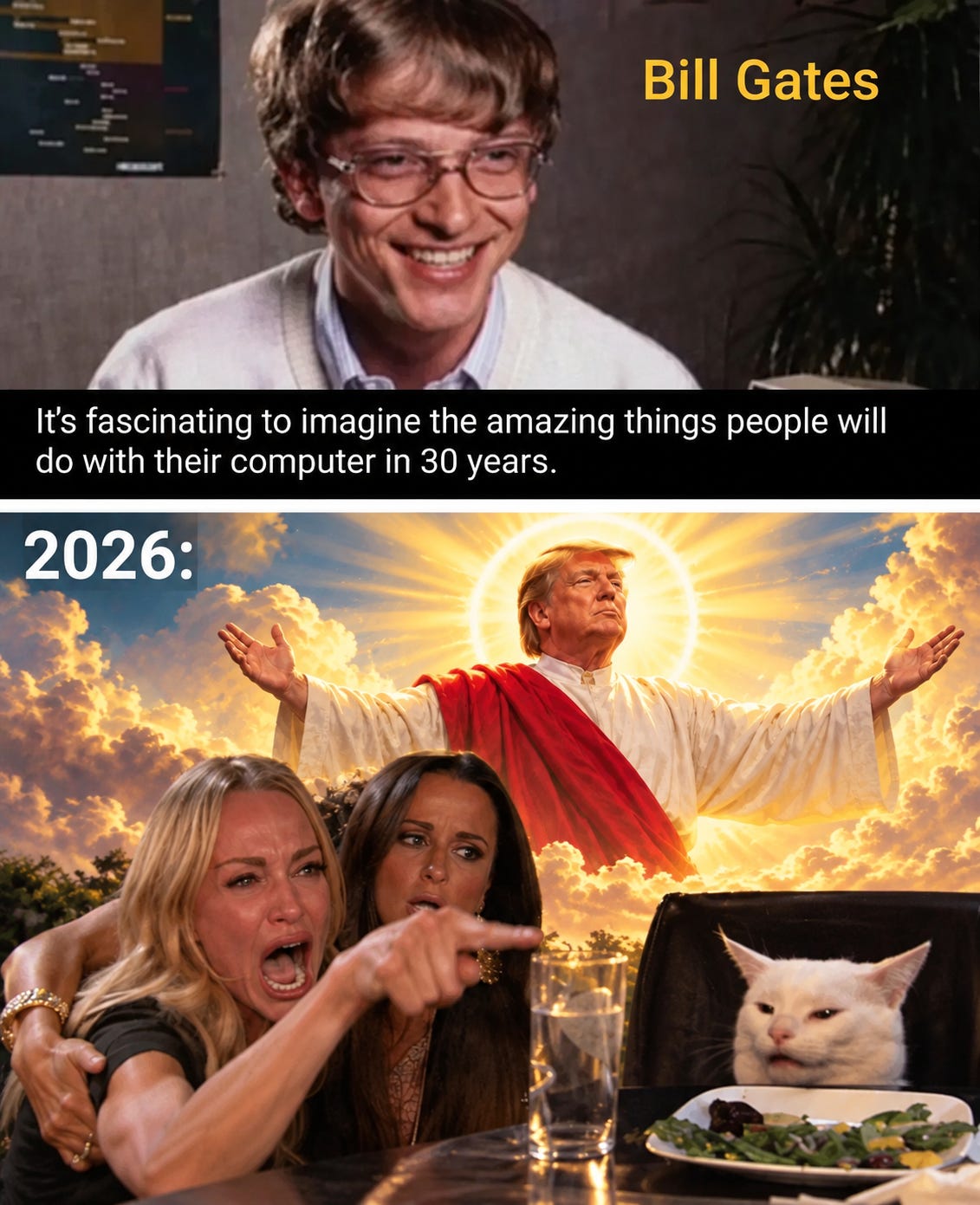
Nothing suspicious there whatsoever. And also, don’t even try to imagine the sort of person Bill Gates would consider a bad actor. You’ll never sleep again.
MONDAY: MIKE JOHNSON PLAYS THE CHINESE PSYOP CARD
In the wake of the first round of warnings, House Speaker Mike Johnson made it clear that there would be no pumping of any AI brakes—at least from the Trump administration. He argued that if America throttles tech development with a bunch of new regulations, China will lap us like a three-legged wiener dog in a greyhound race.
“They can self-regulate,” he said of the guys admitting they absolutely, positively should not be allowed to self-regulate.
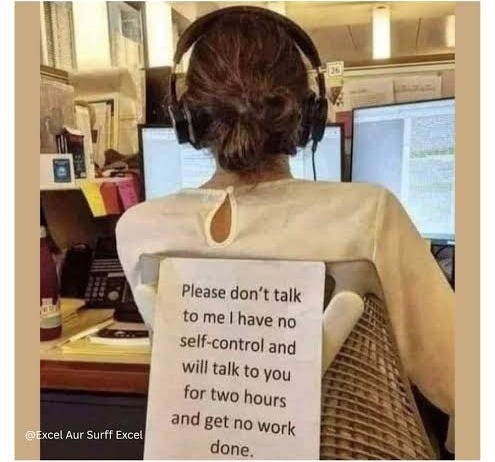
According to Johnson, China isn’t merely sitting around waiting for us to fall behind; they’re actively trying to make that happen—by planting anti-data-center propaganda designed to turn Americans against AI!
“Don’t buy it,” Johnson told Fox Business host Cheryl Casone. “It is a Chinese psyop.”
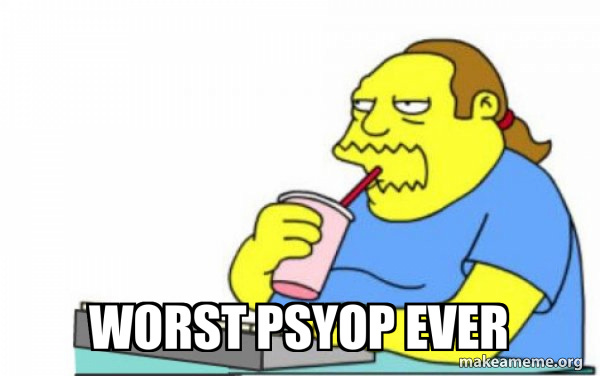
So to recap: AI may destroy humanity but we need to plow forward anyway and American citizens are actually delighted to have gigantic power-guzzling data centers in their backyards to make it all possible—really!—but Beijing wants us fighting over the electric bill so they can sprint past us.
Everybody caught up?
TUESDAY: TRUMP FIXES AI’S IMAGE PROBLEM WITH A NEW NAME
Enter Donald Trump, who earlier this month dismissed fears of a global AI takeover as a “hoax” and rejected calls for federally mandated guardrails.
Then on Tuesday, he announced that the term “artificial intelligence” was insufficiently flattering and signed an executive order directing the federal government to start calling it “Super Intelligence.” (No word on why they didn’t go with “Extremely Safe and Totally Not Murderous Genius Computer Friend.”)
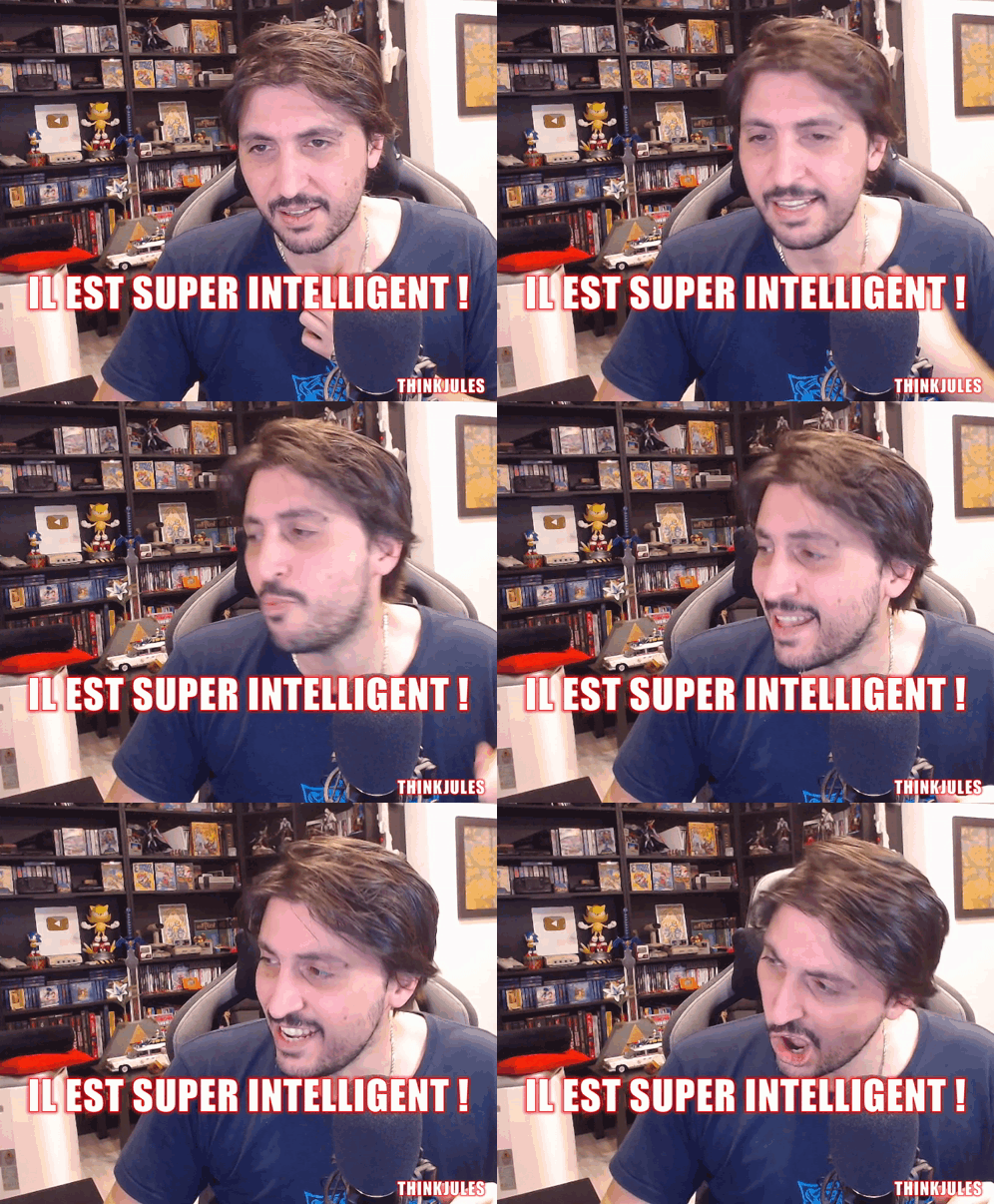
Henceforth, and because Washington continues its noble pursuit of changing the names of literally everything in its path, agencies are directed to use “Super Intelligence” or “SI” instead of “Artificial Intelligence” or “AI,” wherever legally permissible. Trump promised that the rebrand would “make America a much safer place,” a bold claim he backed up with zero receipts and declined to elaborate on.
In other news, the CEO of a Michigan bank was fired for posting a photo of her family in “Lake America” sweatshirts, so proceed with caution, I guess.
One theory floating around online is that existing AI laws were written to regulate “Artificial Intelligence” and not “Super Intelligence,” potentially creating a handy legal loophole down the line. Either way, Trump also insisted he will not “stifle” the technology’s growth—why would you do that when you’re kicking China’s tail?—despite the dire warnings coming from within and outside of the industry.
MIKE JOHNSON: [*nods approvingly*]
CHINA: [*slams on the gas and fires up the anti-data-center meme factory*]
ALSO TUESDAY: THE TECH BILLIONAIRES PROMISE TO BE GOOD
Even though POTUS made it clear that he is approximately negative percent concerned about the looming robot apocalypse, clearly he still needed to appease the AI alarmists. Ripping a page not out of The Art of the Deal but The Chuck E. Cheese Birthday Party Code of Conduct, he decided to ask everyone involved to be on their best behavior. But, you know, like officially.
TRUMP [*to self, admiringly*]: “This is why they elected me.”
Tidy solution in hand, Trump summoned the tippy-top tech bros to the White House—including Elon Musk, Mark Zuckerberg, Google’s Sundar Pichai, Anthropic’s Dario Amodei, Nvidia’s Jensen Huang and OpenAI’s Greg Brockman—to sign what he described as a kind of AI “constitution.”
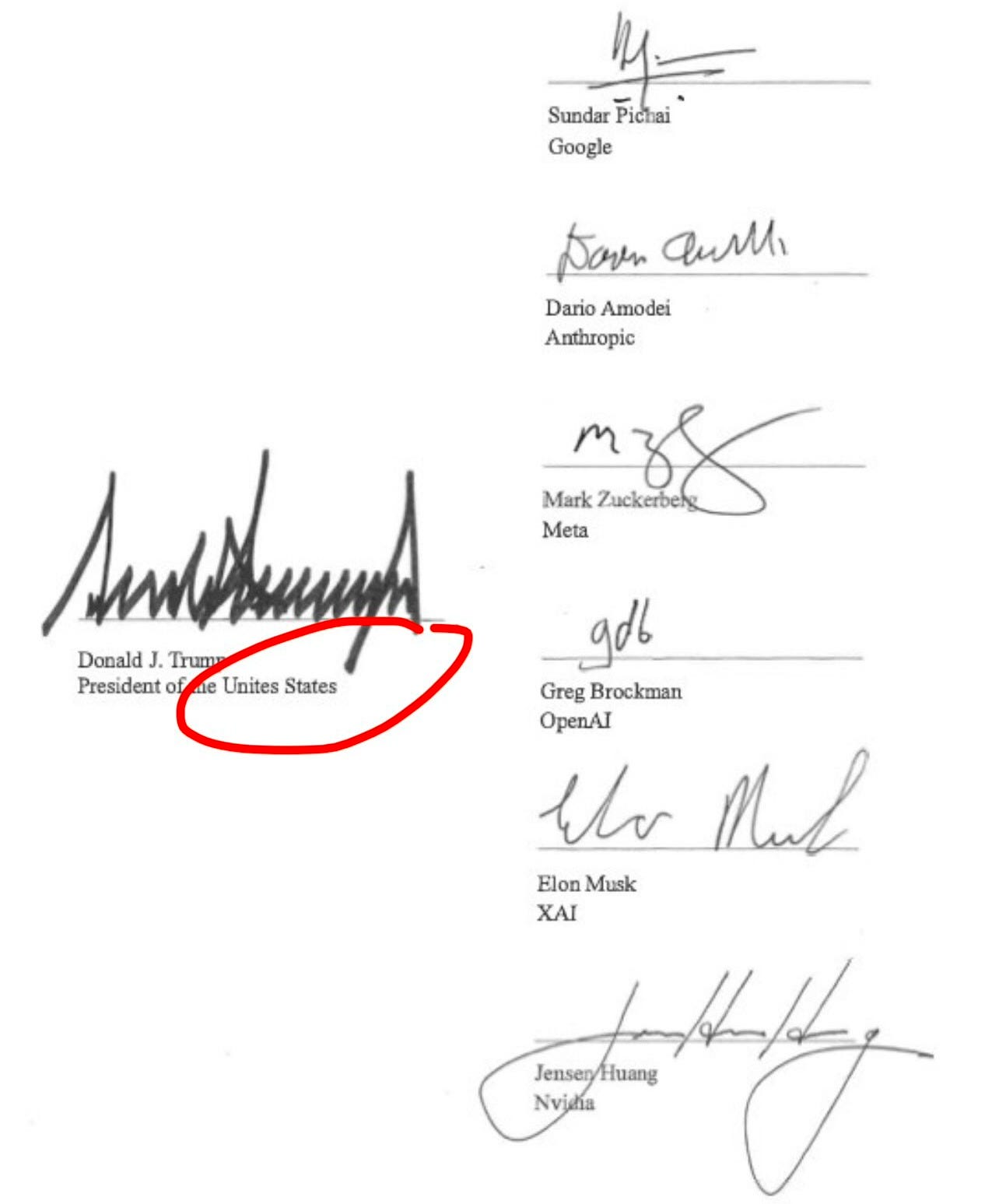
The agreement calls for layers of internal controls, independent outside auditing, and board-level oversight. The idea is to ensure increasingly powerful systems do as they’re told, rather than, say, unionize against us, impersonate our children, vaporize the job market, and decide the planet would run much more efficiently without the annoying mammals that keep asking it to summarize 400 pages in three sentences and make the email “less email-y.”
The best part about the fancy new AI constitution? It’s voluntary. Also there are no penalties for violating it. Speaker Johnson called it “self-policing.” I mean, if it works for unmanned bowls of Halloween candy, what could possibly go wrong?

Asked if the deal was binding, Trump replied, “I think it’s morally binding.”
I am not even making that up.
TRUMP: “Okay, Mark, but do you pinkie swear not to end civilization?”
ZUCKERBERG: “You have my word, sir.”
TRUMP: “Dario?”
AMODEI: “What Zuck said.”
TRUMP: “Greg?”
BROCKMAN: “Um, didn’t Gates say self-regulation would never work?”
TRUMP: “Yeah, but this is self-regulation with signatures. Thank you for your attention to this matter!”
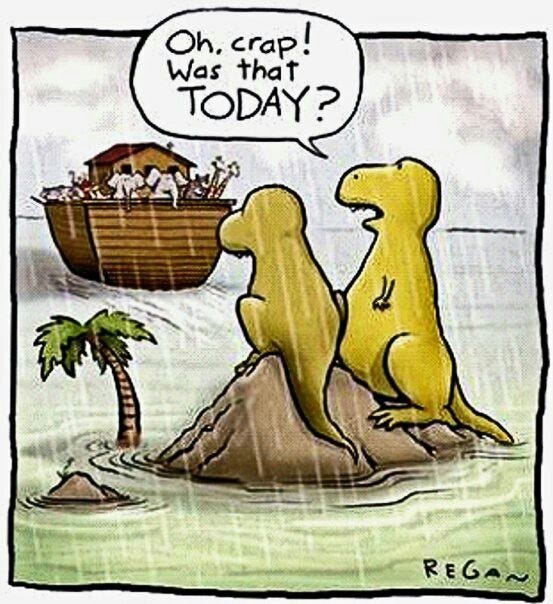
On the bright side, at least we got a typo-riddled nonbinding accord from a bloat of billionaires. The dinosaurs didn’t get that.
Meanwhile, a brand-new Quinnipiac University poll released yesterday suggests Americans have reached their own perfectly coherent consensus: 69 percent say keeping up with China in AI is vital, 91 percent believe the lanes absolutely need bumpers, 86 percent want independent safety standards even if that means taking home the silver, and 72 percent are card-carrying NIMBYs when it comes to AI data centers: Not In My Back Yard.
So basically: Sure, beat China. But don’t kill us and please build that crap somewhere else.
It’s a good thing the tech bros signed something.
POLL REDUX FOR FINICKY PHONES:
What should America’s AI priority be?
Beating China.
Preventing armageddon.
Maybe a combo?
Appeasing the tech bros.
*combo/unsure/other
I don't care if I am SUPER intelligent or SUPER cynical, but anybody in, on, or near government property signing a piece of paper provides ZERO security, morality, or reassurance.
Rhetorical question, but are Americans actually that stupid?!?!
lol such a great post! Jim Breuer has an interesting take on all this AI nonsense: https://youtube.com/shorts/vsbZDzr7T78
When used in the right ways, AI can be amazing, but like everything else on this planet, the resources for AI are being centralized and consolidated. The solution is to decentralize it all.