

You know what I love about socialism besides nothing? The unhinged optimism.
We’re talking about a system that historically produces food shortages, forced labor, censorship, wealth confiscation, economic stagnation, mass surveillance, and widespread, government-induced famine. And yet proponents continue to peddle the failed business model—one that hinges entirely on collective amnesia and Robin Hood economics.
Because the “we’re building utopia” pitch pretty much goes like this:
HOPEFUL DICTATOR: “We’re going to provide free childcare, subsidized housing, no-cost college, expanded public transit, state-funded legal services, universal healthcare, and a complimentary goldfish for every family in the district! Bowl and freeze-dried bloodworms included, of course.”
LAZY PROLETARIAT: “That’s fantastic! How are we paying for all that?”
HOPEFUL DICTATOR: “Rich people.”
LAZY PROLETARIAT: “The rich people we’re constantly calling greedy parasites, soulless oligarchs, tax-cheating dragons hoarding stolen wealth, and the root of literally every problem on Earth?”
HOPEFUL DICTATOR: “Yup!”
LAZY PROLETARIAT: “Okay... but what if they don’t want to pay?”
HOPEFUL DICTATOR: “They don’t get a choice.”
LAZY PROLETARIAT: “Well, what if they leave?”
HOPEFUL DICTATOR: “They won’t.”

That’s it. That’s the entire plan. There’s no secondary revenue source. No sensitivity analysis. No “if the math stops mathing” Plan B. Just absolute confidence that the guy you pickpocketed today on the train will let you do it again tomorrow. And the next day. And the day after. For the rest of ever.
If you pitched that business model on Shark Tank, Mark Cuban would laugh you out of the building before Kevin O’Leary had a chance to call you a moron.
Because here’s the weird thing about wealthy people. They have money. And yeah, money can buy Louis Vuitton trash cans and pet lions and solid gold bathtubs, but it can also buy options. Mobility. Flexibility. If you’re a Rockefeller, you probably aren’t anchored by a mortgage you can never replace, a job you can’t take with you, or kids whose daycare center is also known as “Grandma’s house.” If your town starts charging extra for air, you can move to another town. So can all your other rich friends. Maybe not all of them and not overnight. But enough of them to turn the mayor’s five-year plan into a ten-alarm crisis.
The political far-left pretends this isn’t a thing. Just ask New York. Raise taxes another two percent on the people you’re already bilking the hardest? They’ll stay. Double capital gains taxes? They love it here. Jack up the estate tax? Central Park in the fall! Levy even more on second homes, investment income, and inheritances? You can’t put a price on Broadway. Bleed them until they’re giving the government nine bucks out of every ten they earn? They’ll never, ever leave.
Until they do.
The headlines coming out of the Big Apple since Mamdani moved into Gracie Mansion read less like a market analysis and more like a slow-motion breakup text from the city’s collective sugar daddies.
Just this week, the nonpartisan Citizens Budget Commission dropped an awkward report: New York’s share of the nation’s millionaires has shrunk from 12.7% in 2010 to just 8.7% today. Even worse for Albany’s spreadsheet enthusiasts, the rich aren’t just leaving—they’re sprinting for the exits faster than every other socioeconomic group. (Maybe they have nicer running shoes hahahaha.)
The very next day, Fox News covered “New York’s dramatic exodus of wealthy residents,” estimating the state lost nearly $11 billion in annual taxpayer income in a single year as scores of well-heeled Empire Staters packed up and found greener—and less aggressively taxed—pastures.
When rich people leave town, the other rich people can’t even move across the street because there’s nobody to buy their houses. “Manhattan’s luxury real estate market ground to a halt last week, with just one trophy home asking more than $10 million entering contract,” the New York Post reported the same day as the Fox bomb. (Normally, three to five pads in that posh price range change hands every week.) “Brokers told the Post that anti-wealth rhetoric from Mayor Zohran Mamdani and the controversial pied-à-terre tax are spooking affluent buyers.” Apparently, giving a six-figure surcharge a fancy French name doesn’t soften the blow.
Obviously, taxes aren’t the exclusive reason people move. Florida has sunshine. North Carolina has mountains. Texas has jobs. Kansas has the World’s Largest Ball of Twine (which inexplicably gets 4.6 stars on Google Reviews. I mean, why?). People relocate for family, business opportunities, quality of life, weather, schools, cute boys they met on spontaneous kayak trips. (True story.) But pretending taxes play no role in relocation is every bit as unserious as pretending they’re the only driver.
Here’s the part I can’t get past. If your entire governing philosophy depends on a relatively small number of highly mobile taxpayers continuing to generate an outsized share of your revenue... shouldn’t your first priority be making sure they don’t leave?
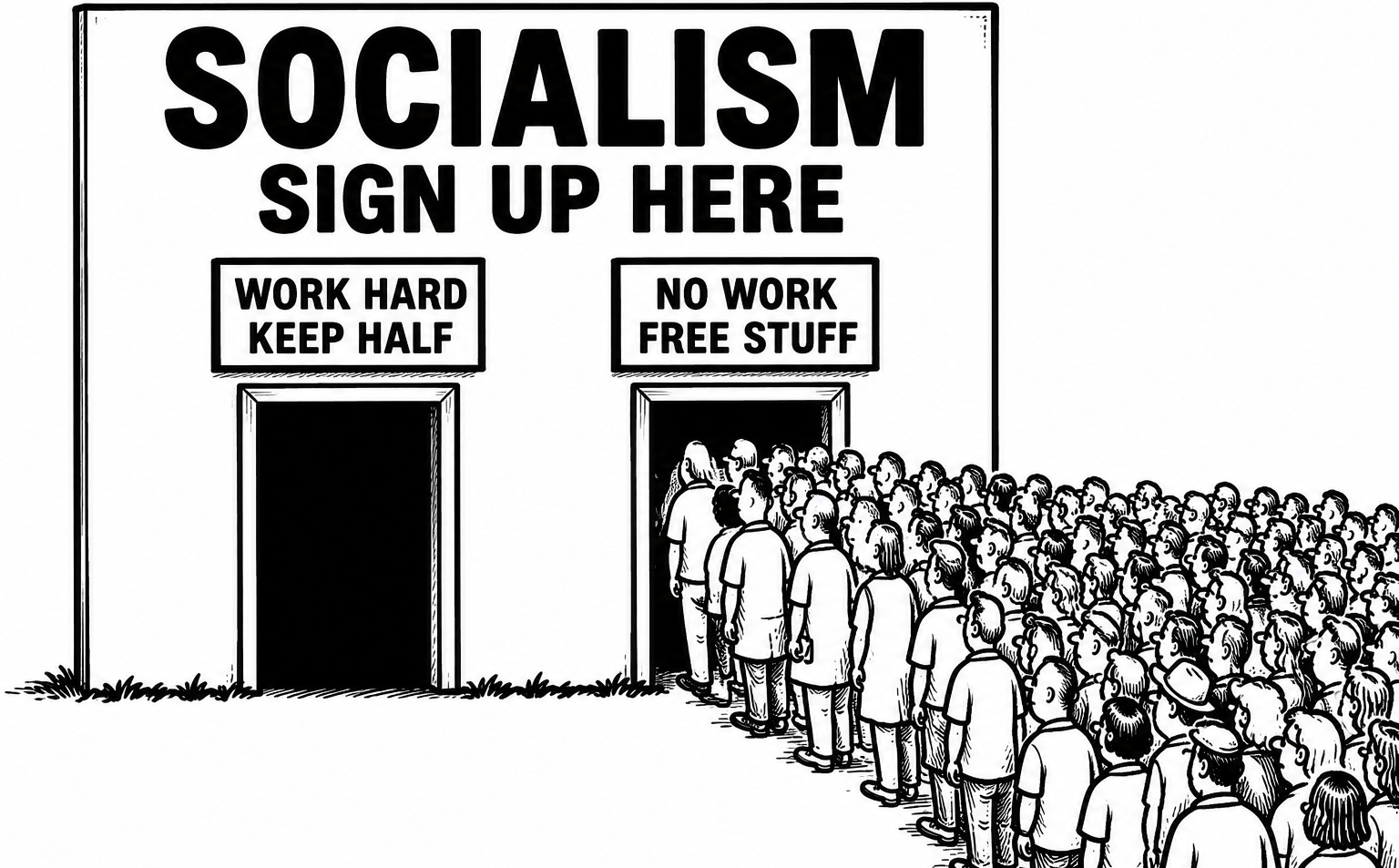
California floated a 5% billionaire tax. The media’s favorite reassurance? “Only six of the state’s 214 billionaires left!” Only six. No big deal. Except those six represented roughly $27 billion in tax revenue—about a quarter of what the entire plan was supposed to bring in. And that’s the part progressives keep forgetting to factor in: when your funding model depends on a microscopic number of people cutting microscopic numbers of enormous checks, “a few” departures isn’t a rounding error—it’s the entire balance sheet blowing up.
There’s a reason places that have tried aggressive wealth taxes keep running into the same problem. France scaled back its wealth tax after years of watching flush Frenchies flee with their fortunes to Switzerland and Italy. Sweden scrapped theirs entirely for the same reason. In the U.S., middle-class families are flocking to low-tax states in record numbers. This isn’t theoretical—it’s a pattern.
And when the cash cow moves farther out into the country, the bills don’t disappear—they multiply. Let’s say you determine you can fully fund Gimmeville by taxing everyone making $10 million or more. But when you do, a third of them leave. No problem. You’ll just lower the threshold to $5 million—and bump up the rate to make up the difference. More natives get restless and bolt. The local paper can’t go a day without another hand-wringing op-ed about “wealth migration.” This is not how things were supposed to go.
The good news is, Gimmeville’s population is booming, thanks to the newcomers streaming in daily for the freebies. The bad news is, almost none of them are hedge fund managers asking where to mail their first eight-figure tax payment.
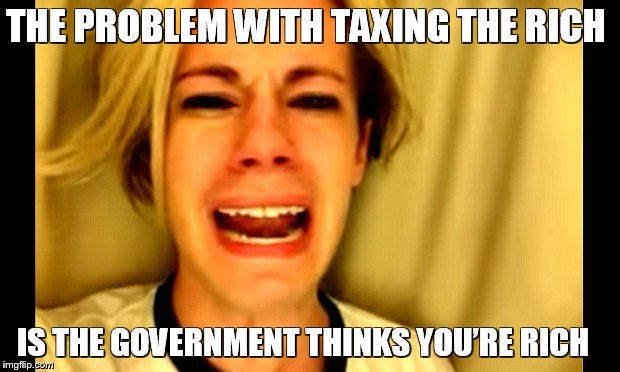
Now you’re in a serious pickle. Suddenly, the people making $2 million start to look suspiciously well-to-do. Then it’s the folks in the high six figures. Because somebody has to pay for all this free crap! Funny how quickly “rich” becomes relative.
The term wealthy has always been a moving target. Consider that the federal income tax itself was originally sold as something only the affluent would ever pay. In 1913, it applied exclusively to incomes above $3,000—a fortune at the time and a threshold fewer than one percent of Americans met. A few decades later, the majority of ordinary Americans were forking over healthy chunks of their paychecks to the IRS (which quickly and conveniently rolled out automatic withholding so citizens couldn’t spend their money before the government could steal it).
Thanks to New York’s aggressive tax structure, the top 1% of earners pay roughly 46% of all state income taxes. Think about that. That’s an astonishing amount of fiscal weight resting on a very small group of individuals. Most people would look at that ratio and think, “Wow, we’re awfully dependent on that tiny clique.” The modern socialist looks at it and thinks, “They can probably cover a little more.”
Which is fine—until even a fraction of the Waltons and the Du Ponts decide they’d rather spend their winters—and their tax dollars—somewhere else.
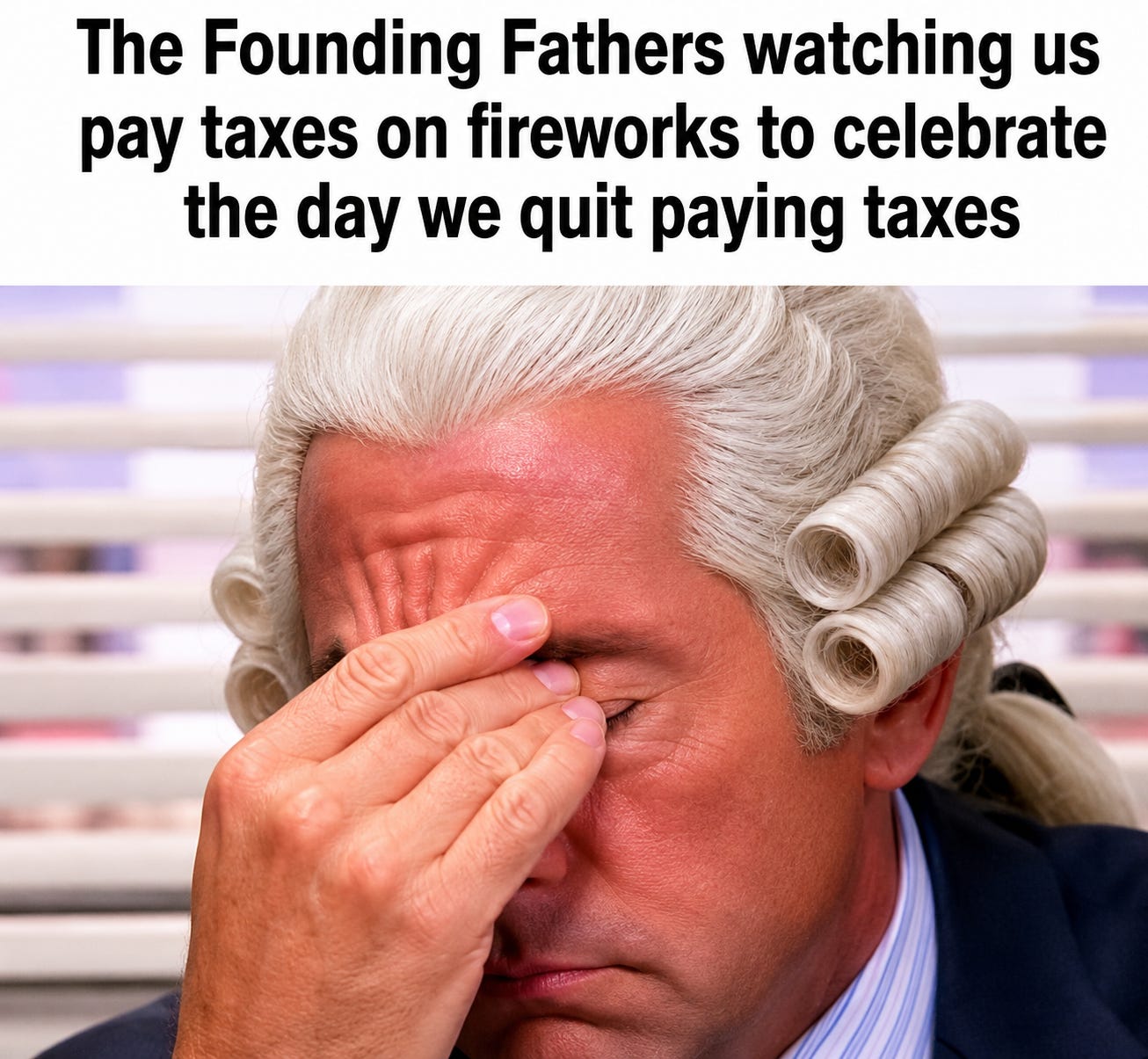
That’s what makes this less of an ideological debate and more of a spreadsheet problem. You don’t have to believe rich people deserve tax breaks. You don’t have to think billionaires are heroes. You don’t have to like anyone who owns a 200-foot yacht or adds guac to their Chipotle burrito ($3!) without even thinking twice about it. You just have to recognize that building an entire financial strategy around the permanent cooperation of people you’re actively incentivizing to leave might not be the World’s Best Business Plan.
In the process of leaving Virginia fo North Carolina as soon as my husband retires in May. Currently pay $10k in property taxes in VA. In NC a similar home on more land will be around $3.5k for taxes. General cost of living is 30% less as well. And don't get me started with the politics that Nov 2025 delivered.
PBD and Tom recently discussed this on an episode of his podcast. Their biggest point?
The ultra-rich are not nearly as tied to manufacturing (physical factories) as they were decades ago. I cannot remember exact numbers, but the point was that it is far easier for "The Rich" to leave and move somewhere else today than in decades past. In other words, wealth is far more mobile than it used to be.
In that same episode, they discussed the trillions that have already left CA and the landslide of trillions getting ready to leave because they put the 5% wealth tax on the ballot for November.
I was discussing this very topic years ago with a friend who manages a flooring mill. He said something that sticks with me to this day... "Have you ever tried working for a poor person?"