

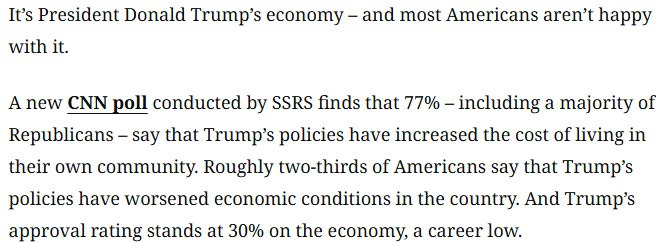
This week, CNN released a poll summing up Americans’ attitudes about the economy. As you might imagine, pretty much everyone they asked feels financially squeezed, economically anxious, and increasingly unable to get ahead.
“My Life Is Not Affordable,” the headline pouted. “No One Cares.”
It actually said that: No One Cares. Apparently this is what happens when participation-trophy kids grow up and get journalism degrees.
Call me cynical, but I suspect this was typed on a $1,200 iPhone 17 Pro in between sips of cold foam through a reusable straw thick enough to siphon gasoline.
“About one-third of Americans say they worry all or most of the time that their income won’t be enough to meet their expenses, with another 42% saying they worry about that at least some of the time,” CNN reported.
“Most say they cannot comfortably afford extras like a nice dinner out or a vacation, and only about a third feel they can comfortably afford an emergency expense of $1,000 or to save money for the future.”
“It’s more expensive to exist,” one respondent lamented. Another said, “You’re just staying afloat instead of getting ahead.” Yet another declared, “It should not be like this.” These negative feelings about the economy, CNN gravely explained, have major political implications for the midterms.

The implications, obviously, are that Americans are miserable, they blame Trump for it, and Democrats would very much like everyone to keep feeling that way through November.
No one would deny that groceries are expensive. Housing is insane. Insurance premiums now resemble ransom demands written by organized crime syndicates. Wages have not kept pace with healthcare, education, or having a roof over your head. Filling up your gas tank feels like paying tuition. A quick Target run somehow costs $173 even if you popped in intending to buy nothing but toothpaste and paper towels. This part is as real as a speeding ticket.
But I would also like to gently submit for consideration that modern Americans may have quietly expanded the definition of baseline survival to include approximately 76 luxury conveniences including but not limited to pre-cut produce, subscription beauty boxes, weekly grocery delivery, doggy birthday parties, seasonal throw pillows, and a countertop appliance dedicated exclusively to spiralizing zucchini. Maybe the occasional “nice dinner out” wouldn’t be such an impossible goal if folks weren’t DoorDashing the rest of the week and leasing Lexuses they otherwise could never afford.
The reality is, we are a nation of consumers. We spend abundantly, recklessly, constantly. We pay for convenience, for comfort, and for cachet. “Getting by” has gone from practical to premium without most of us even realizing it.
I say this not from a position of judgment, but from the middle of my own kitchen, a room that in a single, crowded drawer houses an avocado slicer, a strawberry huller, an apple corer, a selection of pizza wheels, an orange-peel remover, not-one-but-two corn huskers, a mandoline for when I need really thin slices of something, a garlic press, several peelers, yes—a spiralizer, multiple specialized cheese graters, and a watermelon knife.
I do. I own a watermelon knife. This is, of course, in addition to a vast assortment of cutting implements ranging from dull to razor-deadly and specifically designed for butter, bread, grapefruit, lettuce, fish, steak, cheese, and just about every other edible God put on this glorious Earth.
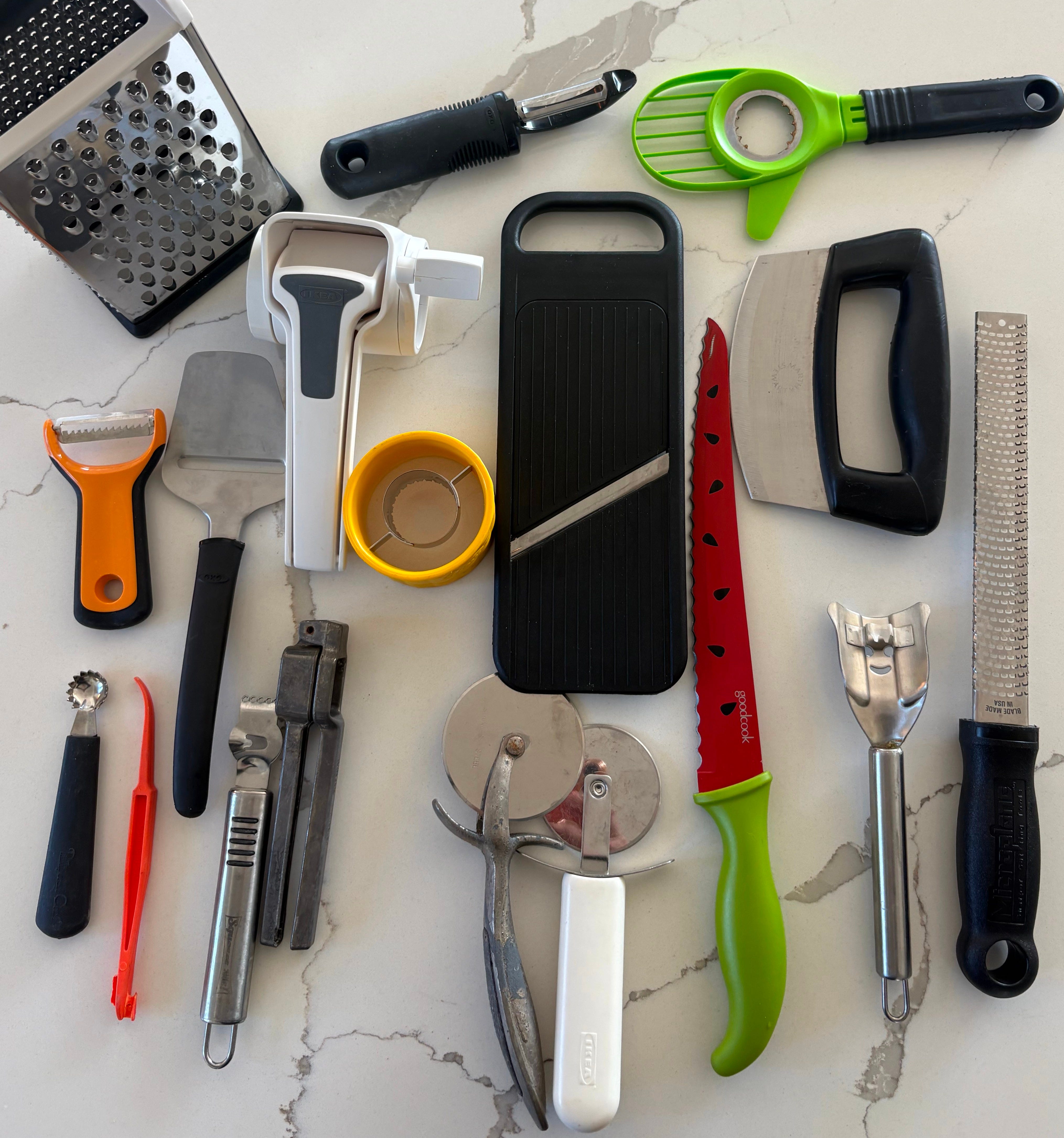
My grandmother had one utility blade. One. A regular old sharp knife. That’s what she called it, too. “Hand me the sharp knife.” She somehow managed to prepare meals for an entire family for decades without a dedicated stainless steel cylinder designed specifically to core tropical fruit with ergonomic precision. She also survived the Great Depression, raised children, baked bread from scratch, and never once complained that her mushroom coffee subscription hadn’t arrived.
This is not to say Americans aren’t under real economic pressure. Many unquestionably are. Americans are also extremely, aggressively, almost heroically bad at distinguishing between “I cannot afford this” and “I have chosen to afford seventeen other things first.” And it’s difficult to discuss present-day financial hardship honestly without acknowledging that contemporary life now comes preloaded with a breathtaking number of expenses previous generations never even conceived of.

We don’t just buy coffee anymore. We buy artisan cold brew with premium oat milk through an app that lets us pre-order it while earning points toward future purchases we absolutely would have made anyway. We’ve somehow been convinced that spending $8 six times a week counts as “saving money” so long as there’s a loyalty program involved.
We no longer simply watch television. We maintain a carefully diversified portfolio of streaming platforms that collectively require a level of financial commitment once associated with boat ownership. Couch surfers are out here juggling Netflix, Hulu, Disney+, ESPN, Amazon Prime, Max, Apple TV, Peacock, Paramount+, Spotify, Audible, and at least one mystery subscription nobody remembers signing up for but which continues siphoning $14.99 a month from the family checking account like an invisible digital parasite.
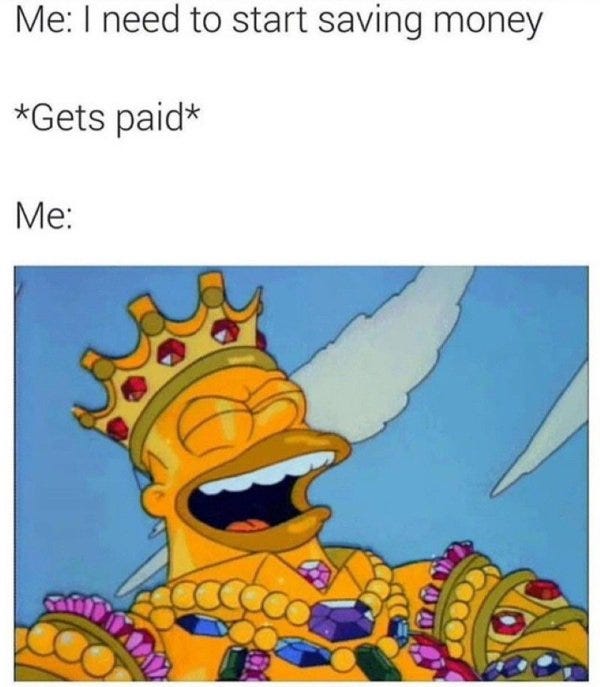
And the market, bless its heart, never stops innovating. No one owns a single water bottle anymore; we stockpile giant emotional-support hydration systems with motivational slogans and ergonomic handles. We have robot vacuums mapping our homes like rolling spies employed by the CIA. We subscribe to meal kits because apparently purchasing groceries and selecting recipes independently has become psychologically overwhelming. We pay for apps that remind us to breathe, encourage us to drink water, monitor our sleep, and gently shame us for not meditating enough.
Ironically, the same Americans who increasingly describe themselves as financially underwater are also carrying around four-figure smartphones capable of facial recognition, satellite communication, professional-grade photography, real-time navigation, instant global information access, and livestreaming raccoons stealing cat food in high definition. These astonishing technological miracles aren’t the frivolous luxuries they might have been considered just a generation ago—they’re absolute bare necessities.

Then there’s “little treat” culture—yes, it’s a thing—where the internet collectively decided that we deserve rewards for routine adult functioning like paying bills, picking up our own dog’s poop, surviving Costco on a Saturday, flossing our teeth, and refraining from flipping someone off in traffic.
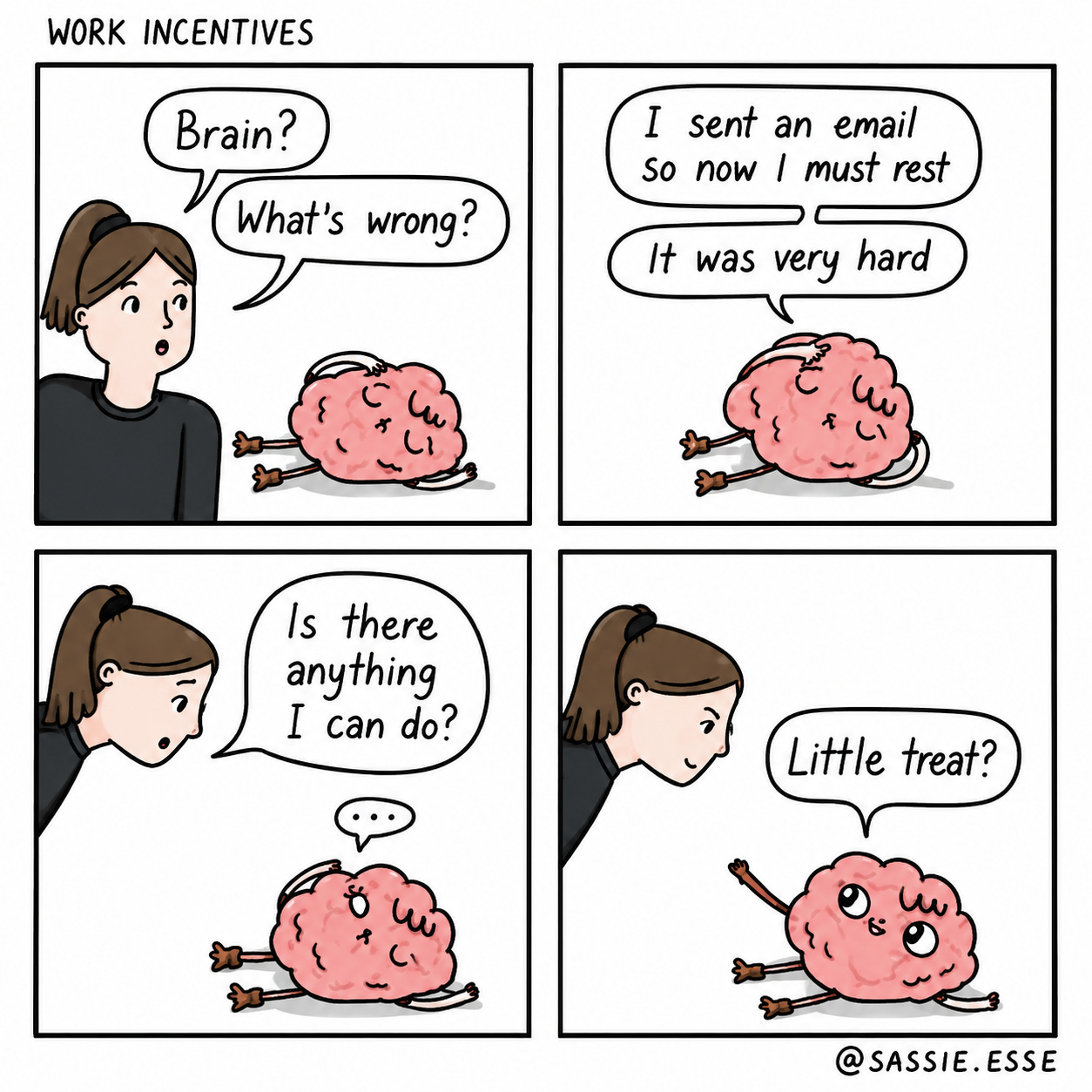
Took out the trash? Little treat. Sat through a Zoom meeting that could have been an email? Little treat. Scheduled the oil change you’ve been putting off? Congratulations, you just earned a $9 lavender matcha sprinkled with ethically sourced cinnamon dust.

Again: none of this is to say inflation isn’t real. It is. But part of the disconnect may be that today’s “normal life” has quietly drifted into what would have looked to earlier generations like low-key aristocracy.
Your grandfather’s starter home had one television, one bathroom, one telephone attached to the wall, no air conditioning, and one small loveseat that was probably covered in plastic. Meanwhile modern Americans have streaming entertainment in every room, multiple smart devices, temperature-controlled memory foam mattresses, noise-canceling headphones, wireless earbuds, internet-connected refrigerators, sectional sofas that can sleep seven, and enough charging cables to wire a medium-sized airport.
And nobody can figure out why we’re all broke.
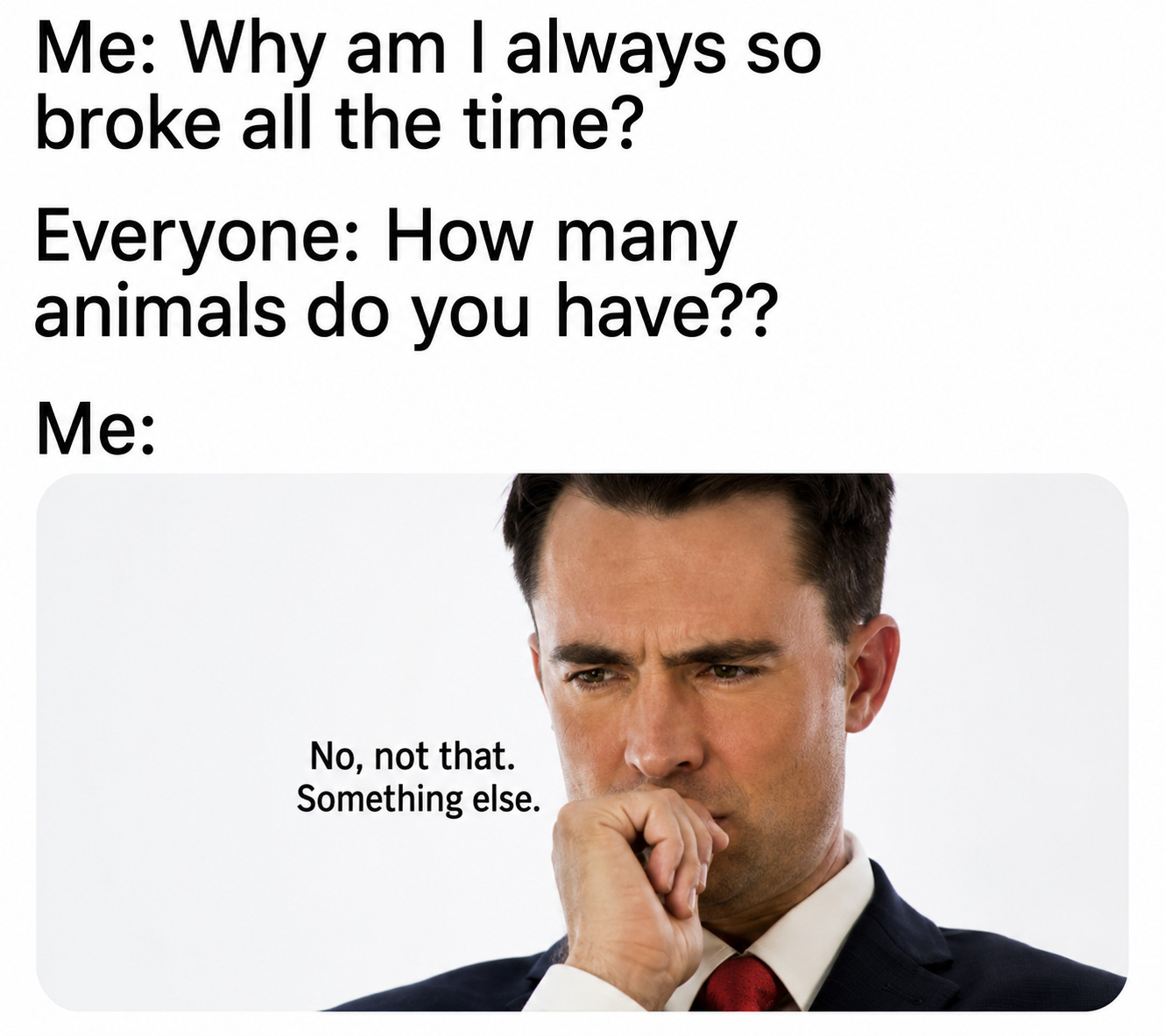
Which, in a way, makes perfect sense. Because lifestyle inflation is sneaky. Nobody wakes up one morning announcing, “I shall now normalize lavish conveniences until they subconsciously register as basic human rights.” It just sort of happens—quietly, incrementally, almost accidentally. The first time you pay seven dollars for a single cup of coffee, it feels absurd. By the fiftieth time, it just feels like Tuesday.
Psychologists call it hedonic adaptation, and humans are remarkably good at it.

 Tiktok failed to load.
Enable 3rd party cookies or use another browser
Which is how you end up with a negative bank balance and a junk drawer that’s too full to close. The cost of living genuinely rose while the cultural definition of “living” blew up like Building 7.
We’re not merely trying to survive anymore. We’re trying to survive comfortably, conveniently, wirelessly, ergonomically, aesthetically, sustainably, algorithmically, and preferably with free two-day shipping.
And occasionally with dedicated watermelon-processing equipment.
I showed you my embarrassing inventory of niche kitchen gadgets. Tell me what you stockpile needlessly in the comments. ;)
I'm 80 years old. I own one 1991 Fender Precision bass guitar, 5,000 books, two pairs of jeans, one very sharp kitchen knife, a Vitamix, one shotgun and three wonderful kids. And that's all I need.
I use my watermelon knife to cut pineapple. I’m just a rebel like that. 😎
Bad ass as always. 🙌🤬🍑😘