

There was a time when people were positive that one day we’d have to pay for email the way we pay for snail mail—per message, per attachment, per passive-aggressive “Just circling back on my earlier note!” follow-up. For a minute there, it seemed inevitable… until Big Tech delivered a revolutionary solution: instead of charging users directly, the internet would just harvest our data and sell it to advertisers. Crisis averted!

Unfortunately—or fortunately—artificial intelligence may not be getting the current “free with surveillance” treatment forever, either. Insiders say it’s not only barreling toward a new billing model but a new category of service altogether. According to OpenAI CEO Sam Altman, data-on-demand will eventually become a utility. Not a metaphorical one. A literal one.
Speaking at the BlackRock Infrastructure Summit, Altman said the future business structure for companies like OpenAI will look a lot like the way we buy electricity or water today—metered, usage-based, and delivered with an invoice. In other words, someday you may receive a bill that looks something like this:
Electricity: $126
Water: $44
Internet: $81
Streaming services you forgot you subscribed to: $63
Intelligence: $237

Altman went on to explain that AI companies expect to sell “tokens”—units of processing power that measure how much computerized brainpower you’re sucking up. Ask Perplexity to summarize a document? A token or two. Generate a marketing plan? Perhaps a pocketful of tokens. Drunk-demand ChatGPT write a sequel to Atlas Shrugged in German? Congratulations, you just personally financed Altman’s ButcherBox subscription this month.
Of course, none of this should surprise anyone. The technology powering these systems isn’t floating in the cloud like benevolent digital fairy dust. It lives inside enormous data centers packed with specialized chips that consume staggering amounts of electricity—sometimes as much power as a small city.

Those buildings don’t construct themselves. The chips aren’t cheap. The energy bills alone could make a Las Vegas casino blush. So yes, intelligence is probably going to cost money.
Which raises a few interesting questions. First and most importantly: who pays?
If artificial intelligence becomes as fundamental to the economy as electricity, it’s not hard to imagine governments stepping in. Utilities are often regulated, subsidized, or both. That means AI could easily become another complex hybrid of public necessity and private profit—the digital equivalent of highways built with tax dollars but surrounded by toll booths.
And what could possibly go wrong if the government has a hand in how information is distributed?

Another issue is that access to massive amounts of computing power could become a new symbol of wealth. The rich once signaled status with mansions and private jets and an excess of offspring. Tomorrow’s prestige flex might look more like, “Oh, you’re still on the basic intelligence plan? That’s adorable. We upgraded to Platinum Infinite IQ Class. It manages our investments and writes our family newsletter!”
The infrastructure required to support this cyber world is massive. The Silicon Valley set is spending hundreds of billions of dollars building new data centers, designing new technology, and harnessing energy to keep up with demand. Which brings us to the next question/observation: Obviously, those costs have to be offset somewhere. (Spoiler: “Thank you for your service. Security will escort you to the parking lot.”)
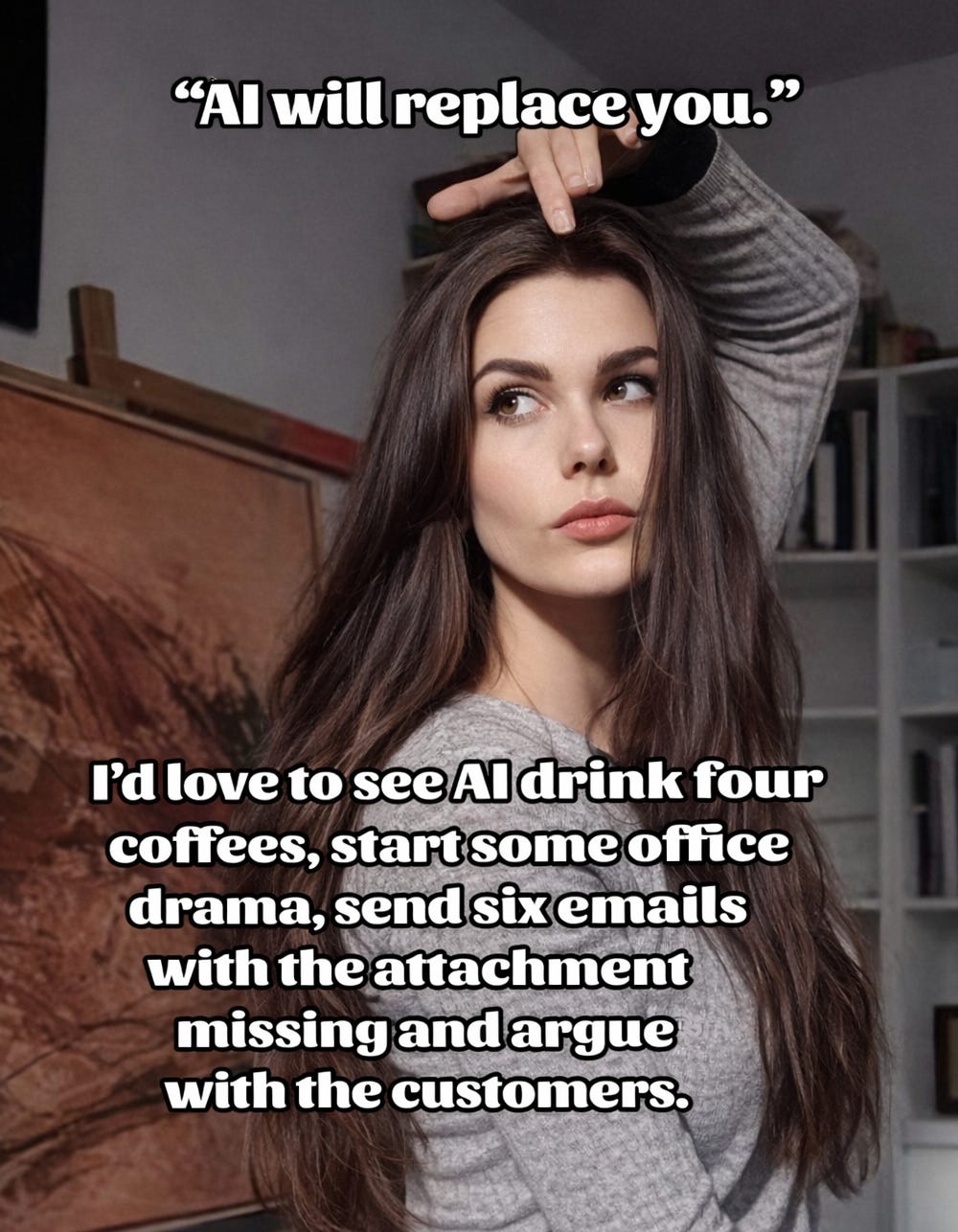
To wit, Altman admitted that AI is quickly and not very quietly killing the workforce—and that “nobody knows what to do about it.” (Um, maybe ask ChatGPT?) “The new generation of startups thinks employees will slow them down,” he said. “They’re all focused on how much ‘compute’ they can get.”
That’s an actual quote, by the way. It sounds like a bad Scooby Doo-Jetsons mashup: “And we would have won the space widget race, too—if it weren’t for those meddling employees!”

In places like India, entrepreneurs are experimenting with so-called “zero-person startups,” where AI writes the software, drafts legal documents, and answers customer service emails. Which is a unique combination of impressive, dystopian, and not at all shocking.
People, you may have noticed, are quickly becoming obsolete. (*But only in the workforce sense. They still need us to consume all of their AI-generated crap! Hahahaha, except now we can’t afford it because you took our jobs. Way to go, guys!) We’ve seen it already with self-driving cars stealing Uber drivers’ rides and AI support agents fielding customer calls and digital image generators replacing graphic artists. There are Substacks I used to read and savor that are now clearly being written by bots. My tender, creative heart aches.

What’s terrifying is how quickly we went from “spell-check this memo for me” to “schedule and run the meeting and send everyone a follow-up.”
This very weekend, I put together a care package for an elderly neighbor who had a bad fall and I wanted to add a card. I ran up to the cavernous CVS by my house—a store I have never once set foot in in the eight years I have lived here. I was in a rush so I figured I’d just ask someone at the front checkout where the cards were—but there was no one at the checkout. I wandered up and down the empty aisles until I finally ran into a human.
“Excuse me, do you know where the greeting cards are?” I asked.
“Sorry, I’m just a vendor,” she replied, and continued stocking the shelves.
I finally found the cards, made my selection, and completed my purchase at the self checkout kiosk. I did not encounter another carbon-based lifeform.

Hilariously, out of the other side of his mouth, Altman lamented something he called “AI washing,” or the growing tendency of companies to blame layoffs on AI whether or not AI had anything to do with it. I mean, sure, sometimes sales collapse organically. Sometimes management makes disastrous strategic decisions. Sometimes a “cutting edge” PR stunt backfires on you and you get cancelled. But let’s not drag AI into this, okay?
Maybe the monetization of AI will be a blessing in disguise. Maybe instead of asking Gemini what the weather is, we’ll (gasp!) step outside. Instead of having it summarize a news article, we might have to read the article. Instead of prompting it to draft a birthday message for Aunt Carol, we’ll have no choice but to suck it up and write two whole sentences ourselves. Students could find themselves engaging in the ancient ritual known as “doing your own homework.” Wondering might even make a comeback.
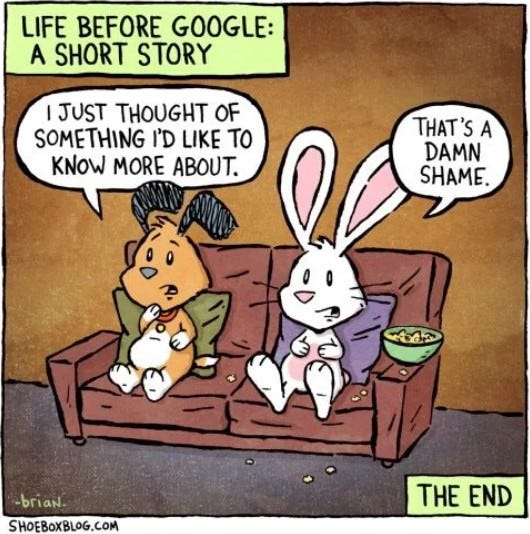
At some point, AI addiction could become as financially savvy as blasting the AC with the windows open. Maybe—just maybe—the moment artificial intelligence starts costing real money, humanity will rediscover the surprisingly economical alternative to consulting the nearest chatbot: using our actual brains again. (This might be a good time to brush up on your writing skills or learn how to use the reminder feature on your phone.)
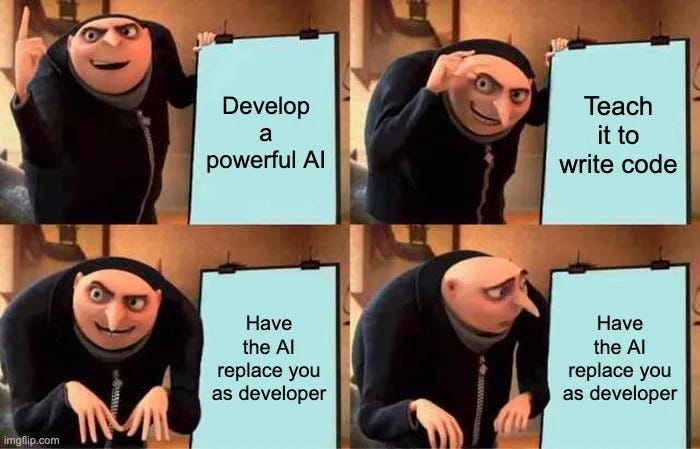
What do you think about paying for intelligence (as it were)? LMK below!

Rick Beato had an interesting take on this recently, could be a solution:
https://youtu.be/YTLnnoZPALI
Well the upside on the jobs front is that there are still tens of millions of illegals, visa holders, and other foreigners holding jobs in America. There are hundreds of thousands of trucking jobs alone being taken from Americans. There are entire industries (small hotels, gas stations, etc.) that have been handed to foreigners via SBA loans (a practice now finally ending). There are thousands of foreigners teaching in our universities. Working at resorts. Teaching yoga. Working in restaurants. Doing construction. Delivering food. On and on it goes.
There are still a LOT of jobs for Americans, if we just got rid of the foreigners who have taken these jobs. Team Trump should be moving far faster to clean up this mess.