

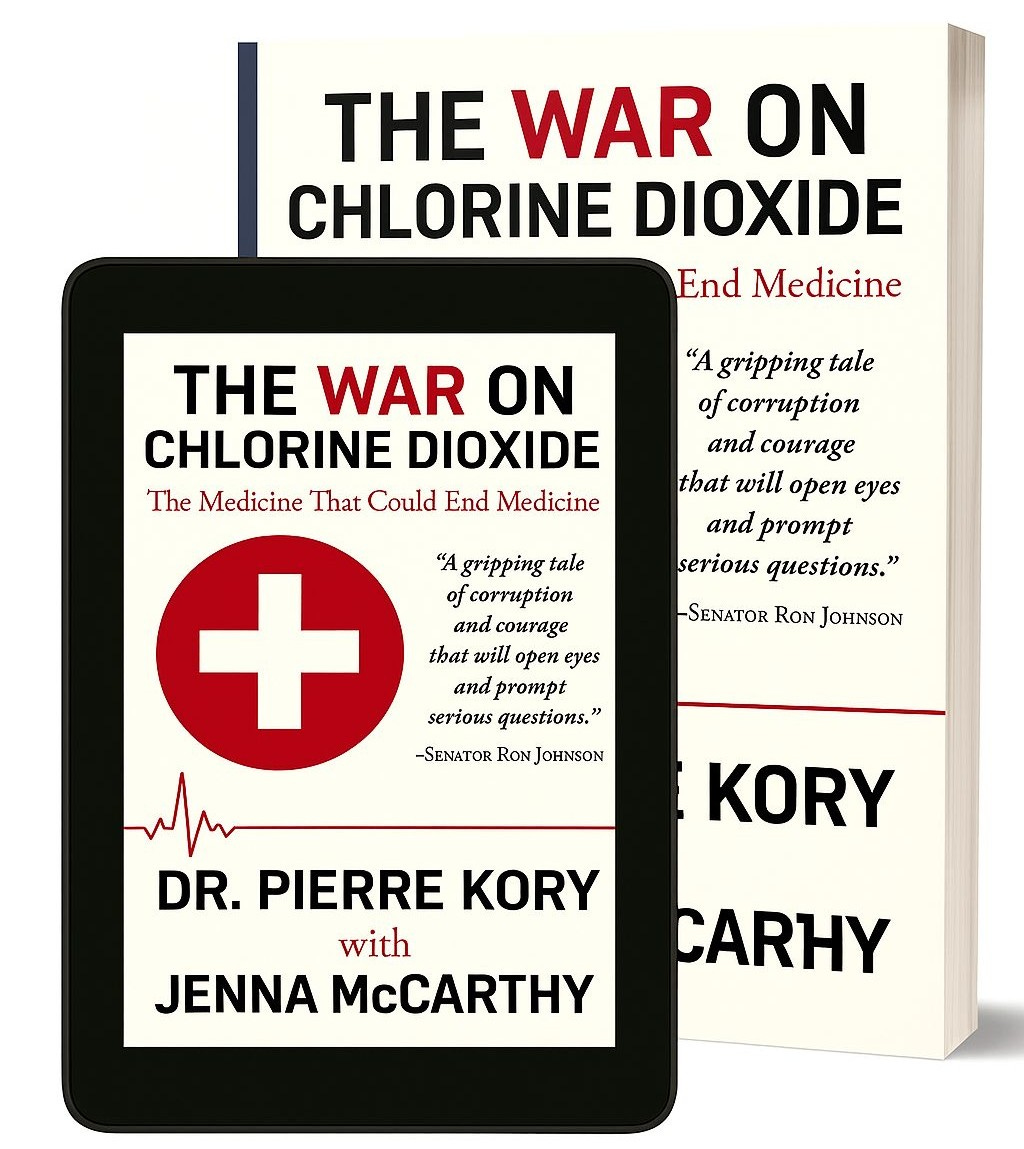
A little over a week ago, I posted about Megan O’Matz, a ProPublica “reporter” who had been stalking me and Dr. Pierre Kory about our upcoming book, The War on Chlorine Dioxide. True to the book’s title, the offense is already all geared up for battle.
In a series of emails, Ms. O’Matz shared excerpts from her pre-written story—which is not a book review, she wants the record to show, particularly since she has not read the book—and asked for comment. My post, which I sent directly to her shortly after publishing it, was the only reply she got.
ProPublica, which calls itself “a nonprofit newsroom that investigates abuses of power,” ran her farcical piece last Thursday. While it pretends to be a heroic and courageous bit of investigative journalism, it reads more like a group chat between three people who once skimmed a CDC pamphlet and have decided it’s their duty to defend civilization from the apocalypse.
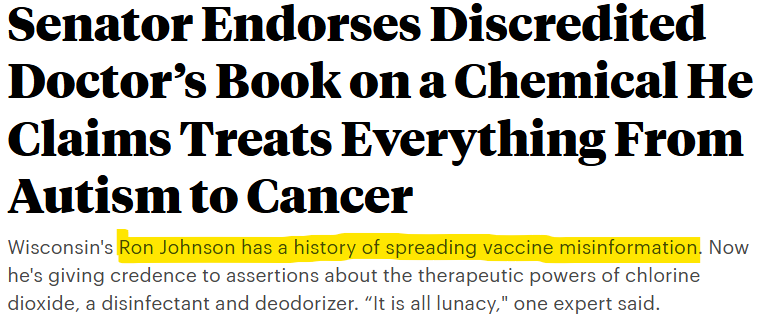
It’s a lot to unpack, honestly.
The most glaring issue—and trust me, there are countless—is that O’Matz did not interview a single person who has ever used, prescribed, studied, or benefited from chlorine dioxide. Not one parent. Not one clinician. Not one trial participant or researcher from the United States or Latin America actually publishing data on it. She didn’t even track down a single hiker who has used a few tablets to purify putrid drinking water. Instead, she assembled a preselected cast of critics already committed to the narrative she intended to write (“Chlorine Dioxide Bad!”), and then declared the matter settled.
[Waits for Merriam-Webster to update definition of journalism to “the act of consulting only the people who already agree with you.”]

Her repeated warnings that both chlorine dioxide and ivermectin are dangerous “in excessive amounts” are unintentionally hilarious, especially since I had already pointed out how meaningless that point is (and she even quoted me!). Remarking that something becomes harmful when consumed in reckless abundance is not journalism; it’s kindergarten-level observation delivered with the gravitas of a nuclear safety briefing. Yet she repeats the phrase as if she’s breaking news.

I was half-expecting her to mention that setting your hair on fire while guzzling chlorine dioxide straight from the bottle and simultaneously juggling rattlesnakes is hazardous and irresponsible.

Another highlight is her attempt to frame HHS Secretary Robert F. Kennedy Jr. as some kind of circus freak for considering new ways to “more closely scrutinize vaccine safety,” as though careful examination of pharmaceuticals is inherently extremist instead of the literal foundation of medical ethics. In O’Matz’s framework, unquestioning obedience is treated as scientific virtue, while skepticism—the actual engine of science—is treated as heresy. By her definition, Galileo, Pasteur, Edison, Tesla, Marie Curie, and the Wright brothers were all first-rate misinformation super-spreaders.
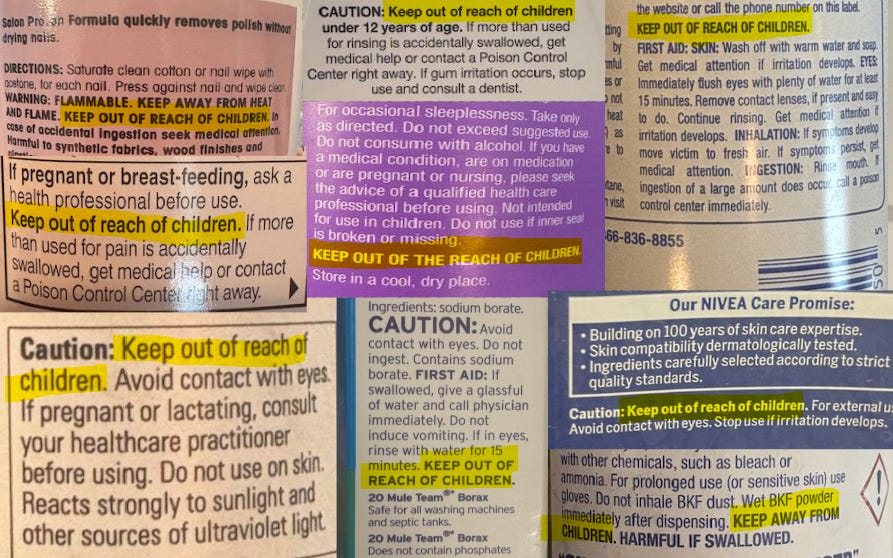
In one particularly head-scratching paragraph, O’Matz notes ominously that a popular chlorine-dioxide-containing mouthwash warns users to “keep out of reach of children.” This is somehow offered as evidence of danger. One wonders if Ms. O’Matz has ever purchased or perused a personal care product in her life. Every mouthwash says that. Every cleaning product says that. Every toothpaste, shampoo, sunscreen, ChapStick, deodorant, hair gel, laundry detergent, hand sanitizer, kitchen knife, and children’s cough syrup says that. But sure, let’s treat a standard bathroom-label warning like it’s a bombshell confession delivered at a midnight press conference.

Her attempt to discredit the ivermectin meta-analysis I shared is even more embarrassing. She links to an “Expression of Concern” hoping readers won’t click it. Because if they do, they’ll see a sentence that undermines her entire point: “This Expression of Concern does not imply that the methodology used by Mr. Andrew Bryant and his collaborators was incorrect. The use of summary data published by others is a generally accepted approach in biomedical meta-analytic research.” Next up from Ms. O’Matz: quoting a court ruling that says “case dismissed” to prove someone was convicted.
O’Matz then parades out the ABIM’s decertification of Dr. Kory as if it were a scientific verdict rather than the bureaucratic and political maneuver it actually was. She also omits the part where the court ruled California’s COVID-misinformation law unconstitutional, finding its definition of “misinformation” so vague that doctors couldn’t possibly know what speech was allowed. In other words, bad medicine was already illegal—the law simply tried to police opinion under the banner of “orthodoxy.” That inconvenient detail must be somewhere on the editing room floor. (She needed the space to beat up on the horse de-wormer in her toxic bleach takedown! SMH.)

The entire article avoids engaging with dosage, biochemical mechanism, blinded studies, pharmacokinetics, published results, or the current research being conducted. She doesn’t differentiate between industrial concentrations and medically titrated microdoses. By her logic, house fires kill people, therefore candles should be outlawed. Instead of scientific inquiry, she offers moral panic wrapped in appeals to authority, with zero curiosity and an absolute refusal to interrogate anything outside the FDA’s press releases.
She quotes experts declaring chlorine dioxide “snake oil,” while her own reporting violates every principle of scientific inquiry: gather evidence, evaluate competing hypotheses, consult diverse sources, and verify claims. She does none of this. This isn’t investigation; it’s the regurgitation of regulatory talking points dressed up as an exposé.
In our first book, The War on Ivermectin, Dr. Kory and I describe the tactics the media use to discredit anyone or anything that is “inconvenient to the narrative.” If you can’t undermine or disprove the data, you simply attack the source. “Well, sure, Johnny recommends red light therapy and intermittent fasting, but Johnny also drinks goat urine and thinks the moon regulates cholesterol levels, so obviously we’re not taking our medical advice from him, LOL.”
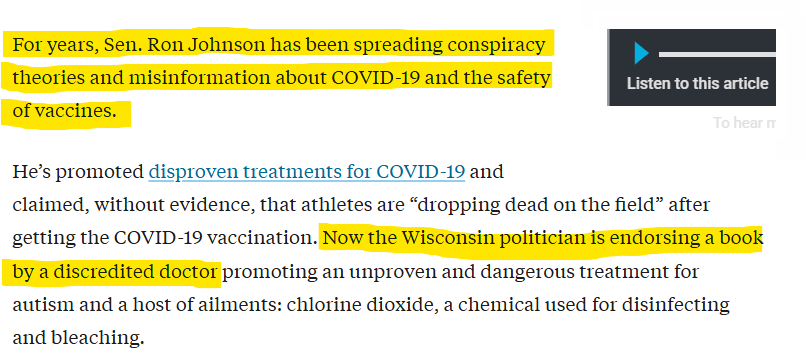
O’Matz obviously desperately wanted Senator Johnson to deny endorsing the book. Instead, he flipped the script and made her look like a buffoon. And she quoted him, too.

This isn’t investigative journalism. It’s a carefully staged dramatic reading of establishment talking points, delivered with the solemn confidence of someone who believes repeating the consensus is reporting. No questions asked, no risks taken, just a faithful reenactment of whatever the approved institutions already decided was true.
If you enjoy cherry-picked moral panic, ritual appeals to authority, generous helpings of FDA boilerplate, zero engagement with actual data, invisible firsthand accounts, and an entirely unexamined belief that “approved = good” and “unapproved = poison,” by all means, read Ms. O’Matz’s attempted take-down. In fact, share it widely. Because thanks to her ham-fisted coverage, we sold a pile of books and picked up a bunch of new subscribers—all without pretending bureaucratic approval is a substitute for thinking. Funny how that works.
I wonder who REALLY signs Meghan’s paycheck. I feel like it’s someone nefarious.
After probably a decade or more of journalism becoming nothing more than opinion pieces I’m reading almost nothing from mainstream. It’s tiring and tedious and ridiculous how far the pendulum has swung. You’d think at some point these far left goon rags would need more eyeballs if only to stay in business. I wonder at their motivation to remain devoted to opinion instead of facts .. they must get something out of it but I can’t imagine what.