

I know it’s devolved into a living hellscape, but I still love New York City. (I was born there, okay?) For at least twenty years, my vision board has featured a pied-à-terre on the Upper West Side, preferably with a doorman, a view of Central Park, and anybody but Mamdani in Gracie Mansion. And I could maybe even swing it if I sold all of my earthly possessions, cashed in my retirement, invented a time machine, and convinced the city to kick in to help cover my expenses.
Is that too much to ask?

Not, it turns out, in San Francisco.
The City by the Bay is now offering free childcare to help families cope with the outrageous cost of living there. Yes, folks, if your household’s combined paychecks are less than a paltry $235,000 a year, someone will watch your kids for free. Stuck in the upper-poverty bracket between $235,000 and $325,000? San Fran’ll split the babysitter bill with you.

An intrepid New York Times reporter, SF Bureau Chief Heather Knight, found a family whose heartbreaking financial circumstances perfectly illustrate the need for such a program.
John Marman and Natsumi Makiyama earn just under $235,000 a year. They own a $1.3 million home with a $6,400 monthly mortgage. Their two cars cost them another $2,200 every four weeks. Phones and Wi-Fi run $300. Things have gotten so dire, the pair explained, that they’re clipping coupons, “saving less than they would like,” and they might have to cancel their annual trip to Japan.

“I don’t want to say we’re rationing, but we’re definitely thinking about not using too much,” Marman told the Times. “Every grain of rice is eaten, and we make sure there is no food waste. I’m the designated garbage disposal for the kids’ leftovers.”
Saving less and eating all the rice? Someone call UNICEF!
Her: “John, have you… gained some weight?”
Him: “Natsumi, I told you! No grain of basmati left behind!”
I legitimately don’t even know where to start here, but I suppose the car portion of this budget is as good a place as any. Do you want to know what my car costs me? About $200/month, all in—and that’s rounding up. It’s ten years old, and I paid cash for it when I bought it used; the only monthly expenses are insurance and gas. Maybe if I go out and buy a G-Wagon I could qualify for food stamps!
After casually mentioning that jaw-dropping monthly car line item, the tone-deaf Times preemptively waved away my “bus passes are cheap!” argument by explaining that the couple needs their vehicles because they are “unable to reach their jobs” without them.

I’m sorry, what? He’s a therapist and she’s a nurse. Are their offices on floating docks in the bay? Does he counsel patients from a lighthouse? Is she administering IVs from a helicopter hovering over Lombard Street? Where on earth are these people commuting that their workplaces are only accessible by two separate personal vehicles with new-car smell?

I’ll admit I’m no financial planner, but I have a few thoughts. Sell the fancy cars (I think it’s fair to assume they’re fancy) and pay cash for two reliable 2019 Toyota Corollas. Dump the house, move a slightly inconvenient distance from the city, and get yourselves a couple of BART passes. There. I just freed up several thousand dollars a month without raising anyone’s taxes, creating another government program, or appointing a deputy commissioner of affordable childcare. You’re welcome.
Before anyone accuses me of wanting to snatch crayons from toddlers’ hands, let me be clear. I’m not opposed to childcare assistance in theory. I’m not even necessarily balking at the income thresholds. Even outrageously pricey cities need bus drivers, grocery store clerks, daycare workers, janitors, cooks, couriers, and the requisite number of surly baristas. If San Francisco wants to help workers afford to stay in the city rather than force everyone taking home less than a quarter-mil a year to commute from Nevada, I won’t even lose sleep over it.

What I object to is the New York Times presenting a couple with a $1.3 million house, exorbitant car payments, and annual trips to the Far East as the poster family for financial hardship. Of all the folks in Frisco struggling to make ends meet, these are the people we’re supposed to weep for? The ones whose biggest financial obstacle appears to be a steadfast refusal to live within their means?
Somewhere near the Golden Gate, a single mother is sleeping on her parents’ sofa and taking three buses to her minimum-wage job, wondering how she’s going to pay for groceries next month. But sure, let’s hear more about the heartbreaking sacrifices of the couple who might have to cut back on international travel.

Because here’s what really bothers me: The pot of money isn’t bottomless. It can’t be. And if income is the primary eligibility test, shouldn’t we at least consider what people are doing with that income? I hate to sound judgy, but if you’re dripping in diamonds and spent your childcare money on a yacht club membership, I don’t really think it’s the government’s responsibility to foot the kinder-care bill.
You may be wondering where the funding from this program comes from. I’m glad you asked. In 2018, San Francisco voters approved a 3.5% tax on most commercial rental income (warehouses typically get a reduced ding). Landlords take the hit and then likely pass the costs along to businesses, which then surely pass their higher costs along to customers. So the city gets more expensive, more people need subsidies, and City Hall congratulates itself for making life more affordable.
It’s a perpetual-motion machine, except instead of producing energy, it produces an endless string of socialists.
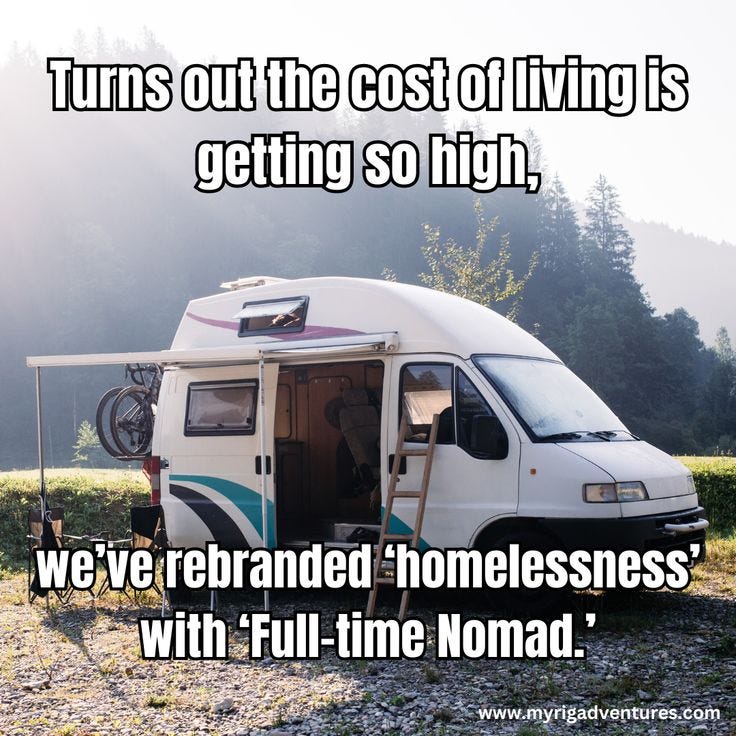
The Times presents this as a tale of struggling middle-class families—and in a twisted way, it is. Because it’s a story about people who want to drive luxury cars, take fabulous vacations, squirrel away a little bit of savings, and live somewhere they can’t comfortably afford. Who doesn’t want that? The difference is, the rest of us aren’t waiting for someone else to pick up the tab.
POLL REDUX FOR FINICKY PHONES:
Who should qualify for taxpayer-funded childcare?
Everyone! It benefits society.
Only families in actual need.
Depends. What’re you driving?
Nobody. This isn’t Sweden.
*combo/unsure/other
This story is like the ridiculous House Hunters show: he’s a stay at home dad who makes scented candles, she’s a beekeeper who sells artisanal honey, their budget is $1.3 million.
I bet they go to a really expensive, private therapist to process the shame they feel. It’s tough out there.