

I shouldn’t need to come out and say it, but I will: I do not want drunk drivers on the road. No sane person wants drunk drivers on the road. It’s bad enough out there as it is, with people next to us texting, scrolling, snacking, flossing, plucking, filming, flexing, FaceTiming, and applying a full face of makeup in the rearview mirror at seventy miles per hour. Nobody needs to add “also hammered” to that list. I think we can all agree that when you slide into the captain’s seat of a multi-ton weapon on wheels, you should be at your most alert and sober best.
The issue is… who gets to be the judge of that?
Starting in 2027, new cars will be required—as in mandated, by the federal government—to include technology that monitors whether you are fit to drive. (It’s buried in the breezy, 2,500-page 2021 Infrastructure Act that surely all Americans have read in its entirety.) Relying on this dystopian gadgetry, if the Almighty Automotive Oz decides that you are not firing on all cylinders, it will quickly render your car inoperable.
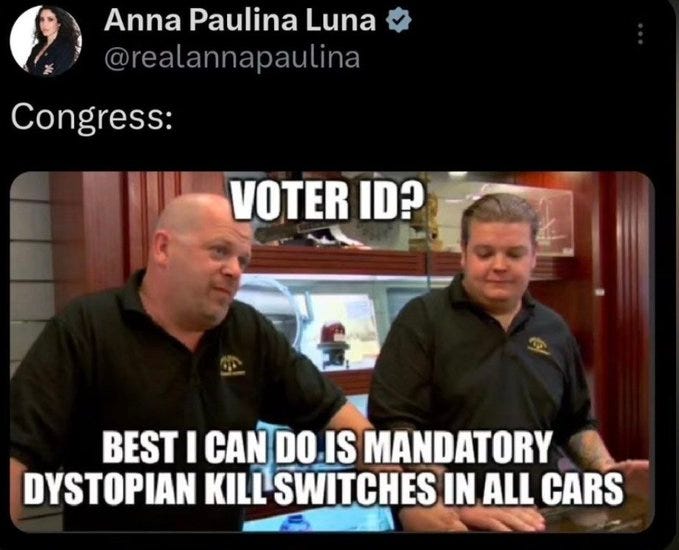
If it sounds like a kill switch for your car, that’s because it’s a kill switch for your car. That your car—with the government’s help—controls.
The system won’t use a breathalyzer, which would at least have the dignity of measuring something real. It will rely on infrared sensors and cameras that continuously monitor your pupil size, head movements, eye movements, and various “behaviors consistent with impairment.” Which is a very technical way of saying the nanny state is coming in hot—and it’s going to be buried in your dashboard.
Here’s a partial list of things that can also affect your pupil size, head movements, and eye movements that have nothing to do with alcohol: fatigue, stress, certain medications, bright sunlight, a migraine, crying, allergies, going into labor, getting a frantic call from your kid, and the particular expression most of us make when we are trying to merge onto a highway while someone in a Kia is doing eighty in the slow lane. Your car will not know the difference. Your car will not confirm, question, or seek a second opinion. Your car will simply decide.
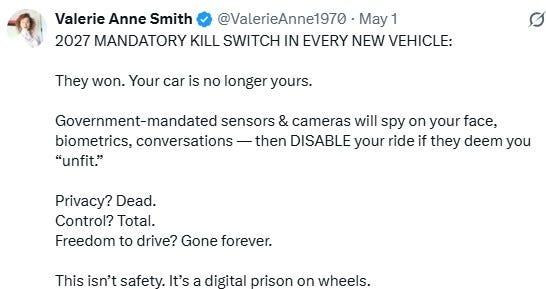
And if it decides wrong? If your mother has fallen and needs you, if your house is on fire, if your dog was just spotted dodging cars on the highway? Well. Hopefully you have a neighbor you like. Because according to automotive experts, there is currently no clear answer to the question of how you get out of what is being called, with chilling accuracy, “kill switch jail.”
The bigger issue isn’t your F-150 temporarily refusing to fire up. The kill switch is almost beside the point. Because while you were probably focused on the part where your vehicle can vote you off the island, you may have missed the bit where it’s also building a file on you. The infrared cameras, the behavioral monitoring, the driving data—it doesn’t stay in the vehicle. It goes to the cloud. (If your current car has a touchscreen, a companion app, remote start, or built-in navigation, this is already happening, BTW.) And from the cloud, per the terms of service you agreed to when you bought the car—the ones no one in the history of time has ever actually read in their entirety—it gets sold. To companies that build what is being called, with a straight face, an automotive “risk score” on individual drivers. Which then gets sold to your insurance company.

In other words, your car is a spy. A snitchy, disloyal spy—the automotive equivalent of the older sister who timed how long you were on the phone and reported back to mom, or the babysitter who told your parents you didn’t go to bed until eleven even though you’d made a very reasonable case for staying up. You wash it. You wax it. You work overtime to afford the monthly payments. And all the while it’s just sitting there, the picture of innocence, compiling evidence that may or may not be used against you in a court of law.
In China, they’d call it what it is: part of the social credit system. Here, we’re calling it “making the roads safer,” because American politicians have learned that if you give authoritarian infrastructure a vague—or emotional—enough name, half the country will not only comply but will show up to volunteer. The Infrastructure Investment and Jobs Act. The HALT Drunk Driving Act—named for a Michigan family killed by a drunk driver. Mothers Against Drunk Driving. Students Against Destructive Decisions. Road safety! Saving lives! It’s for the children! You have a problem with that? What kind of monster are you?

Republicans in Congress had a problem with it—an overwhelming majority voted against funding the program. Their efforts failed thanks to fifty-seven RINOs who voted with Democrats to keep the cameras coming. The mandate survived. Nobody had to explain themselves. And here we are.
“The idea that the federal government would require auto manufacturers to equip cars with a ‘kill switch’ that can be controlled by the government is something you’d expect in Orwell’s 1984,” said Florida’s remarkably sane Governor Ron DeSantis. Marjorie Taylor Greene called it “the most unreal thing I’ve ever seen in my life.” Neither is wrong.
I’ll reiterate, nobody is against safe roads. Nobody should be put at risk by exhausted, drunk, or distracted drivers. That’s the whole trick—you bake the surveillance into something impossible to argue with, and by the time anyone reads the fine print, the sensors are already embedded in the steering wheels.
Your behavior, continuously monitored. Your data, scored. Your ability to operate your own vehicle, subject to approval. What you pay for insurance, determined by a report card your car has been quietly keeping since the day you drove it off the lot.
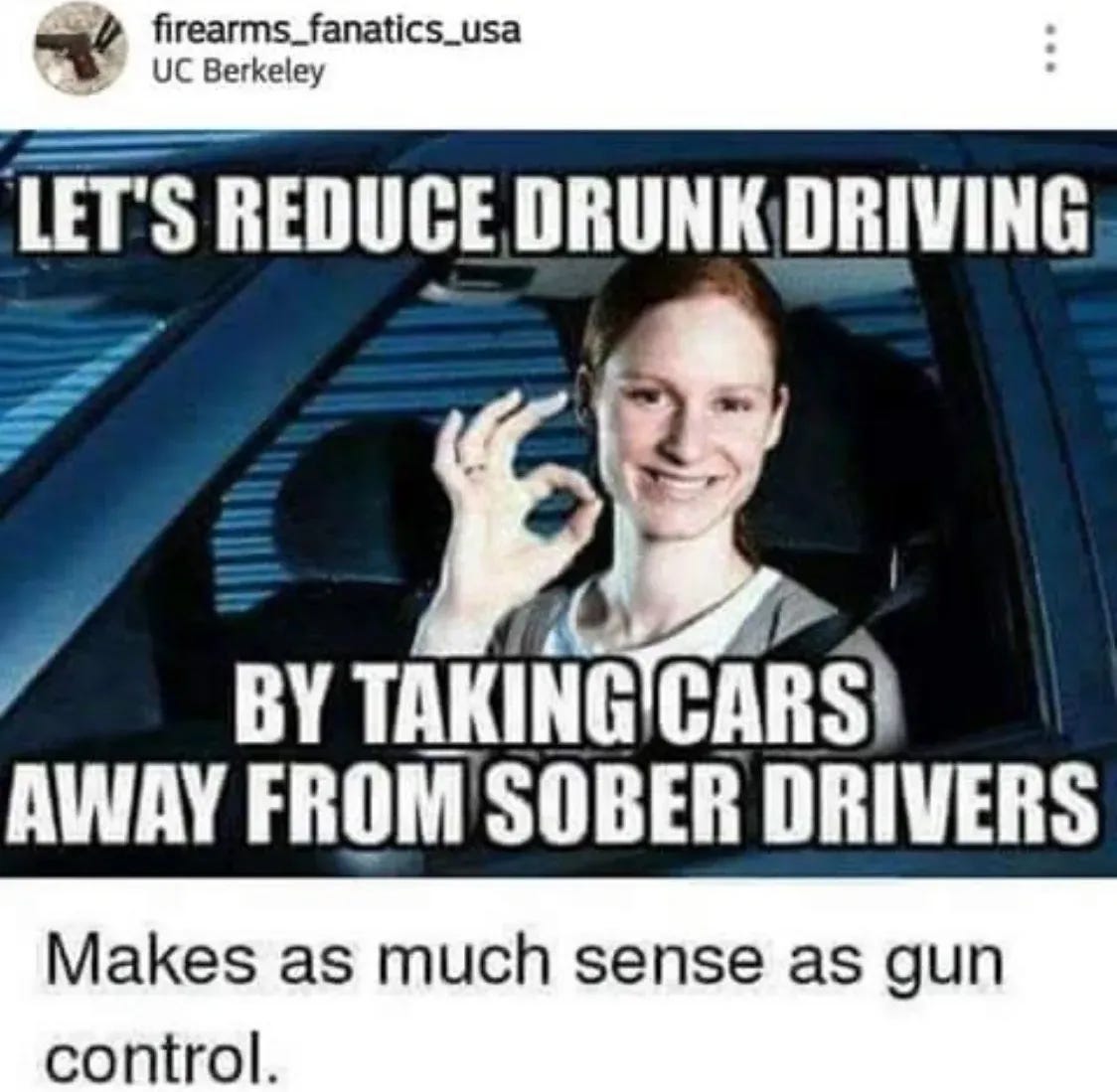
There are other weapons in the anti-drunk-driving arsenal. Better driver education. Mandatory viewing of the kind of footage that makes you never want to get behind the wheel again—sober or otherwise. Harsher punishments for first-time DUI offenses. Ignition interlocks for people who’ve actually been convicted of driving while intoxicated—which already exist and have proven to work. Sobriety checkpoints in high-risk areas. Hell, I’d even vote for government subsidized Uber rides at closing time. Any of these would be a fine place to start. Instead we’re harvesting everyone’s biometrics and calling it “for the greater good.”
Remind me where I’ve heard that before?

There’s some good news in all of this. For one thing, the technology doesn’t exist—at least, not in a form accurate enough to employ, something the National Highway Traffic Safety Administration admitted in a February 2026 report to Congress. I know, you’ve seen the viral videos. Ford wants to scan your irises, GM wants to judge how you walk to your car, and Toyota has been working on sensors to detect alcohol in your sweat since 2007. But none of it has passed federal muster. Because of that, the NHTSA actually missed the implementation deadline—gotta love reliable bureaucratic inefficiency!—leaving us with the government officially requiring technology that hasn’t been remotely perfected yet.
Also, the mandate only applies to new vehicles, which means nobody is coming for your 2019 Tahoe. Yet. But here's the thing about a rule that applies to every new car sold in America starting next year: you don't have to retrofit anything. You just have to wait. Every year, more unmonitored cars will age out of existence and more compliant ones will roll off the lot. The surveillance state isn't in a hurry. It has a fifteen-year plan and infinite patience, and it is perfectly content to let you drive your old car into the ground while it waits for you to need a new one.
For now, at least, enjoy not having Big Brother along for the ride.
Road safety? How do you stop drivers in construction zones where posted speeds of 70 are reduced to 60 and most drivers still do 75 or more? Congress is never your friend. With every bill they pass, our freedoms shrink and this is another example. This has everything to do with 15 minute cites and eventual depopulation.
The only "kill switch" we need is the one where we turn off congress and the DC Cesspool.
I'm thinking I'll open a used car lot... and find a mechanic who knows how to baby old cars forever. The government needs to back off and stay in their lane. 🙄