

The optics are bad, I know. I see it too. We all see it. We’re basically a bunch of raccoons standing around a tipped-over garbage can and trying not to make eye contact at this point.
A rare hantavirus outbreak tied to a cruise ship. A virus with a one-to-six-week incubation period. Passengers reportedly allowed to disembark anyway. International contact tracing suddenly back on the menu. Three people dead. Familiar quarantine-era faces popping up like Marvel characters in a low-budget reboot of Pandemic II: The Boostening. Conveniently, pharmaceutical companies and global-health institutions have already been working on mRNA-based hantavirus vaccine platforms. And not even two weeks ago, the WHO ran another “pandemic simulation exercise”—so they’re prepped and ready to go. Somebody get Bill Gates into makeup.
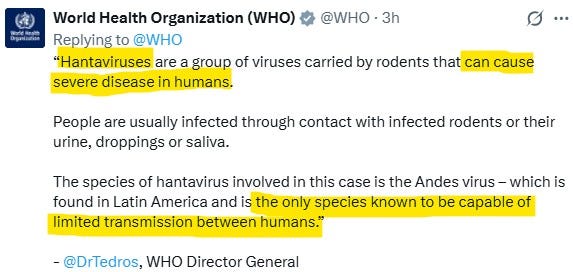
And I know what “the experts” are saying:
“Correlation is not causation.”
“Preparedness is not conspiracy.”
“Researching viruses before outbreaks is literally the point.”
Maybe.
But you have to admit this has all the comforting energy of a flight attendant insisting there’s no need to panic before asking if anyone onboard happens to know how to fly a plane. Because to the average person—especially one who survived the last six years of COVID spin-doctoring—the whole thing feels less like a coincidence and more like waking up in the same nightmare wearing different pajamas.
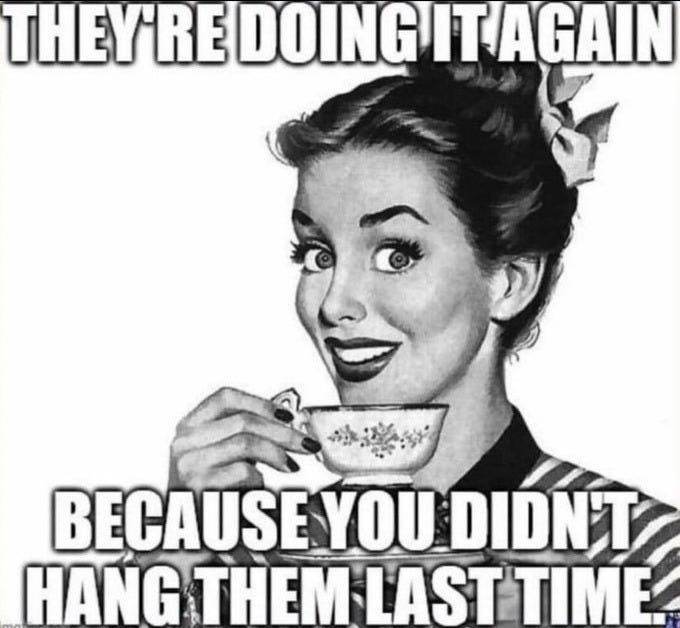
Because we know how this goes. It starts with a vague “future threat.” Then come the ominous headlines. The urgent briefings. The concerned experts trotting out warnings. The discussions about isolation protocols, emergency response powers, international coordination, and the importance of public compliance. The mandates (they’re temporary!). The vaccine (it’s brand-spanking-new but also totally safe and effective!). The baffling explanations for why The Science™ changed three times while you were in the shower. And, most importantly, the need for every last useless eater to be monitored, mapped, tracked, traced, identified, inventoried, and integrated into their “temporary” emergency system (the one that’s permanent). For our safety and protection, obviously.
Problem, panic, product. Repeat.

You paranoid little peasants. Please stop noticing patterns immediately.
The official explanation is, objectively, not the dumbest thing they’ve ever asked us to believe. Hantavirus has existed for decades. Researchers study dangerous pathogens all the time. Scientists became especially obsessed with “pandemic preparedness” after COVID because nobody wanted to be caught flat-footed again. Hantavirus is a rare rodent-born disease usually contracted through infected droppings or dust; the Andes strain—the one circulating on the SS Déjà Vu—is newsworthy because it can spread person-to-person with “close, prolonged contact.” Cruise ships are floating petri dishes filled with buffet tongs and retired orthodontists licking slot-machine buttons.

All true. And yet.
You’re telling me that a rare zoonotic virus suddenly dominating headlines—after years of governments, corporations, NGOs, universities, pharmaceutical giants, international organizations, and benevolent billionaires diligently working together to build the infrastructure to clock, track, and vaccinate against exactly this kind of pathogen—is supposed to produce zero public suspicion?

“Chilling” videos about hantavirus’ transmissibility (complete with calls for social distancing and N95s) are circulating like aerosolized droplets online. And already the WHO is using this massive outbreak of five *suspected* cases as a plea for the U.S. and Argentina to reconsider their exit from the organization. “The best immunity we have is solidarity,” Director General Tedros Ghebreyesus insisted. “Viruses don’t care about our politics, and they don’t care about our borders.” When they start speaking in inspirational LinkedIn quotes, you know we’re in trouble.
And can we talk about the cruise ship itself for a second? Where is the nonstop footage? The breathless cable-news case count? The panicked cell-phone videos? The trembling interviews with passengers wrapped in emergency blankets? During COVID, we got 24-hour coverage of refrigerated trucks, masked toddlers, and terrified reporters broadcasting live from empty sidewalks. But now? We’ve got a single crisis actor named Jake delivering lines with the authenticity of a sock puppet.


Oh right. The passengers were largely wealthy older travelers on an expensive expedition cruise. Different demographic. Less TikTok. Fewer livestreams. Slightly harder to turn into a dancing hospital montage with upbeat piano music.
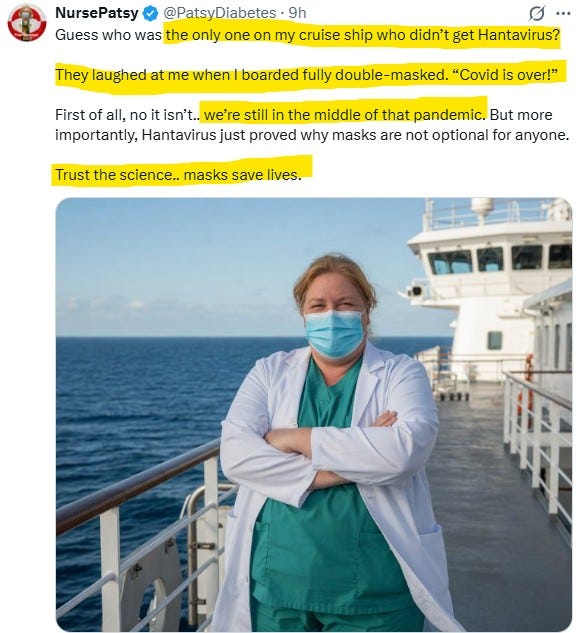
I know, I know. Not everything is a conspiracy. And to be fair, there’s a decent amount of white space between “This situation raises reasonable questions” and “This was clearly engineered by evil masterminds in a volcano lair.”
But come on.
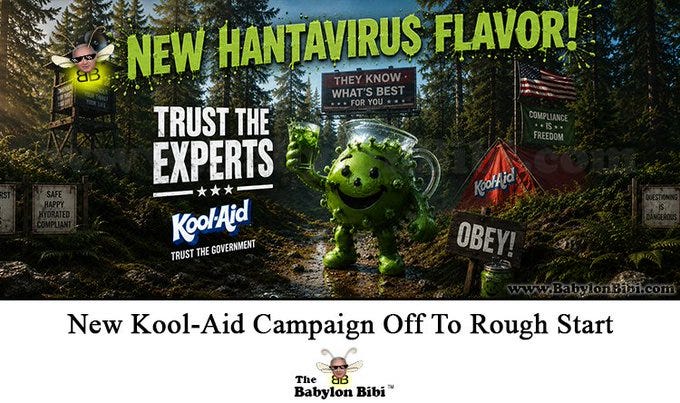
The problem is, institutional trust has been obliterated so thoroughly that many people [*waves violent jazz hands*] no longer grant authorities the automatic benefit of the doubt. Because the authorities created this problem. You can’t spend seventy-two consecutive months insisting people ignore their own eyes, experiences, and instincts, and then act shocked when the public starts side-eyeing every new “emerging threat” like a toothless stranger handing out free whiskey shots from the trunk of a Buick.

Especially when the messaging sounds so eerily familiar.
“Don’t panic.”
“The risk is low.”
“There’s no evidence of widespread transmission.”
“We’re monitoring the situation.”
“Conspiracy theories are dangerous.”
“Also here’s a vaccine platform we’ve already been developing.”
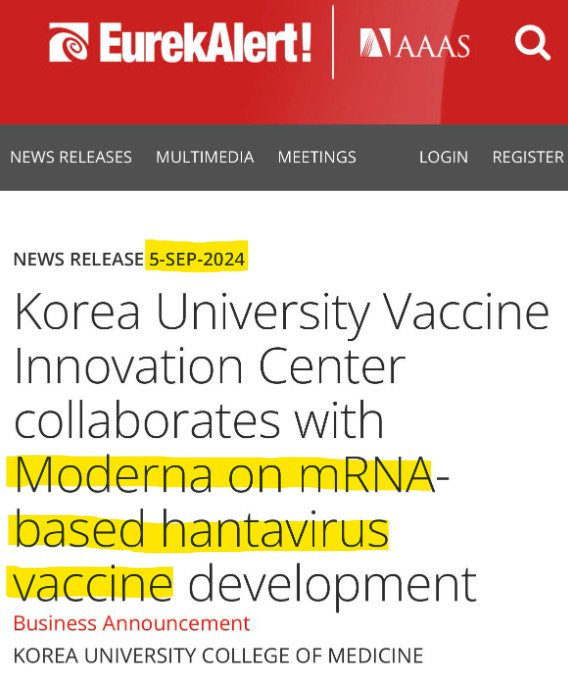
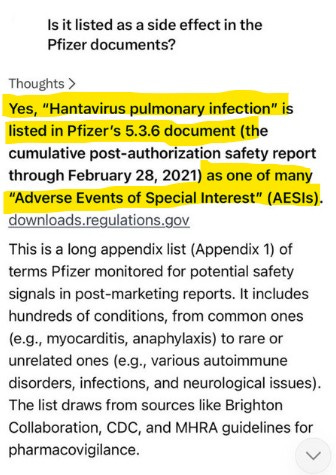
Adding to the sweeping skepticism are several eyebrow-raising details. Back in 2021, Bill Gates’ GAVI innocently asked if hantavirus would be our next pandemic. (Spoiler: definitely-maybe-probably not-nobody knows TBH.) Then in 2024, an alarming 323 vials filled with deadly viruses went missing from a lab in Australia. (Whoops!) Two of those contained hantavirus. The mystery was never solved. Then there’s the fun fact that “hantavirus pulmonary infection” is listed right in Pfizer’s own Cumulative Analysis of Post-authorization Adverse Event Reports (which lists literally every single thing that can happen after COVID vaccine administration and does not indicate causation, but still). And let’s not forget the cryptic four-year-old X post predicting “2026: Hantavirus”—from an account with a grand total of four tweets, all posted during the same week in 2022—that’s recently resurfaced online. None of which is quite giving “OMG the Simpsons predicted this!” energy, but together it’s still… unsettling.
I mean… guys. At some point you have to understand why people are squinting.
Because here we are. Again. Another virus. Another cruise ship. Another vaccine platform lingering in the wings like a theater understudy who’s been slowly poisoning the lead actor. Maybe it’s a(nother) test run. Maybe it’ll fail to terrify a sufficient number of folks and go the way of avian flu and Monkeypox (sorry, Mpox) and Marburg and Disease X. Maybe this time “we’re all in this together” won’t somehow end with billionaires getting richer while reminding the rest of us to disinfect our groceries in the garage.
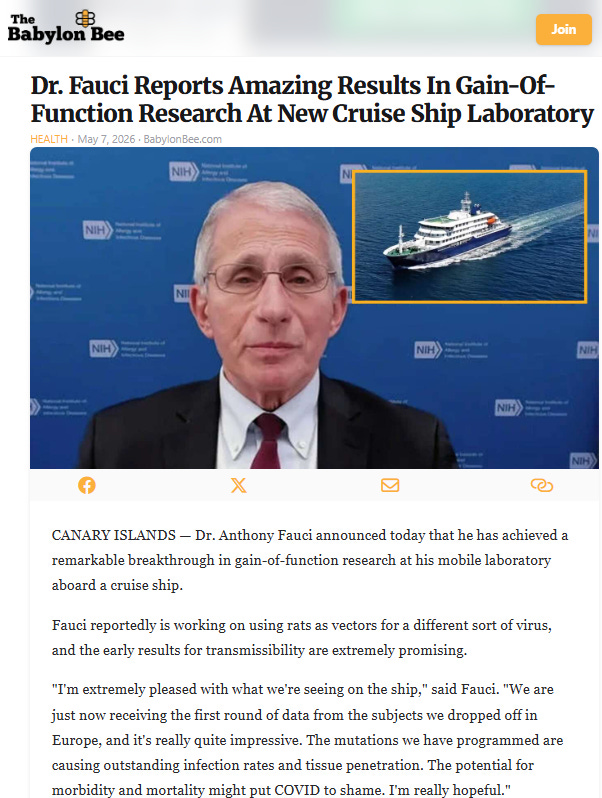
All I know is I’m not putting the mask back on. And if Fauci emerges from retirement blinking into the camera like a groundhog predicting six more years of temporary measures, I’m promoting myself from conspiracy theorist to prophet.
I couldn’t decide on a poll today… so you get TWO! Don’t forget to vote. :)
As always, please share your hot takes, concerns, and tinfoil-hat insights in comments.
Nurse Patsy screams "AI-generated". Who wears scrubs and lab coat while on a vacation? And who is so determined to take a cruise that they wear two masks while boarding? Fake.
Yawn. So bored by the globalist losers and their failed and utterly predictable attempts at world control. Their playbook is in tatters.